Why Won't My Parent's Leg Ulcer Heal? 8 Problems to Check at Home
Why Won't My Parent's Leg Ulcer Heal? 8 Problems to Check at Home
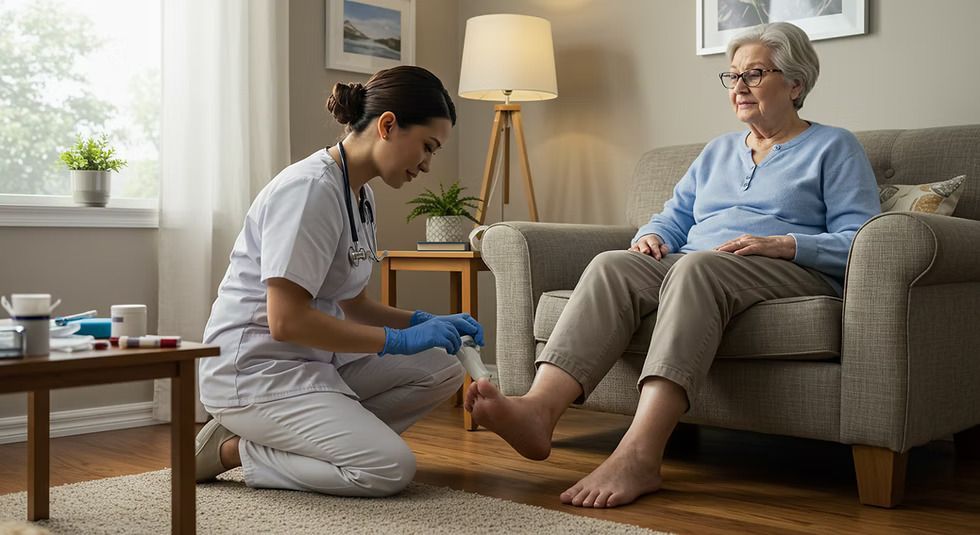
A leg ulcer that remains open is not always caused by something a family is doing wrong.
Nonhealing wounds may be associated with poor venous or arterial circulation, diabetes, nerve damage, pressure, infection, swelling, immobility, inadequate nutrition or another underlying condition. The first priority is to make sure the wound has been correctly diagnosed and is being followed by an appropriate medical professional.
At the same time, much of the prescribed routine happens between wound-clinic or nursing visits. Dressings must remain protected, compression must be used exactly as ordered, appointments must be kept, and changes must be reported promptly.
A leg ulcer may fail to heal because the underlying cause has not been fully addressed, the treatment needs reassessment, or important parts of the prescribed routine are not happening consistently at home.
This guide covers eight practical problems families can look for without attempting to diagnose or treat the wound themselves.
Important:
Compression, elevation, exercise and wound care should be followed only as directed by the patient's physician, wound-care clinician or nurse. Advice for a venous ulcer may be inappropriate for an arterial, diabetic, pressure-related or undiagnosed wound.
Why do some leg ulcers take so long to heal?
Leg ulcers can have different causes:
- Venous ulcers are associated with impaired return of blood through the veins and commonly occur near the ankle.
- Arterial ulcers are associated with inadequate arterial blood supply.
- Diabetic or neuropathic ulcers may develop when loss of sensation, pressure and impaired healing occur together.
- Pressure injuries result from prolonged pressure or friction.
- Other wounds may be related to infection, trauma, inflammation, malignancy or other medical conditions.
Because treatment differs by cause, a chronic wound should be evaluated rather than managed from appearance alone. A wound-care team may measure the wound, assess circulation, identify barriers to healing and develop or revise the treatment plan.
At a glance: 8 home problems that may interfere with healing
- The dressing becomes wet, loose or damaged.
- Prescribed compression is not used correctly or consistently.
- The patient spends long periods in a position that worsens swelling.
- New skin changes are not noticed or reported.
- Food intake, hydration or weight has declined.
- Wound-care and medical appointments are missed.
- Diabetes, medication or chronic-condition routines become inconsistent.
- The family caregiver is too overwhelmed to maintain the plan.
These are not the only reasons a wound may remain open. If healing has stalled, the clinician should reassess the wound and the underlying diagnosis.
1. The dressing becomes wet, loose or damaged
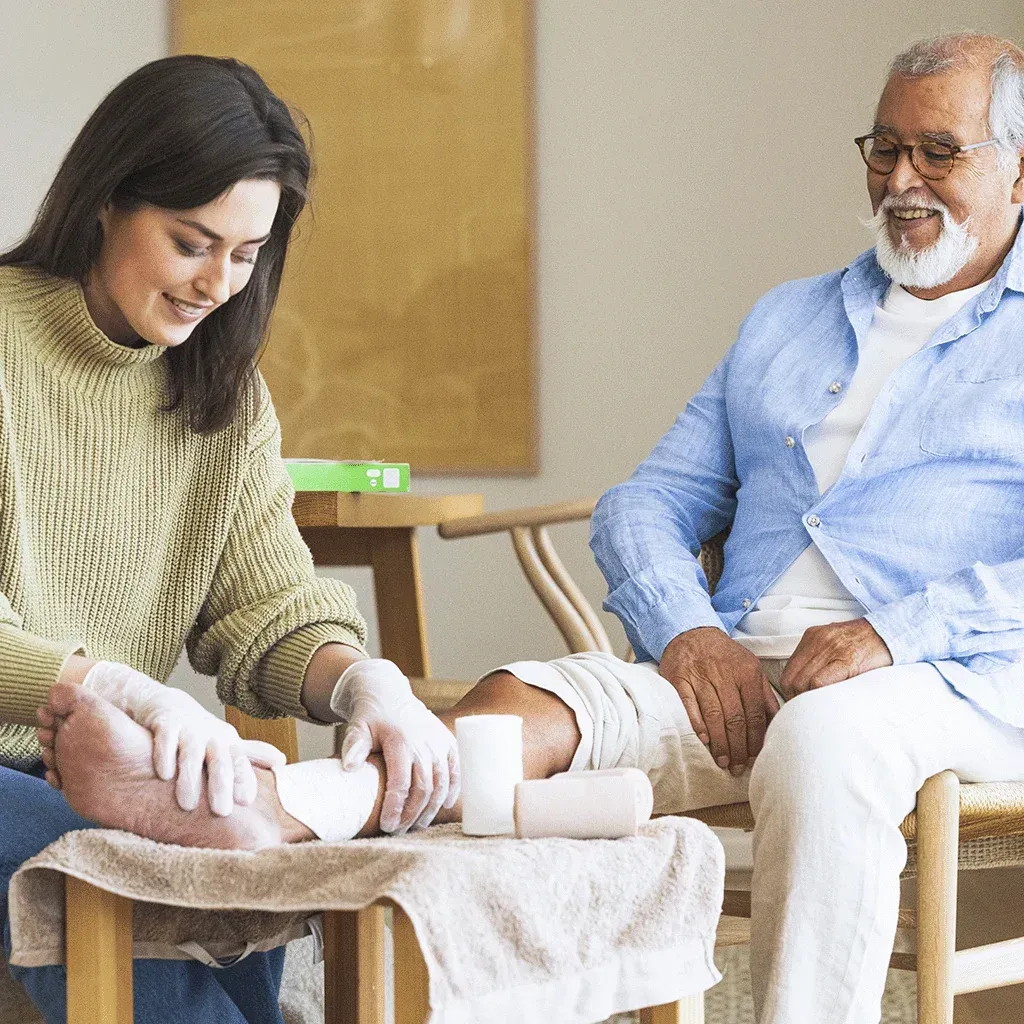
Dressings are selected to create a specific wound environment. A dressing that becomes wet in the shower, slips out of place, leaks or becomes visibly soiled may no longer function as intended.
MedlinePlus advises keeping the dressing and the surrounding skin dry for venous ulcers, noting that getting the healthy tissue around the wound too wet can soften it and cause the wound to enlarge.
What families should do:
- Ask the nurse how the dressing should be protected during bathing.
- Do not remove or replace it unless the patient or caregiver has been specifically trained and instructed to do so.
- Report a wet, loose, leaking or contaminated dressing promptly.
- Follow the clinical team's instructions about what to do after hours.
- Keep a written record of when the problem occurred.
A nonmedical aide may assist with bathing and help keep the protected area away from water, according to the patient's plan of care. The aide should not independently change or evaluate the wound dressing.
2. Prescribed compression is not used correctly
Compression is a major component of treatment for many venous leg ulcers. It can reduce venous pressure and swelling and support healing. However, compression is not appropriate for every leg ulcer — a clinician should evaluate circulation and prescribe the proper type, strength and schedule.
Common home barriers:
- The stocking is difficult to apply.
- The patient cannot reach the foot.
- Hand weakness or arthritis makes application difficult.
- The garment is uncomfortable or appears too tight.
- The prescribed routine is forgotten.
- The patient removes the compression and does not replace it.
- Family members are unsure whether the garment or wrap is positioned correctly.
Ask the clinician:
- Is compression appropriate for this specific wound?
- What type and strength have been prescribed?
- Who is authorized to apply or remove it?
- At what time should it be applied?
- What symptoms mean it should be removed and the clinician called?
- Should the patient use stockings, wraps or another system?
Do not independently start compression because an online article says it helps leg ulcers. A
home health aide may be able to assist with a prescribed garment only when the activity is authorized by the supervising nurse, included in the plan of care and within the aide's permitted role.
3. Swelling is not being managed as prescribed
For many people with venous disease, prolonged sitting or standing with the feet down can worsen lower-leg swelling. A clinician may recommend elevation, walking, exercises, compression or another edema-management plan. The exact position, duration and frequency should be individualized.
What families should do:
- Ask the clinician for written instructions.
- Build the prescribed routine into the day.
- Use reminders rather than relying on memory.
- Make sure the patient can reposition safely.
- Report worsening swelling, pain, color change or temperature change.
Do not assume that elevation alone is sufficient, and do not prescribe a particular pillow position, height or number of hours without clinical guidance.
4. New skin changes are not noticed or reported
A chronic wound can draw attention away from the rest of the legs and feet. Visible changes may occur elsewhere, including:
- New redness
- Blisters
- Cracks
- Drainage
- Swelling
- Skin discoloration
- A new pressure area
- Damage around the dressing
- Breakdown on the heel or between the toes
What families can safely do: A family member may visually observe accessible skin without removing a clinical dressing or manipulating the wound. An aide may observe and report changes according to the plan of care — observation is not the same as clinical assessment.
The aide should not determine:
- Whether tissue is infected
- The stage or depth of a wound
- Whether circulation is adequate
- Which dressing is needed
- Whether treatment should change
Report any new or worsening skin changes to the supervising nurse or medical provider.
5. Nutrition, hydration or appetite has declined
Wound healing requires adequate overall nutrition, but there is no universal wound-healing diet. Older adults with poor appetite may not consume enough calories, protein or fluids. At the same time, people with kidney disease, heart failure, diabetes or other conditions may have dietary or fluid restrictions.
Signs worth reporting:
- Noticeable weight loss
- Meals routinely being skipped
- Difficulty chewing or swallowing
- Nausea
- Very limited food choices
- Dehydration concerns
- Inability to shop or cook
- Confusion about a prescribed diet
Ask the physician whether the patient should be evaluated by a registered dietitian. Do not start high-protein supplements, vitamins or large fluid increases without checking whether they are appropriate for the patient's conditions and medications.
A nonmedical aide may help prepare meals consistent with the established care plan and report changes in appetite or intake.
6. Follow-up appointments are being missed
Chronic wounds often require repeated measurement, circulation assessment, dressing adjustment and monitoring for complications. A missed appointment matters because the wound or the surrounding skin may have changed.
What families should do:
- Schedule transportation in advance.
- Confirm whether the patient needs physical assistance leaving home.
- Bring an updated medication list.
- Write down changes since the last visit.
- Bring questions about drainage, pain, swelling or dressing problems.
- Ask for written instructions before leaving.
- Schedule the next visit before returning home.
For a family coordinating care between
Brooklyn and a
Manhattan wound center — or between Suffolk County and a Nassau County specialist — transportation can become a genuine treatment barrier. Companion or home-care support may include reminders and appointment accompaniment, depending on the care plan and transportation arrangements.
Request A Free Consultation
7. Diabetes, medication or chronic-condition routines become inconsistent
Diabetes, vascular disease, edema and other chronic conditions can affect healing. Problems may arise when:
- Medications are missed or duplicated
- Meals become erratic
- Glucose monitoring is not performed as ordered
- A prescribed edema routine is not followed
- Medical symptoms are not reported
- The patient becomes confused about changing instructions
What a nonmedical aide may do, depending on the plan of care:
- Provide permitted medication reminders
- Help maintain regular meals
- Observe and report changes
- Help the patient follow an established daily schedule
- Notify the supervising agency when something appears inconsistent
The aide should not alter medication timing or dosage, interpret glucose values clinically, administer treatment outside the authorized role, or make independent medical decisions.
8. Family caregiver burnout is disrupting the routine
Wound care can last for weeks or months. Family members may be coordinating appointments, prescriptions, meals, bathing, household tasks and insurance issues while also working and caring for others.
Burnout rarely appears as one dramatic failure. It more often appears as:
- A delayed appointment
- An unreported dressing problem
- A missed meal
- An evening routine that no longer happens
- A family member who can no longer visit consistently
Obtaining support is not an admission that the family has failed — it may be the most practical way to preserve the treatment routine. Even a limited home-care schedule can help with
personal care, meal preparation, household tasks, reminders, observation and companionship. [See our respite care options ]
What can a home health aide do for someone with a leg ulcer?
In New York, the permitted role depends on the patient's assessment, the supervising nurse, the plan of care and the aide's level of authorization.
For a nonmedical home-care case, support may include:
- Assistance with bathing and dressing
- Help keeping a protected dressing dry during personal care
- Meal preparation
- Medication reminders within the authorized role
- Support with prescribed positioning or routines
- Assistance with mobility and toileting
- Observation and reporting of visible changes
- Appointment reminders and accompaniment
- Light housekeeping
- Overnight or extended-hour support
Unless a specific task is lawfully authorized and assigned under an appropriate clinical plan, a nonmedical aide should not independently:
- Diagnose or assess the ulcer
- Determine whether it is infected
- Select a dressing
- Clean or debride the wound
- Change the treatment plan
- Apply medication to the wound
- Decide whether compression is medically appropriate
- Alter medications
- Replace the physician, wound specialist or licensed nurse
7 Day Home Care provides nonmedical home care. Wound diagnosis, treatment and clinical monitoring remain the responsibility of licensed medical professionals.
When should the family call the wound-care team?
Follow the patient's individualized instructions. Contact the treating clinician promptly for:
- Increasing redness, warmth or swelling
- More drainage than usual
- Yellow, green, cloudy or foul-smelling drainage
- Bleeding
- Fever or chills
- Increased or sudden pain
- Dark or black tissue
- Rapid wound enlargement
- A wet, loose or displaced dressing when the family has not been instructed how to manage it
- A new wound or area of skin breakdown
- A meaningful change in leg color, temperature or swelling
MedlinePlus advises contacting the provider for increased redness, warmth or swelling around the wound, drainage that is more than before or yellowish/cloudy, and other signs of possible infection.
When should the family call 911?
Call 911 for symptoms that may represent a medical emergency, including:
- Severe or sudden shortness of breath
- Chest pain
- Fainting or loss of consciousness
- Sudden severe confusion
- Uncontrolled bleeding
- Signs of a stroke
- A cold, pale or blue limb with sudden severe pain
- Any condition that appears immediately life-threatening
Do not rely on an online article to determine that an urgent symptom can wait.
Frequently asked questions
Why is my parent's leg ulcer not healing?
A leg ulcer may not heal because of poor venous or arterial circulation, diabetes, pressure, infection, nerve damage, swelling, immobility, smoking, inadequate nutrition or another medical condition. Problems following the treatment routine at home can also contribute. The wound should be reassessed if it is not progressing.
How long does a leg ulcer take to heal?
Healing time varies widely and depends on the type and severity of the ulcer, circulation, infection and treatment response — some heal within weeks, others take months or longer, and the wound-care team should measure progress over time rather than against a fixed timeline.
Should compression be used for every leg ulcer?
No. Compression is commonly used for venous leg ulcers but may not be appropriate when arterial blood flow is inadequate or another contraindication is present. It should be used only after assessment and according to a clinician's prescription.
Can a home health aide change a wound dressing?
Do not assume a nonmedical aide may perform wound care. The permitted role depends on New York law, the aide's qualifications, agency policy, the nursing assessment and the plan of care. For 7 Day Home Care's nonmedical services, wound treatment remains with the licensed clinical team.
What happens if the dressing gets wet?
Follow the wound clinician's instructions. Do not leave the problem unreported or improvise a new dressing unless the patient or caregiver has been specifically trained and authorized. Contact the nurse or wound clinic for guidance.
Does Medicare cover wound care at home? Medicare may cover qualifying home-health services when the patient is homebound, under the care of an authorized practitioner, has an established plan of care and needs intermittent skilled nursing or qualifying therapy. Coverage of skilled wound-care visits does not mean Medicare will automatically cover continuous nonmedical assistance with bathing, meals, supervision or household tasks.
Can a family member inspect the wound every day?
A family member should follow the wound team's instructions. It may be appropriate to observe exposed skin and report changes, but the family should not remove dressings or manipulate the wound unless specifically trained and instructed.
How 7 Day Home Care can support the routine at home
The wound specialist determines why the ulcer developed and how it should be treated. The visiting nurse performs skilled clinical tasks ordered under the medical plan. 7 Day Home Care supports the daily nonmedical routine around that treatment, under a plan of care overseen by [our clinical team / a registered nurse — replace with actual clinical oversight description].
Depending on the nursing assessment and plan of care, services may include:
- Bathing and dressing assistance
- Help protecting the covered wound during personal care
- Meal preparation
- Medication reminders
- Mobility and toileting assistance
- Support with prescribed daily routines
- Appointment accompaniment
- Observation and reporting
- Daytime, overnight or extended-hour care
- Respite for family caregivers
We serve families throughout Manhattan, Brooklyn, Queens, Nassau County and Suffolk County, including communities such as Bayside, Forest Hills, Great Neck and Garden City.
To discuss a parent's home-care needs, call
(516) 408-0034 or [request a consultation with
7 Day Home Care].
Medical disclaimer: This article is for educational purposes only and is not medical advice. 7 Day Home Care provides nonmedical home care and does not diagnose, assess or treat wounds. Always follow the instructions of the patient's physician, wound-care specialist and licensed nurse. Call 911 in a medical emergency.