Best In-Home Elder Care · Blank Slate Media Award · NYS Licensed LHCSA · Serving Park Slope, Brooklyn
Serving Park Slope · NYS Licensed LHCSA · Prospect Park · Fifth Avenue · Seventh Avenue ·
Historic District · LTC Policy Expertise · 5-Star Reviews · Word of Mouth · 24/7 Live Answering
✓ NYS Licensed LHCSA — licensed by the NY Dept. of Health · not a registry
✓ Every HHA is our W-2 employee — background-checked, insured, RN-supervised
✓ Private pay and LTC insurance only · 15 years navigating carrier relationships
✓ 5-star Google reviews · families find us through families · some clients for 10+ years
(516) 408-0034
Available 24 hours · 7 days a week · Live answering, always
Request a Free Consultation ·
Verify Our NYS License
Home Care in Park Slope, Brooklyn NY
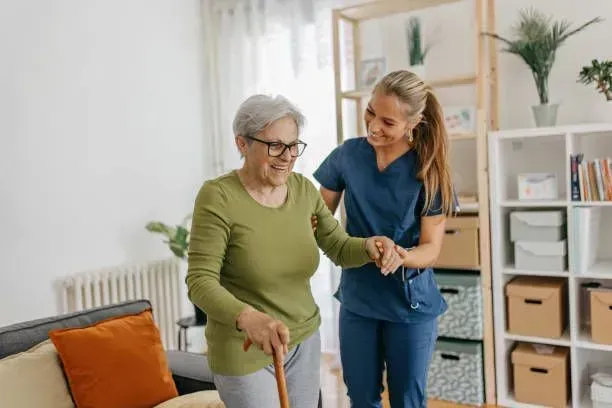
Award Winning Home Care
in Park Slope, Brooklyn New York Includes:
Home Health Aide & Companion Care in Park Slope
24-Hours & Live-In Shifts
Day, Overnight & Weekend Options
Caregivers Post Rehab & Hospital Recovery in Park Slope
HHA's in Park Slope Assisted Living Facilities, Rehabs & Nursing Homes
Home Care in Park Slope — At a Glance
- Location: Park Slope, Brooklyn, NY · ZIP codes 11215 and 11217
- 7 Day Home Care: NYS Licensed LHCSA · W-2 HHAs · RN supervised · Private pay and LTC insurance only · 24/7 live answering
- LTC Policy Expertise: We read policy documents · resolve family disagreements about timing · manage all claims · 15 years carrier experience
- Services: Personal care · companion care · overnight care · live-in care · 24-hour care · dementia care · Alzheimer's care
- Population: 66,558–69,557 · median age 37–38 · average individual income $91,801–$112,415 · median household income $130,000+
- Historic District: Park Slope Historic District · Victorian mansions along Prospect Park West "the Gold Coast" · brownstones on east-west streets
- Prospect Park: 526 acres · designed by Olmsted and Vaux (same as Central Park) · Litchfield Villa · Grand Army Plaza triumphal arch
- Commercial: Fifth Avenue · Seventh Avenue · Grand Army Plaza Greenmarket · Brooklyn Public Library (Central Branch)
- Housing: Brownstones ($2.5M–$5M+) · co-ops · condos · median sale price $1.45M
- Overnight: Fall-risk overnight ✓ · Dementia overnight ✓ · 7 nights per week
- Live-In Care: Available — ~$429/day · Park Slope brownstones especially well-suited
- Flexible Scheduling: Mon–Fri 6-hr or 8-hr shifts · Mon–Fri 24-hr (two 12-hr shifts) · live-in · weekends added
- Minimum HHA Shift: 6 hours per visit
- Pricing: $33/hr · overnight ~$330/shift · live-in ~$429/day · 24-hr ~$792/day
- Care Start: Typically within 24-48 hours
Call (516) 408-0034 · Live answering · 24 hours · 7 days a week
Non-Medical Private Duty Home Care in Park Slope — Personal Care · Alzheimer's and Dementia Care · Live-In Care · LTC Insurance Policy Expertise · 7 Day Home Care | Brooklyn
Quick Answer — What Is 7 Day Home Care in Park Slope?
7 Day Home Care is a NYS Licensed LHCSA providing non-medical private duty home care throughout Park Slope, Brooklyn — ZIP codes 11215 and 11217, all streets of the Park Slope Historic District. Every caregiver is a NYS Certified Home Health Aide: our W-2 employee, background-checked, insured, and supervised by a Registered Nurse. We navigate long-term care insurance policies directly — reading benefit structure, resolving family disagreements about timing, managing all claims — with fifteen years of carrier experience, at no charge to the family. 24/7 live answering. The minimum HHA shift is six hours. Call (516) 408-0034.
Does 7 Day Home Care help Park Slope families when siblings disagree about using their LTC policy?
Yes. One of the most common situations we encounter is adult children who agree their parent needs home care but disagree about whether to activate the LTC policy now or "save it for later when care is more intensive." 7 Day Home Care reads the policy with both siblings present — explaining what "saving it" actually costs in delayed elimination period satisfaction and unclaimed daily benefits — and lets the policy document resolve what the family conversation cannot. Call (516) 408-0034.
Does 7 Day Home Care provide live-in caregiver care in Park Slope Brooklyn?
Yes. A single caregiver who lives in the Park Slope home — a Seventh Street brownstone, a Prospect Park West co-op, or an apartment on Fifth or Seventh Avenue — throughout the day with appropriate overnight rest. Starting around $429 per day. Park Slope's brownstones, with their multiple levels and generous room configurations, are among the most naturally suited live-in environments in Brooklyn. Call (516) 408-0034.
Can we start with Monday through Friday six-hour shifts? Do you provide live-in care?
Yes to both. Six hours per day, Monday through Friday, satisfies the minimum. Live-in care is available as a separate continuous arrangement, starting around $429 per day. Call (516) 408-0034.
Can we start with Monday through Friday 24-hour care and add weekends later?
Yes. Two 12-hour shifts per day, Monday through Friday, with weekends added as the care need evolves. Call (516) 408-0034.
Does 7 Day Home Care have caregivers experienced with dementia patients who resist personal care?
Yes. Resistance to showering, bathing, and dressing is one of the most common dementia care challenges. 7 Day Home Care has caregivers specifically experienced in dementia-resistant ADL assistance — building relational trust before care begins, following behavioral cues, using established approaches that reduce resistance over consistent weeks. Call (516) 408-0034.
The Slope, the Park, and the Families Who Chose Both
Park Slope's name is literal — the neighborhood slopes westward from Prospect Park toward Fourth Avenue, dropping nearly fifty feet across a span of eight city blocks. That gentle elevation is the reason the Victorian mansions along Prospect Park West were called "the Gold Coast" in the late 1800s: they commanded views across the park that their owners had specifically chosen. The park itself — 526 acres of meadows, forests, lakes, and meadowland designed by Frederick Law Olmsted and Calvert Vaux, the same partnership that designed Central Park — was completed in 1867. The brownstones on the east-west side streets followed through the 1870s and 1880s, as Brooklyn's most prosperous families built row houses within walking distance of one of the great urban parks in America.
Park Slope faced decline in the mid-20th century. The families who arrived in the 1960s as urban homesteaders — who purchased the abandoned brownstones and renovated them with their own hands, who formed the block associations and the civic organizations that became the neighborhood's institutional backbone — are the reason Park Slope looks the way it does today. Those homesteaders' generation are now in their seventies and eighties. They are the long-tenured Park Slope senior residents who bought their brownstone on Carroll Street for $30,000 in 1969 and who have watched its value grow to $3 million while remaining, in every meaningful sense, in the same neighborhood.
Their children — who grew up on those streets, who walked to Prospect Park every weekend, and who now live in Park Slope's brownstones themselves or in surrounding neighborhoods — are the families who call us.
With a population of approximately 67,000 residents and a median household income above $130,000, this neighborhood attracts buyers willing to pay premium prices for quality of life. Grand Army Plaza — the triumphal arch at Prospect Park's northern gateway, modeled on the Arc de Triomphe — frames the Greenmarket that has anchored Saturday mornings for Park Slope families for decades. The Brooklyn Public Library's Central Branch on Flatbush Avenue serves as the neighborhood's intellectual anchor. Fifth Avenue and Seventh Avenue provide two distinct commercial personalities: Fifth Avenue grounded, local, community-oriented; Seventh Avenue more polished, restaurant-lined, and family-focused.
This is the neighborhood whose brownstones are worth more than most buildings in the country, and whose senior residents have no intention of leaving.
Call (516) 408-0034 · Available 24 hours a day · 7 days a week · Live answering, always.
Quick Facts — Park Slope, Brooklyn, NY
- Park Slope, Brooklyn, NY · ZIP codes 11215 (central and southern) and 11217 (northern) · Brooklyn Community District 6
- Population 66,558–69,557 · median age 37–38 · average individual income $91,801–$112,415 · median household income $130,000+
- Park Slope Historic District · Victorian mansions along Prospect Park West "the Gold Coast" · brownstones on east-west side streets (Union through 15th)
- Prospect Park (526 acres) · designed by Frederick Law Olmsted and Calvert Vaux (1867) · same designers as Central Park · Litchfield Villa (Edwin Litchfield's former estate, now Brooklyn Parks Department HQ)
- Grand Army Plaza (triumphal arch, Greenmarket) · Grand Army Plaza Greenmarket (Saturdays) · Brooklyn Public Library Central Branch (Flatbush Avenue)
- Brownstones $2.5M–$5M+ · median sale price $1.45M · co-ops from $450K · condos $650K–$1.5M
- F/G/R at 4th Ave–9th Street · B/Q at Seventh Avenue · 2/3 at Bergen Street and Grand Army Plaza
- 7 Day Home Care: 100 Park Avenue, Suite 1600, New York, NY 10017 · 3000 Marcus Avenue, Lake Success, NY 11042 · (516) 408-0034
The Long-Term Care Insurance Story — The Sibling Meeting
This story is not about a policy that was missed or misunderstood. It is about the most common family dynamic that delays the use of a perfectly valid LTC policy: the sibling disagreement.
Meredith and her brother Daniel both lived within walking distance of their mother's Seventh Street brownstone in Park Slope. Their mother, Frances, was seventy-six, had lived in the brownstone since 1971, and had been managing well on her own until a Parkinson's diagnosis eighteen months earlier had made the morning routine increasingly difficult. Both siblings agreed that professional home care was necessary. They could not agree on what to do about the insurance policy.
Frances had a Genworth long-term care insurance policy, purchased in 2002 at age fifty-three, through the financial advisor she had worked with since the brownstone was renovated in the early 1990s. The policy was active. The benefit was confirmed. The Parkinson's diagnosis and resulting ADL limitations qualified for the benefit trigger.
Meredith wanted to activate the policy immediately. Daniel wanted to "hold it in reserve" — his reasoning was that their mother's current needs were manageable enough that private pay made more sense, and that the policy should be saved for a time when care became more intensive, more continuous, and more expensive.
The disagreement had been going on for four months. During those four months, Frances had been receiving private pay care — four mornings per week, $33 per hour, six-hour minimum — at a cost to the family of approximately $3,168 per month. The Genworth policy sat inactive.
Daniel's reasoning — save it for when care is more intensive — sounds logical. But it misunderstands how LTC insurance elimination periods and benefit periods work in a specific and costly way.
Meredith had seen our name in a Google review from a Park Slope family that mentioned we helped them understand their policy. She called us and asked whether we would be willing to walk through the policy with both siblings on a call.
We said yes.
We read the Genworth policy on the call. Three things became clear:
First: The elimination period was sixty days. Every day of private pay care the family had been providing for four months was a day the elimination period had not advanced — because the policy requires licensed LHCSA care to satisfy the elimination period. The four months of private pay had not moved the clock at all. The policy would not begin paying until sixty days after the first day of licensed care.
Second: The benefit period was unlimited. Daniel's concern about "using it up" was based on the assumption that there was a finite total pool of benefits to preserve. The Genworth policy had no total pool — it paid a daily benefit for every qualifying day of care, indefinitely, as long as the benefit trigger was met.
Third: The current daily benefit — accounting for the 4% compound annual inflation rider applied since 2002 — was approximately $447 per day. The family had been paying $198 per day in private pay care that the policy would have covered at no out-of-pocket cost from day sixty-one onward.
Daniel's response on the call was quiet for a moment. Then: "There's no limit on the total benefit?"
There was not.
"And the four months of private pay didn't count toward the elimination period?"
They did not.
Care through 7 Day Home Care began the following Monday. The Genworth policy verification took forty-eight hours. The elimination period started that Monday. The policy begins paying on day sixty-one.
Meredith told us afterward: "I'm not saying I was right and Daniel was wrong. We were both working with incomplete information. I'm saying I wish we had had this conversation four months ago. We paid four months of private pay and didn't advance the clock at all."
Details modified for privacy.
The sibling disagreement is one of the most common reasons LTC insurance benefits go unused. The disagreement is usually not about whether to get home care — it is about whether to use the policy now or save it. That disagreement almost always resolves when someone explains the elimination period structure and the benefit period structure clearly, with the actual policy document in front of both siblings.
7 Day Home Care will have that conversation with your family. Call (516) 408-0034.
— Ready to discuss home care for your Park Slope family? —
Call (516) 408-0034 · Live answering · 24 hours · 7 days a week · Care typically begins within 24-48 hours
Request a Free Consultation
The Right Caregiver for a Park Slope Household
Quick Answer — How Does 7 Day Home Care Match Caregivers in Park Slope?
Caregiver matching in Park Slope accounts for the specific care plan, the client's personality and background — including the specific character of a person who renovated their brownstone in 1971 and has lived in it for fifty-four years — the home's physical layout, and any conditions including dementia with personal care resistance. The right match is the foundation. When the chemistry is right, care becomes genuinely productive. If the first match is not right, we make an adjustment immediately. Call (516) 408-0034.
The Park Slope Brownstone — What It Requires
Park Slope's historic brownstones are architecturally significant and physically specific. The parlor floor accessed by stoop steps. The original staircase between the parlor floor and the bedroom floor. The bathroom at the end of the hall on the second level. The garden level. The kitchen that may require navigating between floor levels. For a Park Slope resident with post-surgical mobility limitations, a Parkinson's diagnosis, or advancing arthritis, the brownstone that has been home for fifty years presents specific fall-risk considerations that the RN home assessment documents before the first caregiver arrives.
Every caregiver who arrives at a Seventh Street or Carroll Street or Montgomery Place address has been briefed on this specific building before the first morning begins.
When the Chemistry Is Right — A Park Slope Reality
Frances told her daughter Meredith, after three weeks of care, that she had stopped dreading Wednesday mornings. For two years — since her husband passed away and since her Parkinson's had begun to limit the morning routine — Wednesday had been the day that felt most uncertain and most alone. The caregiver arrives on Wednesday mornings now.
When the chemistry between a Park Slope client and their caregiver is right, the experience becomes genuinely productive. The client does more, not less. The Prospect Park morning walk that had become uncertain becomes possible again — accompanied, safe, and genuinely enjoyed rather than endured. The brownstone that had begun to feel like a source of risk becomes the home it always was, because the right professional support is calibrated to extend what the client can do rather than replace it.
This is what home care, at its best, provides: not a service but a relationship — and through that relationship, a restoration of independence that the family did not expect to find.
Resistance to Care in Park Slope's Independent Households
The Park Slope urban homesteader who renovated a brownstone with their own hands in 1969 and who has managed their own household and community for fifty years does not easily accept professional care. The resistance is an expression of the same self-reliance that made the neighborhood what it is. The caregivers who succeed earn trust through consistent professional conduct — who follow the client's lead, who do less than they could in the first weeks, and who demonstrate through action that their presence supports independence rather than ending it.
Dementia and Personal Care Resistance
For Park Slope's dementia clients, resistance to showering and dressing requires a matching approach that is more careful, not less. The caregiver who manages dementia personal care resistance successfully builds enough relational trust over enough mornings that the routine becomes manageable. Consistent caregiver assignment is the foundation. Call (516) 408-0034.
Companionship Along the Olmsted Paths
The Saturday Greenmarket at Grand Army Plaza. The Tuesday morning walk into Prospect Park. The Fifth Avenue errands that have organized the week. For the Park Slope resident whose mobility has changed and whose daily engagement with the neighborhood has contracted, the companion caregiver who makes those outings possible is maintaining the connection to one of the most beautiful urban neighborhoods in America.
Research on social isolation and aging is unambiguous: daily loneliness in older adults accelerates cognitive decline, increases fall risk, and elevates depression rates. The companion caregiver's consistent daily presence — the genuine relationship that develops over months in a Park Slope brownstone — is one of the most protective interventions available to an older adult living in this neighborhood.
Long-Term Care Insurance — What 7 Day Home Care Brings to the Conversation
The sibling meeting story above illustrates two specific policy misunderstandings that 7 Day Home Care regularly clarifies: the elimination period requires licensed LHCSA care (not private pay), and unlimited benefit periods cannot be "saved up" by using private pay now.
There are other policy questions that Park Slope families bring to us regularly.
Questions 7 Day Home Care answers from the policy document:
Does the elimination period need to be consecutive days or can it accumulate? (It varies by policy.) Does home care count toward the elimination period if the client is cognitively impaired rather than ADL-limited? (Cognitive impairment is often a separate benefit trigger.) Can the elimination period begin before care starts at 7 Day Home Care if another licensed agency has been providing care? (Sometimes yes, with documentation.) What documentation does this specific carrier require for ongoing monthly claims? (Carrier-specific — we know each carrier's current requirements.)
These are not hypothetical questions. They are the specific questions that determine whether a family is using their LTC policy correctly, and they have different answers for different policies and different carriers.
7 Day Home Care has fifteen years of direct carrier relationship experience. We read policies. We resolve disagreements. We manage claims.
CNA · Brighthouse · Genworth · Mutual of Omaha · MetLife · Transamerica · John Hancock · New York Life · Northwestern Mutual · MassMutual · Lincoln Benefit Life · UNUM · AIG · American Heritage · Bankers Life
Learn more: Long-Term Care Insurance
Services Available in Park Slope, Brooklyn
Personal Care and Home Health Aide Services
Hands-on daily assistance by NYS Certified HHAs throughout Park Slope — Historic District brownstones on Carroll, President, 2nd, 3rd, 4th, 5th, 6th, 7th, and 8th Streets; Prospect Park West co-ops; Fifth Avenue and Seventh Avenue corridor apartments. Minimum six-hour shift. Flexible scheduling: Monday–Friday six or eight hours/day · 24-hour weekday coverage · live-in care · weekend overnight standalone. The RN home assessment addresses the specific brownstone layout before the first shift. Learn more: Personal Care Services
Companion Care
Accompanied walks into Prospect Park, Saturday mornings at the Grand Army Plaza Greenmarket, Fifth Avenue and Seventh Avenue errands, and the neighborhood outings that have organized a Park Slope resident's week for decades. For the resident whose Prospect Park morning walk has become uncertain, the companion caregiver who makes that walk possible is maintaining the connection to the neighborhood that defines life here. Learn more: Companion Care Services
Live-In Care
A single caregiver in the Park Slope brownstone throughout the day with appropriate overnight rest. Starting around $429 per day. Park Slope's multi-level brownstones are among the most naturally suited live-in environments in Brooklyn. Most effective for dementia clients and for clients whose care needs benefit from a single consistent daily presence. Call (516) 408-0034.
Overnight Care — Fall Risk and Dementia Supervision
Non-medical overnight supervision throughout Park Slope — any nights, with weekend overnight as a standalone. For fall-risk clients: brownstone staircase and original bathroom configurations documented in the RN home assessment. For dementia clients: wandering prevention, sundowning management, consistent overnight presence from the same familiar caregiver. Learn more: Overnight Care
Alzheimer's and Dementia Care
Non-medical in-home dementia care across all types and all stages. Consistent caregiver assignment is the foundational care priority. For Park Slope dementia clients whose brownstone home and neighborhood identity remain part of who they are, the caregiver who honors that history provides care that no clinical protocol alone can specify. Learn more: Alzheimer's and Dementia Care
Pricing — Home Care in Park Slope, Brooklyn
- Hourly Home Care — starting around $33 per hour (minimum 6-hour HHA shift)
- Overnight Care — starting around $330 per shift
- Live-In Care — starting around $429 per day
- 24-Hour Rotating Care (two 12-hour shifts) — starting around $792 per day
General reference ranges only. Long-term care insurance may cover most or all costs. If siblings disagree about when to activate the policy, call (516) 408-0034 — we can read the policy with the family and let the document resolve the disagreement.
Frequently Asked Questions — Home Care in Park Slope, Brooklyn
Does 7 Day Home Care serve all of Park Slope — ZIP codes 11215 and 11217?
Yes. 7 Day Home Care provides non-medical home care throughout Park Slope — all Historic District streets, Prospect Park West, Fifth Avenue and Seventh Avenue corridors, and all residential buildings in both ZIP codes. Building access protocols and brownstone-specific staircase assessments are established before the first shift. Call (516) 408-0034.
Can 7 Day Home Care help our family understand our LTC policy if we are disagreeing about when to use it?
Yes. This is one of the most common situations we navigate. We read the policy with the family — all siblings on a call if needed — explaining the elimination period structure, benefit trigger, benefit period, and what delaying activation actually costs in unclaimed benefits. The policy document resolves what the family conversation often cannot. Call (516) 408-0034.
What is the minimum number of hours for a Home Health Aide in Park Slope Brooklyn?
The minimum shift is six hours per visit. Monday through Friday six-hour or eight-hour shifts, 24-hour weekday coverage, live-in care, and weekend overnight as a standalone are all available. Call (516) 408-0034.
Do you have live-in caregiver schedules for Park Slope Brooklyn?
Yes. Live-in care — a single caregiver in the Park Slope brownstone throughout the day with appropriate overnight rest — is available throughout ZIP codes 11215 and 11217 starting around $429 per day. Park Slope's multi-level brownstones are among the most naturally suited live-in environments in Brooklyn. Call (516) 408-0034.
Can we start with Monday through Friday six-hour shifts? Do you provide live-in care?
Yes to both. Six-hour weekday shifts satisfy the minimum. Live-in care is available as a separate continuous arrangement. Call (516) 408-0034.
My parent has dementia and resists showering and dressing in their Park Slope brownstone — how do you approach that?
This is one of the most common and distressing situations in dementia care. 7 Day Home Care matches caregivers specifically experienced in dementia-resistant ADL assistance — building relational trust before care begins, working at the client's pace, using behavioral approaches that reduce resistance over consistent weeks. If the first match is not right, we make an adjustment immediately. Call (516) 408-0034.
What if the chemistry between my parent and the caregiver is not ideal?
If the match is not working for any reason, we make a caregiver adjustment. When the chemistry is right, care becomes genuinely productive — the client does more, engages more, and maintains greater independence. Call (516) 408-0034.
Can 7 Day Home Care provide weekend overnight fall-risk supervision in Park Slope?
Yes. Weekend overnight fall-risk supervision — including brownstone staircase protocol specific to the RN home assessment — is available throughout Park Slope as a standalone arrangement seven nights per week. Call (516) 408-0034.
Can 7 Day Home Care provide weekend overnight dementia supervision in Park Slope?
Yes. Wandering prevention, sundowning management, and consistent overnight presence from the same familiar caregiver are available throughout Park Slope seven nights per week. Call (516) 408-0034.
Does 7 Day Home Care have caregivers experienced in Alzheimer's and dementia care in Park Slope?
Yes. Caregivers with specific Alzheimer's and dementia experience — consistent caregiver assignment, wandering supervision, sundowning management, personal care resistance management — assigned to every Park Slope dementia client. Call (516) 408-0034.
Is 7 Day Home Care accessible 24 hours a day?
Yes. 24/7 live answering — a real person, not a voicemail, at any hour. For Park Slope families managing a parent's care in a brownstone, this accessibility is the difference between a manageable situation and an emergency. Call (516) 408-0034 any time.
Does long-term care insurance cover home care in Park Slope Brooklyn?
Yes. Most LTC policies cover non-medical home care from a licensed LHCSA. 7 Day Home Care reads policy documents, explains benefit structure, and manages all claims at no charge. 15 carriers accepted. Call (516) 408-0034.
Nearby Brooklyn Neighborhoods Also Served
Gowanus · Carroll Gardens · Cobble Hill · Boerum Hill · Prospect Heights · Windsor Terrace · All Brooklyn
All Service Areas — Brooklyn, NYC, and Long Island
Explore 7 Day Home Care Services
Personal Care — Home Health Aide Services
Companion Care Services
Overnight Care
Alzheimer's and Dementia Care
Assisted Living Care
Long-Term Care Insurance
HHA Duties and Responsibilities
Our Office — Serving Park Slope and All of Brooklyn
Manhattan Office
100 Park Avenue, Suite 1600
New York, NY 10017
By Appointment: Serving Park Slope · Gowanus · Carroll Gardens · Cobble Hill · Boerum Hill · Prospect Heights · All of Brooklyn and Manhattan
Get Directions
Long Island Office
3000 Marcus Avenue
Lake Success, NY 11042
By Appointment: Serving All of Queens · Nassau County and Suffolk County
Licensed. Supervised. Responsive. Experienced Where It Matters.
7 Day Home Care is a New York State licensed LHCSA, licensed by the New York State Department of Health to provide non-medical home care throughout Park Slope, all of Brooklyn, New York City, and Long Island. We are private pay and LTC insurance only — we do not participate in Medicaid or CDPAP.
Every caregiver is a NYS Certified Home Health Aide — our W-2 employee, background-checked, insured, and supervised by our Registered Nurse. All care is private duty. The same caregiver is assigned consistently from the first shift — and for some Brooklyn families, for many years.
We maintain 24/7 live answering. We read LTC policy documents. We navigate carrier relationships. We have been doing both for fifteen years, and some of the families we started with are still with us.
Our caregivers speak English, Spanish, Italian, Russian, Polish, Tagalog, Mandarin, Cantonese, Farsi, French, and additional languages.
Main: (516) 408-0034 · info@7dayhomecare.com
Open 24 Hours a Day · 7 Days a Week · Live Answering, Always
"I'm Not Saying I Was Right and Daniel Was Wrong. We Were Both Working With Incomplete Information."
The Seventh Street brownstone since 1971. The Genworth policy, purchased in 2002, active and valid. Four months of siblings disagreeing — one wanting to use the policy, one wanting to save it — while private pay care proceeded and the elimination period clock never started. The sibling meeting on the phone with the policy document. The unlimited benefit period. The elimination period that doesn't advance from private pay. The four months that didn't have to be private pay.
7 Day Home Care brought the policy document, the policy expertise, and the fifteen years of Genworth carrier experience to the call. The family brought the will to finally understand what they were working with. The brownstone on Seventh Street is still home. Frances has stopped dreading Wednesday mornings.
"I wish we had had this conversation four months ago."
Live answering · 24 hours · 7 days a week · Care typically begins within 24-48 hours
Request a Free Consultation
Long-Term Care Insurance
Alzheimer's and Dementia Care
All Brooklyn Service Areas
© 2026 7 Day Home Care Ltd. All rights reserved.
Licensed by the New York State Department of Health.
Serving Park Slope, Brooklyn · ZIP Codes 11215 · 11217
Last updated July 2026.
Personal
Care
7 Day Home Care is committed to bringing your family the highest level of personal care. Our dedicated caregivers assist with the activities of daily living while keeping our client safe. Providing safely to our clients is crucial to aging in the home. Our personalized approach includes meeting each family and developing a care plan specific to each clients needs.
Our
Park Slope, Brooklyn Caregivers Assist With:
- Showering and bathing
- Toileting
- Dressing
- Transferring
- Ambulation
- Medication reminders
Companion
Care
Social interaction and companionship are key to positive mental health. This doesn't change when we get older, though many activities become more difficult, such as seeing friends and family. 7 Day Home Care can provide a caregiver in a private residence, during a stay in the hospital, nursing home or rehabilitation center.
Our Park Slope, Brooklyn Caregivers Assist With:
- Light housekeeping
- Planning & scheduling appts
- Meal preparation
- Cards & Board Games
- Company for errands/appts.
- Laundry services
Overnight
Care
Overnight care is provided to help people who have trouble sleeping through the night or tend to wake up disoriented. Overnight care is also beneficial for clients with dementia who tend to wander and once asleep we ensure they remain safe.
Our
Park Slope, Brooklyn Caregivers Assist With:
- Fall Prevention
- Medication Reminders
- Bedtime Hygiene
- Meal Preparation
- Showering & Dressing
- Incontinence Care
Alzheimer's and Dementia Care
Our 7 Day Home Care team has years of experience and training, which is why we understand that extra attention and tender compassionate care must be the foundation for all our services. Alzheimer’s has no current cure, but treatments for symptoms are available and research continues. Although current treatments cannot stop the disease from progressing, they can temporarily slow the worsening of symptoms and improve quality of life.