What Is Respite Care and When Do Families Actually Need It?
What Is Respite Care and When Do Families Actually Need It?

Quick Answer:
Respite care is short-term substitute care that gives a family caregiver time away from caregiving responsibilities. A trained caregiver temporarily takes over the daily routine—such as personal care, meals, medication reminders, supervision and companionship—while the family caregiver rests, works, attends appointments, travels or simply has time to themselves.
For New York families caring for someone with dementia, there is also an important Medicare development to know about. The Medicare GUIDE (Guiding an Improved Dementia Experience) Model provides comprehensive dementia care through participating providers and, for qualifying patients and caregivers, can include Medicare-funded respite services. Depending on eligibility, respite may be provided in the home, through an adult day center or in a facility.
Most families need respite care earlier than they arrange it.
The signs are rarely dramatic at first. You are sleeping, but never feel rested. Your own doctor's appointment has been rescheduled twice. You have stopped seeing friends because leaving the house requires too much coordination. You become impatient with your mother over something small and then spend the rest of the evening feeling guilty about it.
None of these things necessarily means you cannot care for someone you love. They may mean that one person has been doing a job that was never designed to be done alone.
For families throughout Nassau County, Queens, Brooklyn, Manhattan and Suffolk County, respite care can provide something remarkably simple: another trained person who can safely take over for a while.
The Question Behind the Question: Is It Really Time for Respite Care?
Most people searching for "what is respite care?" already understand the basic idea. The harder question is whether their own situation has reached the point where they should use it.
Maybe you have been managing your mother's medications, taking her to appointments in Mineola or Manhasset, preparing meals, handling the house and waking several times a night because she needs assistance. Somewhere in the process, your own life has become increasingly difficult to maintain.
Family caregiving often develops gradually. A weekly grocery trip becomes help with bathing. Help with bathing becomes daily meal preparation. Then there is a hospitalization, a fall or a change in memory, and suddenly someone who needed a few hours of help each week needs supervision throughout much of the day.
Because that progression happens one task at a time, families frequently adjust without realizing how much responsibility they have absorbed.
Respite care creates a planned interruption in that cycle. It allows someone else to take responsibility for the care routine for a defined period while the family caregiver steps away.
It is not the same thing as giving up responsibility. For many families, it is one of the things that makes continuing to care for someone at home possible.
What Is Respite Care?
Respite care is
temporary substitute care designed to give an unpaid family caregiver relief from caregiving responsibilities.
The actual services can look very similar to ordinary home care. A caregiver may assist with bathing and dressing, prepare meals, provide medication reminders, help with mobility, offer companionship or supervise a person with dementia who cannot safely remain alone.
What makes the service "respite" is primarily its purpose.
With ongoing
home care, the central objective is meeting the older adult's continuing care needs. With respite care, there is an additional and explicit objective: giving the family caregiver time away from those responsibilities.
That relief might mean a recurring afternoon every week. It could mean overnight coverage so a spouse can finally sleep. It might mean several days of care while an adult child travels for work or attends a wedding. In other situations, respite may be needed while the primary caregiver recovers from surgery or an illness of their own.
There is no rule that says someone must reach complete exhaustion before respite care becomes appropriate.
What Types of Respite Care Are Available?
For many New York families,
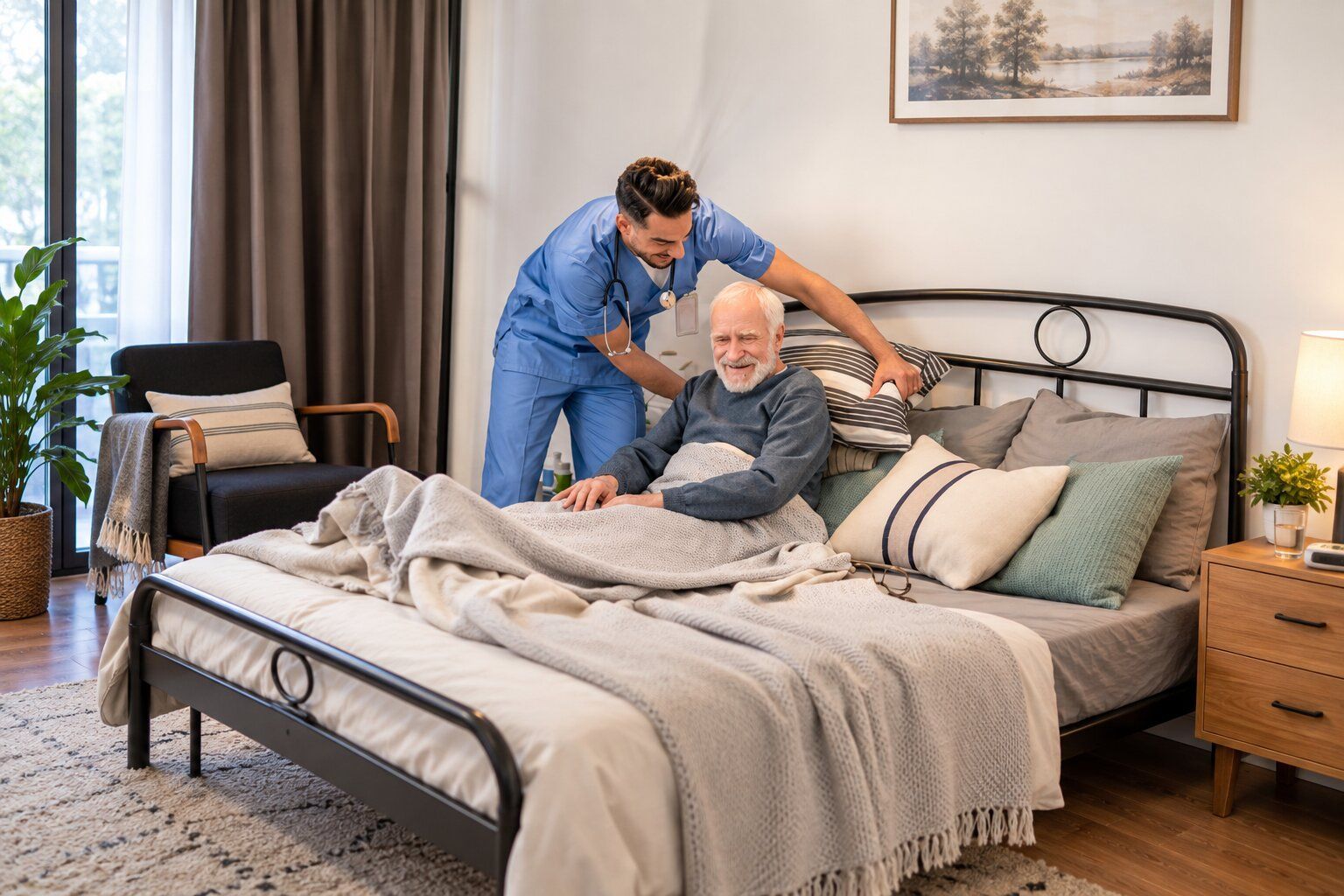
in-home respite care is the least disruptive option because the older adult remains in familiar surroundings. A Home Health Aide comes to the home and follows the established routine while the family caregiver leaves, works, rests or handles other responsibilities.
Overnight respite care can be particularly valuable when nighttime caregiving has become exhausting. If an older adult needs supervision or assistance throughout the night, coverage during those hours can allow the family caregiver to sleep without remaining responsible for every awakening.
Live-in care may be appropriate when a family caregiver needs to be away for several days and the circumstances are suitable for a live-in arrangement. Live-in care should not be confused with 24-hour rotating care. A live-in caregiver requires appropriate sleep and rest periods, while 24-hour rotating care uses caregivers in shifts when continuous awake coverage is required.
Respite can also be provided through adult day programs, where an older adult spends part of the day in a supervised community setting, or through temporary facility-based respite.
For Medicare beneficiaries, two separate forms of respite coverage are particularly important to understand:
Medicare hospice respite and the newer
Medicare GUIDE Model for people living with dementia. They are very different programs with different eligibility rules.
When Do Families Actually Need Respite Care?
There is no single threshold.
For some families, the need becomes obvious after a hospital discharge. A parent who previously needed occasional assistance may return home requiring help with transfers, bathing, meals and supervision. For others, it happens gradually as Alzheimer's disease or another form of dementia progresses.
One of the clearest signs is that caregiving has begun to interfere consistently with the caregiver's own health and daily functioning.
You may notice that you are repeatedly postponing your own medical appointments, having difficulty concentrating at work, withdrawing from friends, sleeping poorly even when you have the opportunity to sleep, or becoming increasingly irritable with the person you are caring for.
The point is not to diagnose "caregiver burnout" from a checklist. It is to recognize that caregiving capacity is finite.
If your parent is safe only because you have stopped doing virtually everything else in your life, additional help is worth considering.
Sometimes the Need for Respite Arrives All at Once
Not every family reaches this decision gradually.
Sometimes there is simply a date on the calendar.
You need surgery and will not be able to drive or lift for several weeks. Your daughter is getting married out of state. A work trip cannot be postponed. You have the flu and suddenly realize there is nobody else available to handle your father's routine.
Or perhaps you simply want to take a vacation.
That counts too.
Respite care does not require a crisis to be legitimate. In fact, arranging help before the situation becomes a crisis usually gives the family more time to find the right caregiver, introduce that person properly and establish a comfortable routine.
Nighttime care deserves particular attention. Repeated waking, wandering or nighttime confusion associated with dementia can make it extraordinarily difficult for a spouse or adult child to get adequate sleep. When this becomes a regular pattern, overnight support may be one of the most practical forms of respite.
What Does In-Home Respite Care Actually Look Like?
Families often hesitate because they understand respite care conceptually without being able to picture what will happen once a caregiver walks through the door.
Good in-home respite should generally fit into the household's existing routine rather than forcing the household into an entirely new one.
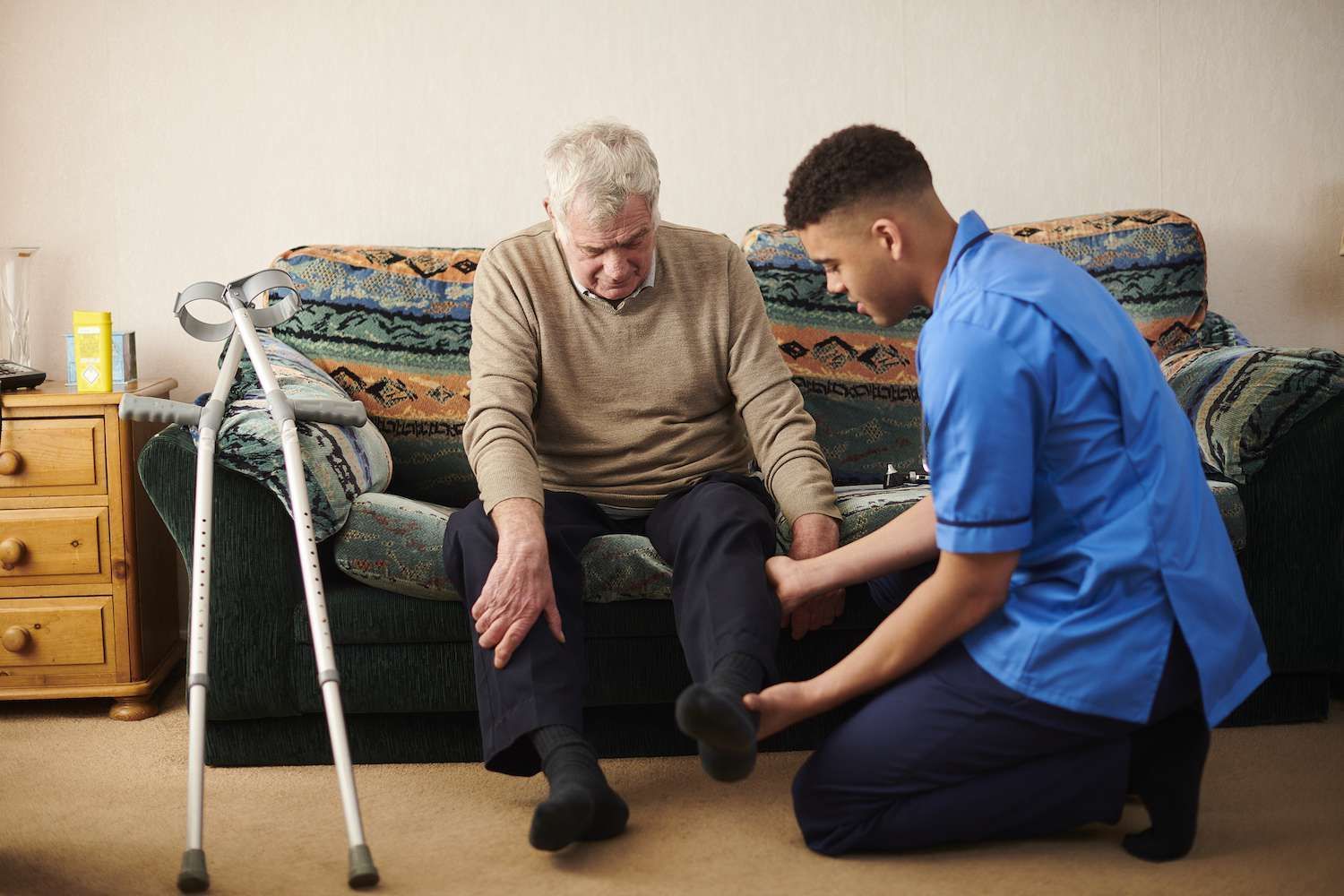
The caregiver may assist with bathing, dressing, grooming and toileting; prepare meals according to the person's established preferences; provide medication reminders; assist with walking and transfers; perform light housekeeping or laundry; provide companionship; and supervise someone who should not safely be left alone.
For a person with dementia, that might mean maintaining the familiar afternoon routine, listening to music, preparing the usual dinner and providing calm supervision while the family caregiver goes out.
For someone recovering after hospitalization or rehabilitation, it might mean assistance getting dressed, preparing lunch, walking safely through the home and getting to a scheduled appointment.
7 Day Home Care provides non-medical home care.
Home Health Aides do not diagnose medical conditions or independently perform skilled nursing functions such as changing clinical treatment plans or adjusting medications. Skilled medical needs remain with the appropriate nurses, physicians and other licensed clinicians.
Why the First Respite Visit Matters
The first visit often feels harder for the family caregiver than the second.
After months or years of being responsible for everything, handing the routine to someone else can feel unnatural. A parent may also resist having an unfamiliar person in the home.
An overlap can make the transition easier. The family caregiver can remain present at the beginning, introduce the caregiver, explain the actual routine and then leave once everyone is comfortable.
Write down the details that seem too ordinary to mention. What time does your mother eat lunch? Which cup does she use? Does your father become anxious if someone rushes him in the morning? Which television program does he watch every afternoon? Which bathroom is easiest to use?
These details are not trivial. They are what turn generic assistance into care that feels familiar.
Respite Care for Alzheimer's Disease and Dementia
Dementia creates a particular need for continuity.
A person with memory impairment may become confused by an unfamiliar caregiver even when that caregiver is competent and kind. For that reason, families often benefit from introducing respite care before they are completely exhausted and, where possible, using a consistent caregiver.
A dementia-experienced Home Health Aide can provide supervision, maintain routines, use calm redirection and help the person move through the day without unnecessary confrontation.
For the family caregiver, this provides something that becomes increasingly difficult to obtain as dementia progresses: time during which someone else is responsible for watching, responding and remaining present.
A recurring afternoon every week may ultimately be more valuable than waiting until the caregiver is desperate enough to need an entire week away.
And for families caring for someone with dementia who has Original Medicare, there is now another option that deserves particular attention.
What Is the Medicare GUIDE Program for Dementia Respite Care?
The
GUIDE Model—Guiding an Improved Dementia Experience—is a Medicare program designed specifically to improve care for people living with dementia while also supporting their unpaid caregivers.
GUIDE began in 2024 and is being tested by the Centers for Medicare & Medicaid Services as an eight-year nationwide model. Participating dementia care programs provide a coordinated package that can include a comprehensive assessment and care plan, care navigation, caregiver education and support, connections with community services, and 24/7 access to a member of the care team or support line.
One of GUIDE's most important features for families is
respite care.
For eligible patients, CMS can reimburse GUIDE participants for respite services up to an annual cap of $2,500 per patient, adjusted for inflation each year. These respite services are intended to temporarily relieve the patient's qualifying unpaid caregiver of caregiving responsibilities.
Unlike the traditional Medicare hospice respite benefit, GUIDE respite does not have to mean sending the person to an inpatient facility.
In-home respite is specifically included in the GUIDE Model. Depending on what the participating dementia care program offers, respite may also be available through an adult day center or a facility.
This is a significant development for families because traditional Medicare historically has not covered ordinary private-duty in-home respite simply because an unpaid caregiver needs a break.
Who Qualifies for the Medicare GUIDE Model?
GUIDE is specifically for people living with dementia, and not every Medicare beneficiary automatically qualifies.
Generally, the person must have a dementia diagnosis confirmed through a participating GUIDE provider, be enrolled in
Original Medicare Parts A and B with Medicare as the primary payer, and meet the model's other eligibility requirements.
People enrolled in Medicare Advantage—including Medicare Advantage Special Needs Plans—or PACE are not eligible for GUIDE under the current CMS eligibility rules. A person who has elected the Medicare hospice benefit is also not eligible for GUIDE while receiving hospice.
The individual generally must live in a private residence or certain approved residential care settings and cannot be a long-term nursing home resident. As of July 2026, people living in memory care units are not eligible for GUIDE.
Importantly, enrollment is not automatic simply because someone has dementia and Original Medicare. The patient must receive GUIDE services through a participating GUIDE dementia care program and consent to alignment with that participant.

Who Can Receive Medicare GUIDE Respite Care?
There is another important distinction: qualifying for the GUIDE Model does not necessarily mean that every enrolled patient automatically receives the respite benefit.
GUIDE uses assessments of the person with dementia and their caregiver to determine care needs, and respite is available to qualifying patients whose circumstances meet the model's requirements.
The respite benefit exists specifically to relieve a qualifying unpaid caregiver—typically a family member or another unpaid person who assists the individual with dementia.
CMS requires GUIDE participants to make
in-home respite care available to eligible patients, either directly or through a partner organization. Participants may also make adult day center and facility-based respite available.
As of July 2026, people living in certain approved residential care communities may be eligible for other GUIDE services, but residents of those communities are not eligible for GUIDE respite services. Families should therefore ask the participating GUIDE provider specifically whether the individual qualifies for the respite component rather than assuming that GUIDE enrollment alone guarantees it.
How Much Does Medicare GUIDE Respite Care Cost the Family?
For eligible GUIDE services, including GUIDE respite,
the participating GUIDE provider cannot charge the aligned Medicare patient cost-sharing.
CMS pays the GUIDE participant for qualifying respite services, subject to the model's annual respite limit. The annual respite cap is $2,500 per eligible patient and is adjusted for inflation each year.
That does not mean Medicare gives a family a $2,500 check or an unrestricted respite allowance. The respite must be arranged through the person's GUIDE dementia care program and provided in accordance with CMS GUIDE requirements.
For New York families, the practical first step is therefore not simply calling Medicare and asking for $2,500 of home care. It is determining whether the person with dementia is eligible for GUIDE and locating a participating GUIDE dementia care program serving the area.
Medicare GUIDE vs. Medicare Hospice Respite: What Is the Difference?
These two Medicare respite benefits should not be confused.
Medicare GUIDE respite is designed for eligible people living with dementia and their qualifying unpaid caregivers. It can include
in-home respite care, as well as adult day or facility-based respite when those options are offered by the GUIDE participant. Eligible GUIDE patients cannot simultaneously have elected the Medicare hospice benefit.
Medicare hospice respite, by contrast, applies to people who have elected Medicare hospice. The hospice benefit can cover short-term inpatient respite care in an approved facility to give the caregiver a break. Medicare permits inpatient hospice respite for up to five consecutive days at a time.
The important takeaway is that the statement "Medicare does not cover respite care" is now too broad.
Traditional Medicare still does not generally function as a payer for ordinary private-duty home care whenever a family wants a break. But there are now important exceptions—particularly GUIDE for qualifying people with dementia and inpatient respite under the Medicare hospice benefit.
Families should determine which, if either, applies to their situation.
Respite Care After a Hospital or Rehabilitation Discharge
Hospital discharge is another common point at which families suddenly discover they need relief.
A senior returning home from North Shore University Hospital in Manhasset, NYU Langone Hospital—Long Island in Mineola, Long Island Jewish Medical Center in New Hyde Park, or another New York hospital may be medically ready for discharge while still requiring considerably more everyday assistance than before the hospitalization.
The first days home can involve new mobility limitations, a higher fall risk, difficulty bathing or dressing, new routines and follow-up appointments.
This is where planning matters.
When possible, arranging the RN assessment and caregiver schedule before discharge allows the family to know who will be present when the senior arrives home rather than trying to find help after the first difficult night.
For families whose need began with a discharge but continues afterward, respite care can also transition naturally into ongoing home care.
Paying for Respite Care in New York
Private-pay home care remains one of the most flexible ways to arrange respite, but it is not the only potential source of support.
For a person living with dementia, the first question should now include whether they may qualify for the
Medicare GUIDE Model. Because GUIDE can include funded in-home respite for qualifying patients and caregivers, families with Original Medicare should investigate this option before assuming that all respite must be paid privately.
New York families should also know about
NY Connects, the state's information and referral system for long-term services and supports. County Offices for the Aging can help families understand programs available locally.
New York's
Expanded In-home Services for the Elderly Program (EISEP) provides certain non-medical services to eligible adults age 60 and older and may include respite services. The
National Family Caregiver Support Program, administered locally through Area Agencies on Aging, is another potential source of caregiver support.
Eligibility, availability, cost-sharing and the number of respite hours vary by program and locality. Public programs therefore should not be assumed to provide the same coverage or scheduling flexibility as privately arranged home care.
Long-term care insurance is another important possibility. Many older adults purchased policies years or decades before needing care, and adult children sometimes discover those policies only after care has already begun. Coverage depends on the individual contract, benefit triggers, elimination periods and covered services.
7 Day Home Care works with long-term care insurance and can help families understand the claims process and applicable benefits.
How Much Respite Care Should a Family Arrange?
The best schedule is not necessarily the largest schedule.
For a family caregiver who is functioning reasonably well but has no dependable time of their own, a recurring block of care may be enough to make a meaningful difference. The value comes partly from predictability: knowing that every Tuesday afternoon belongs to you is different from hoping someone in the family will eventually be available.
Other households need
overnight care because sleep has become the central problem. Others need temporary live-in support while the primary caregiver travels or recovers from surgery. Some families discover during respite that the older adult's needs have progressed to the point where ongoing home care makes sense.
The schedule should reflect the actual problem you are trying to solve.
Why Families Choose a Licensed Home Care Agency for Respite Care
The purpose of respite is to remove responsibility temporarily. That makes reliability particularly important.
If a privately hired caregiver becomes ill on the morning of your medical procedure, the problem immediately returns to you. With an established licensed agency, staffing, credentialing, supervision, payroll and backup coverage are agency responsibilities.
At 7 Day Home Care, caregivers are NYS Certified Home Health Aides employed by the agency, background-checked, insured and supervised by a Registered Nurse. 7 Day Home Care is a New York State Department of Health–licensed Home Care Services Agency (LHCSA), not a caregiver registry or referral platform.
That distinction matters when the entire reason for arranging care is that the family needs to be able to step away.
Local Respite Care Across Nassau County, Queens, Brooklyn, Manhattan and Suffolk County
7 Day Home Care provides private-duty, non-medical home care and respite support throughout
Nassau County,
Queens,
Brooklyn,
Manhattan and Suffolk County, with a Long Island office at
3000 Marcus Avenue, Lake Success, NY 11042 and a Manhattan office at
100 Park Avenue, Suite 1600, New York, NY 10017.
On Long Island's North Shore, we serve families in Great Neck, Manhasset, Roslyn, Old Westbury, New Hyde Park, Floral Park, Glen Cove and surrounding Nassau County communities. In Queens, our service area includes Forest Hills and surrounding neighborhoods, with care also available throughout Brooklyn and Manhattan.
Families can explore 7 Day Home Care's community-specific pages for Home Care in Great Neck, Home Care in Manhasset, Home Care in Roslyn, Home Care in Old Westbury, Home Care in New Hyde Park, Home Care in Floral Park, Home Care in Glen Cove, and Home Care in Forest Hills for information about local hospitals, senior communities and care options.
Whether respite is needed following discharge from North Shore University Hospital, NYU Langone Hospital—Long Island, Long Island Jewish Medical Center or another area hospital, the objective is the same: put reliable help in place before the family caregiver reaches the point where there is no reserve left.
How 7 Day Home Care Handles Respite Care
There is no single "respite package" because families do not all need relief in the same way.
For one household, the right arrangement may be a regular daytime shift that gives an adult daughter time for work, appointments and her own family. For another, it may be overnight care because dementia-related nighttime waking has made uninterrupted sleep impossible. Another family may need live-in support while the primary caregiver travels, while a senior requiring continuous awake assistance may need 24-hour rotating caregivers instead.
The care plan begins with the client's actual needs and the household's existing routine.
7 Day Home Care provides hourly care with applicable minimum shifts,
overnight care, live-in care and 24-hour rotating care. Care can often begin within 24–48 hours, depending on the client's needs, location, caregiver matching and schedule.
For planned travel, surgery or other known dates, earlier notice is always preferable because it allows more time for appropriate caregiver matching and a smoother introduction.
A Break Works Only If You Actually Take It
There is one surprisingly difficult part of respite care: leaving.
A family caregiver may arrange several hours of help and then spend those hours sitting in another room listening for problems.
That defeats much of the purpose.
Use the time for the appointment you have postponed, lunch with someone you have not seen, exercise, errands without rushing, or simply an afternoon during which nobody needs anything from you.
Respite care is not valuable because a few hours away solves every problem. It is valuable because caregiving becomes more sustainable when the person providing it has regular opportunities to remain a person outside that role.
Frequently Asked Questions About Respite Care
What is respite care in simple terms?
Respite care is temporary substitute care that gives a family caregiver a break. A trained caregiver temporarily handles the older adult's established care routine while the family caregiver rests, works, attends appointments, travels or handles other responsibilities.
Does Medicare pay for respite care?
Medicare does not generally cover ordinary private-duty in-home respite simply because a caregiver needs a break. However, there are important exceptions. Eligible people with dementia participating in the
Medicare GUIDE Model may qualify for respite services, including in-home respite. The Medicare hospice benefit also provides short-term inpatient respite for eligible hospice patients.
What is the Medicare GUIDE respite benefit?
GUIDE is a Medicare dementia-care model that provides coordinated care and caregiver support through participating dementia care programs. For qualifying patients and unpaid caregivers, GUIDE can fund respite services up to an annual cap of $2,500 per eligible patient, adjusted for inflation. In-home respite must be made available by GUIDE participants, while adult day and facility-based respite may also be offered.
Does everyone with dementia on Medicare qualify for GUIDE?
No. GUIDE has specific eligibility requirements. Among other requirements, the person must have dementia, generally be enrolled in Original Medicare Parts A and B rather than Medicare Advantage, meet residency requirements, not have elected Medicare hospice and receive services through a participating GUIDE dementia care program.
Does Medicare give families $2,500 to hire any caregiver they choose?
No. The GUIDE respite benefit is not a cash payment to the family. CMS reimburses the participating GUIDE program for qualifying respite services arranged under the model, subject to the annual cap and program requirements.
What is the difference between Medicare GUIDE respite and hospice respite?
GUIDE respite is for qualifying people with dementia and can include in-home respite. Medicare hospice respite is for people who have elected the hospice benefit and provides short-term inpatient respite in an approved facility, generally for up to five consecutive days at a time.
What is the difference between respite care and regular home care?
The services may be very similar. The principal difference is purpose and scheduling. Regular home care addresses the older adult's ongoing needs, while respite care is arranged specifically to provide temporary relief to a family caregiver. Respite may later become ongoing home care if the person's needs increase.
How long can respite care last?
Respite may be a recurring daytime shift, overnight coverage or care lasting several days or longer. The appropriate arrangement depends on the care recipient's needs and the amount of relief the family caregiver requires.
Is respite care only for people with dementia?
No. Dementia is a common reason for respite because supervision can become intensive, but families also use respite after hospitalization or surgery, with mobility limitations, during chronic illness, and whenever an older adult's needs exceed what one family caregiver can sustainably provide alone. The Medicare GUIDE benefit, however, is specifically a dementia-care program.
Can respite care happen overnight?
Yes. Overnight care can be particularly helpful when an older adult needs nighttime supervision or assistance and the family caregiver is losing sleep. Families should distinguish overnight or live-in arrangements from 24-hour rotating care when continuous awake supervision is required.
Does long-term care insurance cover respite or home care?
Many long-term care insurance policies provide benefits for qualifying in-home care, but coverage varies significantly by policy. Benefit triggers, elimination periods, daily or monthly maximums and definitions of covered providers should all be verified before care begins.
What happens during the first respite care visit?
The first visit can include an overlap with the family caregiver so the Home Health Aide can learn the established routine, preferences, mobility needs and household details. A gradual introduction can be particularly helpful for a person with dementia or someone who is hesitant about accepting outside help.
How quickly can respite care start in New York?
7 Day Home Care can often begin care within 24–48 hours, depending on the client's location, care needs, schedule and caregiver matching. Planned overnight, live-in or extended respite is best arranged as early as possible.
Will we have the same caregiver each time?
Continuity is especially valuable in respite and dementia care, and consistent caregiver assignment is prioritized where scheduling permits. Familiarity can make accepting care easier for the older adult and make it easier for the family caregiver to leave with confidence.
Taking a Break Can Be Part of Caring for Someone Well
Caregiving is usually described in terms of what one person does for another. In reality, long-term caregiving affects an entire household.
Months or years of meals, appointments, nighttime interruptions, bathing assistance, supervision and constant availability accumulate. The person providing that care may stop counting the hours because caregiving has simply become the structure of everyday life.
Respite care creates room inside that structure.
It does not have to signal a move to assisted living or a nursing home. It does not have to mean that a family can no longer manage. Sometimes it means exactly the opposite: the family has recognized what is necessary to continue caring for someone safely at home.
And for families caring for someone with dementia, the Medicare GUIDE Model makes it particularly important to investigate available benefits before assuming respite care must be entirely private pay.
If you are caring for an aging parent, spouse or other loved one in Nassau County, Queens, Brooklyn, Manhattan or Suffolk County and are wondering whether it is time for respite care, you do not have to make that decision before calling.
Call 7 Day Home Care at (516) 408-0034 for a free consultation. We are available 24 hours a day, 7 days a week.
Tell us what the day currently looks like, where the difficult hours are and what would actually give you relief. From there, we can help you determine whether hourly respite, overnight care, live-in support, 24-hour care or simply more planning makes sense.
7 Day Home Care — Long Island Office
3000 Marcus Avenue
Lake Success, NY 11042
By appointment · Serving Nassau County, Suffolk County, Queens and Long Island
7 Day Home Care — Manhattan Office
100 Park Avenue, Suite 1600
New York, NY 10017
By appointment · Serving Manhattan, Brooklyn and New York City
Main:
(516) 408-0034
Available 24 hours a day · 7 days a week
7 Day Home Care is a New York State Department of Health–licensed Home Care Services Agency providing private-duty, non-medical home care. This article is for general informational purposes and is not medical advice. Medicare GUIDE eligibility, respite eligibility, government program rules and insurance benefits can change. Families should confirm current eligibility and coverage directly with a participating GUIDE provider, Medicare, the applicable government program or their insurer.