Help at Home After Hip or Knee Replacement: A Practical Recovery Guide
Help at Home After Hip or Knee Replacement: A Practical Recovery Guide
A hip or knee replacement recovery continues long after the patient leaves the hospital. During the first days and weeks at home, everyday tasks — getting to the bathroom, bathing, preparing meals, following the prescribed medication schedule and getting to physical therapy — can become surprisingly difficult.
For someone recovering alone, or for a family that cannot be present throughout the day, short-term home care can provide non-medical assistance during the period when help is needed most.
This guide explains what families should consider before discharge, how hip and knee recoveries differ, where a non-medical caregiver can help and how support can be reduced as independence returns.
QUICK ANSWER
What help may be needed at home after a hip or knee replacement?
After joint replacement surgery, a person may temporarily need help with
walking and transfers, bathing and dressing, meal preparation, medication reminders, household tasks, transportation to follow-up appointments and physical therapy, and general safety supervision.
The amount and duration of help varies considerably. The surgeon's discharge instructions and physical therapist's recommendations should determine what the patient can safely do and when.
Important: This article provides general information, not medical advice. Recovery instructions differ by procedure, surgical approach and individual health. Always follow the specific instructions provided by the surgeon, physical therapist and other treating clinicians.
Why the First Days at Home Require Planning
Surgery May Be Over. Recovery Isn't.
A great deal of preparation goes into joint replacement surgery: choosing a surgeon, completing preoperative testing, arranging insurance, planning time away from work and preparing for the procedure itself.
Then comes the part that happens at home.
Modern joint-replacement programs often encourage patients to begin standing and walking soon after surgery, and some appropriate patients may return home the same day. Others remain in the hospital longer depending on their procedure and condition.
The person returning home, however, is not necessarily returning to normal independence.
Pain, swelling, fatigue, prescribed medications, an unfamiliar walker or cane and temporary limitations on movement can make ordinary activities more complicated than expected.
The practical question families should ask before surgery isn't simply:
“When will you be discharged?”
It is:
“What will everyday life look like once you're home?”
Hip Replacement vs. Knee Replacement Recovery
The Support Needed at Home Can Be Different
Hip and knee replacements are often discussed together, but recovery isn't identical.
After Knee Replacement
Physical therapy and progressive movement are important parts of knee-replacement rehabilitation.
Early rehabilitation commonly focuses on safely walking, transfers, strength and gradually restoring range of motion according to the physical therapist's program.
At home, the challenge is often practical: getting safely from bed to bathroom, managing meals and household tasks while using an assistive device, and consistently following the rehabilitation plan prescribed by the clinical team.
After Hip Replacement
Hip-replacement patients also begin mobility and rehabilitation early, but specific movement precautions can vary substantially.
Depending on the procedure and surgical approach, a surgeon or physical therapist may provide instructions about certain movements, positions or activities during recovery.
Those instructions — not a generic checklist found online — should determine what the patient does at home.
The Practical Difference
For either procedure, the caregiver's role is not to determine what exercises or movements are medically appropriate.
The caregiver's role is to help the client follow the plan already established by the surgeon and rehabilitation team while making everyday life at home safer and more manageable.
Joint Replacement Recovery at Home: What to Expect
Recovery after joint replacement is different for everyone. Age, overall health, type of surgery, home environment, and the surgeon’s rehabilitation plan can all affect recovery time.
Instead of following a fixed timeline, it can be helpful to think about recovery based on what the person can safely do at each stage.
1. Arrival Home
- Fatigue and pain are common.
- Getting used to walkers or other assistive devices.
- Help may be needed with transportation, entering the home safely, meals, and getting settled.
2. First Several Days
- Mobility may be limited.
- Frequent rest and new daily routines are common.
- Help may be needed with bathing, dressing, transfers, meals, reminders, and household tasks.
3. Early Rehabilitation
- Walking and prescribed exercises gradually increase.
- Support may be useful with daily activities, meals, transportation, and household tasks.
4. Outpatient Therapy
- Mobility generally improves, but some limitations may continue.
- Help may be useful for rides to therapy and appointments, errands, and heavier household tasks.
5. Increasing Independence
- More daily activities can be performed independently.
- Caregiver or home care hours can gradually be reduced as appropriate.
6. Later Recovery
- Strength, mobility, and endurance continue to improve.
- Many people eventually need little or no non-medical assistance.
The goal of short-term home care is not to create dependence. It is to provide the right amount of support while helping the individual safely regain independence.

The Day You Come Home
Plan the Transition Before Discharge
The trip home deserves more planning than many families give it.
Before discharge, make sure you understand:
- How the patient will get home
- Whether stairs are required to enter the home
- Which assistive device should be used
- How the patient should transfer in and out of a car
- Where the patient will sleep
- Which bathroom will be used
- What medications have been prescribed
- What the surgeon's restrictions are
- When physical therapy begins
- When the first follow-up appointment occurs
- Who will be present once the patient arrives home
If professional home care is being arranged, planning before surgery or discharge allows the caregiver schedule to begin when it is actually needed.
When arranged in advance, a caregiver may also be able to meet the client at the hospital or rehabilitation facility and accompany the client home.
The First Several Days
Ordinary Tasks Can Become the Hardest Ones
Families sometimes picture post-surgical assistance primarily as help with walking.
In practice, some of the most difficult moments are much more ordinary.
- Getting out of bed.
- Reaching the bathroom at night.
- Getting dressed.
- Preparing breakfast while using a walker.
- Carrying a glass of water when both hands are occupied by an assistive device.
- Getting into a shower.
- Picking something up from the floor.
These are precisely the situations where temporary support can be valuable.
A non-medical caregiver can assist with permitted activities while following the mobility and safety instructions established by the client's clinical team.
Prepare the Home Before Surgery
A Joint Replacement Home-Safety Checklist
Preparing the home while the patient is still independently mobile is considerably easier than improvising after discharge.
Clear Walking Paths
Remove loose rugs, cords, clutter and unnecessary furniture from commonly used routes.
Make sure there is enough room to comfortably use the walker, cane or other prescribed assistive device.
Plan for Stairs
If the bedroom or primary bathroom requires stairs, discuss the setup with the physical therapist before discharge.
The therapist can advise the patient on how stairs should be managed and whether an alternative temporary arrangement is appropriate.
Prepare the Bathroom
Depending on the patient's needs and clinical recommendations, useful equipment may include grab bars, a shower chair or an elevated toilet seat.
Follow the occupational therapist's, physical therapist's or surgeon's recommendations regarding equipment.
Choose an Appropriate Chair
Identify a stable chair that is easy to enter and exit.
Avoid assuming that the client's favorite couch or recliner will necessarily be appropriate immediately after surgery.
Improve Nighttime Lighting
Make sure the route between the bed and bathroom is well lit and free of obstacles.
Move Frequently Used Items
Place everyday items within easy reach so unnecessary bending, stretching and carrying can be minimized.
Prepare Food
Stock easy-to-prepare meals and foods that fit the nutritional recommendations provided by the client's medical team.
Arrange Transportation
Plan transportation for the trip home, follow-up appointments and outpatient physical therapy before the surgery occurs.
The best time to discover a problem with the home setup is before the patient comes home.
Seven Ways a Non-Medical Caregiver Can Help After Joint Replacement
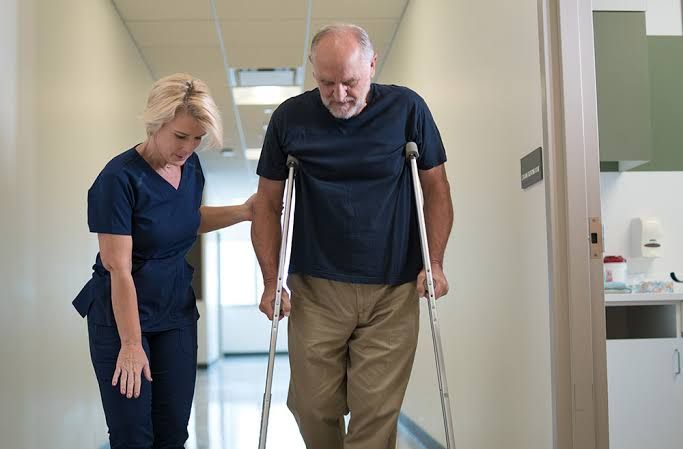
1. Assistance With Transfers and Mobility
A caregiver can provide permitted assistance with getting in and out of bed or a chair, walking through the home and other everyday movement according to the client's plan of care.
Caregivers do not determine weight-bearing status or mobility restrictions. Those instructions come from the surgeon and rehabilitation team.
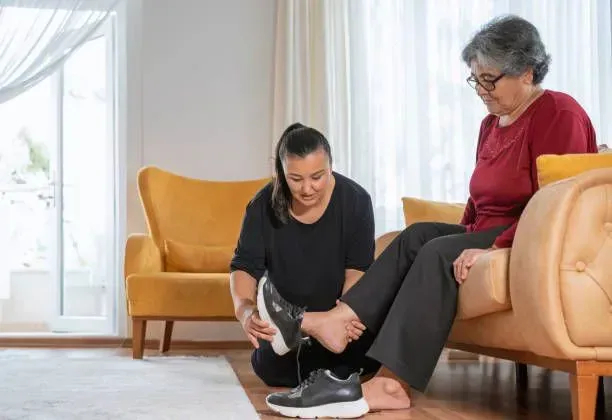
2. Bathing, Dressing and Personal Care
Temporary movement limitations can make bathing, dressing, grooming and toileting difficult even for someone who was completely independent before surgery.
A trained Home Health Aide can assist with these activities according to the client's plan of care.
3. Meal Preparation and Hydration
Standing in a kitchen can be difficult when someone is tired, uncomfortable or using an assistive device.
A caregiver can prepare meals, bring food and drinks to the client and help keep the kitchen organized while mobility is limited.
4. Medication Reminders
Post-surgical medication regimens may involve several medications and specific instructions.
A non-medical caregiver can provide medication reminders according to the established plan, but does not prescribe medications, change dosages or independently make clinical decisions.
Questions about medication should be directed to the surgeon, pharmacist or other appropriate healthcare professional.
5. Transportation
Once outpatient therapy begins, transportation can become one of the most important logistical needs.
A caregiver may assist with transportation to physical therapy, surgical follow-ups and other appointments, depending on the care arrangement.
6. Light Housekeeping and Errands
Laundry, changing linens, grocery shopping and ordinary household tasks do not stop because someone had surgery.
Temporarily transferring those responsibilities to someone else allows the client to focus on the activities the clinical team has prioritized for recovery.
7. Observation and Communication
A caregiver who sees the client regularly can become familiar with the client's normal routine and can report observed changes or concerns to the appropriate supervisor or family member.
The caregiver does not diagnose a complication.
The value is having another attentive person present who knows when something should be reported.
Home Care and Physical Therapy Have Different Jobs
They Can Work Alongside Each Other
A physical therapist provides skilled rehabilitation: evaluating movement, prescribing exercises, progressing the rehabilitation program and determining how activities should be performed.
A non-medical caregiver has a different role.
A caregiver may:
- Remind the client about exercises prescribed by the physical therapist
- Help prepare a safe area for the prescribed program
- Encourage the client to follow the established routine
- Provide permitted assistance with everyday activities
- Arrange or provide transportation to therapy
- Report relevant observations according to the care plan
A caregiver should not design, change or progress the rehabilitation program.
That remains the responsibility of the physical therapist and treating medical team.
How Much Home Care Is Needed After Joint Replacement?
Start With the Person, Not a Standard Schedule
There is no universal caregiver schedule after hip or knee replacement.
Someone who lives with an able-bodied spouse in a one-level apartment may need very little outside help.
Someone who lives alone in a multi-story home may need considerably more.
When determining an appropriate starting schedule, consider:
- Whether the person lives alone
- Mobility immediately after discharge
- Stairs and bathroom accessibility
- Overnight bathroom needs
- Cognitive status
- Other medical conditions
- Family availability
- Transportation needs
- Surgeon and therapist instructions
- How independently the client can safely perform daily activities
Some families choose more assistance immediately after discharge and reduce the schedule as the client becomes safer and more independent.
That is often one of the advantages of short-term private-duty home care: support can be built around the recovery rather than assuming the same schedule is necessary throughout it.

When Should Home Care Be Arranged?
Ideally, Before Surgery or Discharge
Families frequently begin looking for help only after discovering that recovery at home is more difficult than expected.
Planning earlier has several advantages.
It allows time to understand the home layout, discuss the expected discharge plan, determine when family members will and will not be available, identify transportation needs and select a caregiver suited to the client.
It also allows support to begin at the transition home rather than several days into the recovery.
If the surgery date is already on the calendar, the recovery plan can be too.
Warning Signs After Joint Replacement
Know When to Contact the Medical Team
The surgeon should provide specific instructions explaining which symptoms require a call to the office and which require emergency medical attention.
Those instructions should always take priority.
Because surgery and periods of reduced mobility can increase the risk of blood clots, patients and families should also know the signs their medical team tells them to watch for.
Seek emergency medical attention for symptoms such as difficulty breathing, chest pain, coughing up blood, fainting or other symptoms your medical team has identified as an emergency.
Contact the appropriate healthcare professional promptly for concerns such as new or worsening leg swelling or tenderness, increasing wound redness or drainage, fever, worsening pain or other changes identified in the discharge instructions.
A non-medical caregiver should not diagnose these symptoms.
The caregiver's role is to recognize a change, follow the established emergency or reporting procedure and get the appropriate person involved.
Does Medicare Pay for Home Care After Joint Replacement?
Medicare Coverage Depends on the Type of Care
Medicare may cover eligible skilled home health services, including intermittent skilled nursing or physical therapy, when Medicare's requirements are met.
Medicare's coverage of home health aide services is more limited. Home health aide services are generally covered only when the patient also qualifies for covered skilled home health care and the other Medicare requirements are satisfied.
Private-duty, non-medical assistance needed primarily for everyday activities or extended supervision is different and is commonly paid privately or, when eligible, through long-term care insurance.
Because coverage depends on the individual's circumstances, families should confirm benefits directly with Medicare, their insurer and the providers involved.
[ LEARN ABOUT PAYING FOR HOME CARE ]
Planning Post-Surgical Home Care in New York
How 7 Day Home Care Approaches Short-Term Recovery Support
At 7 Day Home Care, post-surgical planning begins with the individual rather than a predetermined schedule.
Before care begins, a Registered Nurse assesses the client's needs and develops the non-medical plan of care.
For a joint-replacement client, that assessment can take into account the client's mobility, home environment, surgeon's restrictions, daily routine and the availability of family support.
We then work to match the client with a caregiver suited to those needs.
Depending on the plan of care, a Home Health Aide may assist with personal care, mobility and transfers, meal preparation, medication reminders, light housekeeping, errands, transportation and other permitted activities of daily living.
As the client's independence returns, the care schedule can be reassessed rather than continuing more assistance than is needed.
The objective of post-surgical home care is ultimately independence.
Joint Replacement Home Care in Long Island & New York City
7 Day Home Care provides private-duty, non-medical home care to clients recovering at home throughout:
Nassau County · Suffolk County · Manhattan · Queens · Brooklyn
Our offices are located in Lake Success, Long Island, and Manhattan.
Families can arrange short-term support before an upcoming hip or knee replacement or while discharge planning is underway.
Frequently Asked Questions
How long does recovery take after hip or knee replacement?
Recovery varies by procedure and individual. Many people make substantial functional progress during the first several weeks, while strength, endurance and other aspects of recovery can continue improving for months. Knee and hip recovery also differ. Your surgeon and physical therapist are the best sources for your individual timeline.
How long will I need help at home after joint replacement?
There is no standard period. Some people need only brief assistance, while others benefit from support for several weeks. Living alone, stairs, mobility, other health conditions and family availability can all affect how much help is appropriate.
Should someone stay with me after joint replacement surgery?
Follow the discharge team's recommendation. A person returning home may initially need assistance with transportation, transfers, personal care, meals and other everyday activities. Someone who lives alone or has significant mobility limitations may require more support than someone with an available family caregiver.
Can a home caregiver help with physical therapy exercises?
A non-medical caregiver can remind and encourage a client to follow the exercise program prescribed by the physical therapist and help prepare a safe environment. The caregiver does not design, modify or progress the rehabilitation program.
Can a caregiver remind me to take medication?
Yes. A non-medical caregiver may provide medication reminders according to the established plan of care. Medication prescribing, dosage changes and other clinical decisions remain with the appropriate healthcare professional.
Can a caregiver take me to physical therapy?
Depending on the care arrangement, a caregiver may assist with transportation to outpatient physical therapy and follow-up appointments.
Does Medicare cover home care after joint replacement?
Medicare may cover eligible skilled home health services when its requirements are met. Coverage for home health aide services is limited and generally requires the patient also to be receiving qualifying skilled home health care. Extended private-duty non-medical assistance is generally different from Medicare-covered skilled home health.
Can home care be temporary?
Yes. Post-surgical home care can be arranged for a short period and reduced or ended as the client regains independence.
Should I arrange home care before surgery?
When possible, planning before surgery or discharge can make the transition home easier. It provides time to assess the expected needs, home environment, family availability, transportation and caregiver schedule before support is actually required.
Your Surgery Is Scheduled. Plan the Recovery at Home, Too.
The surgeon and rehabilitation team determine the medical recovery plan.
The family's job is to make sure everyday life at home can support it.
Before surgery, think through the bedroom, bathroom, stairs, meals, transportation, family availability and the hours when the person will otherwise be alone.
If additional support is needed, arranging it before discharge can make the transition home considerably easier.
7 Day Home Care provides short-term, private-duty home care throughout Nassau County, Suffolk County, Manhattan, Queens and Brooklyn.
Call
(516) 408-0034
Available 24 hours a day, 7 days a week
[ REQUEST A FREE HOME CARE CONSULTATION ]
7 Day Home Care is a New York State Department of Health–licensed Home Care Services Agency providing private-duty, non-medical home care. This article is for general informational purposes and is not medical advice. Recovery timelines, precautions and restrictions vary by procedure, surgical approach and individual circumstances. Always follow the instructions provided by your surgeon, physical therapist and other treating healthcare professionals.