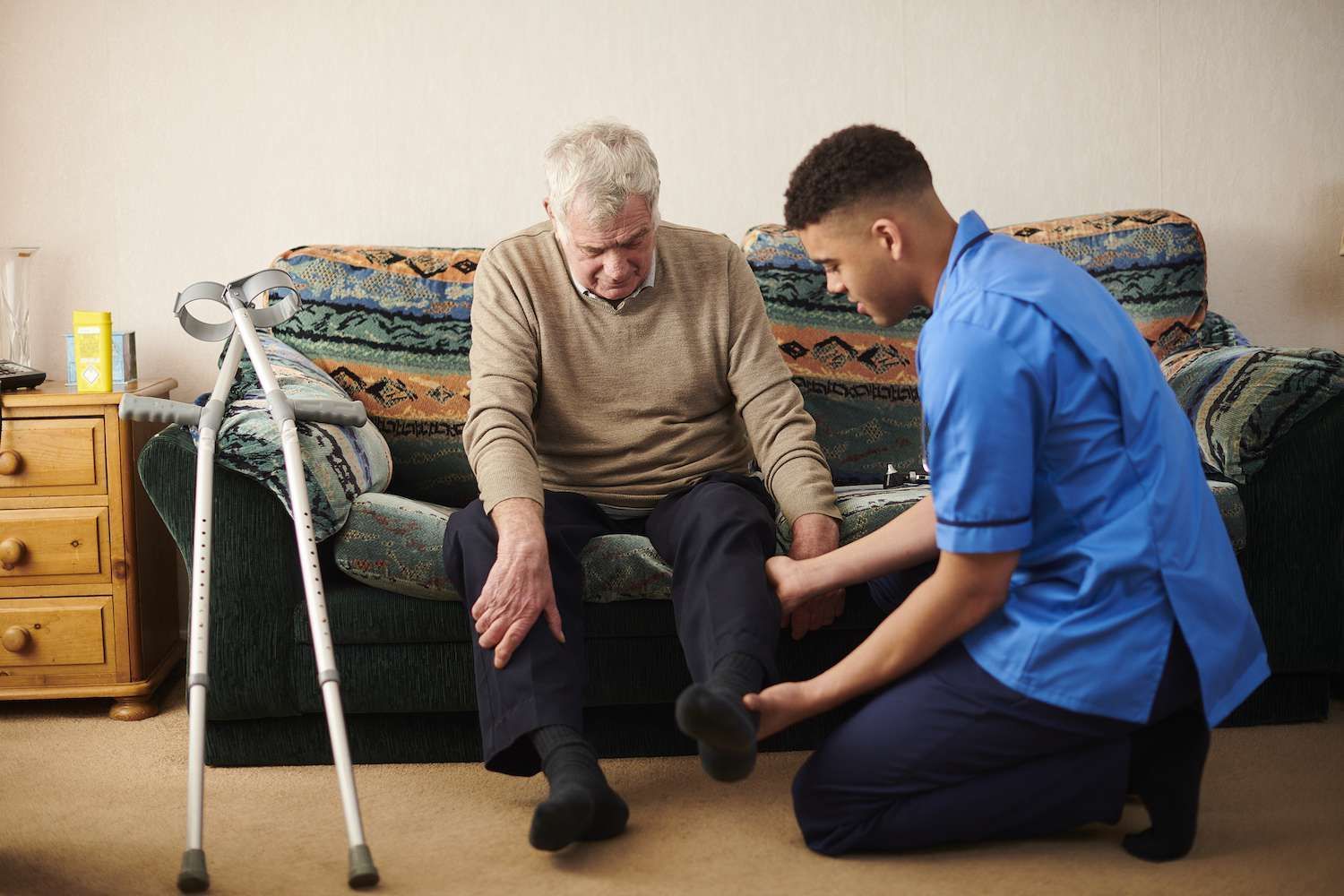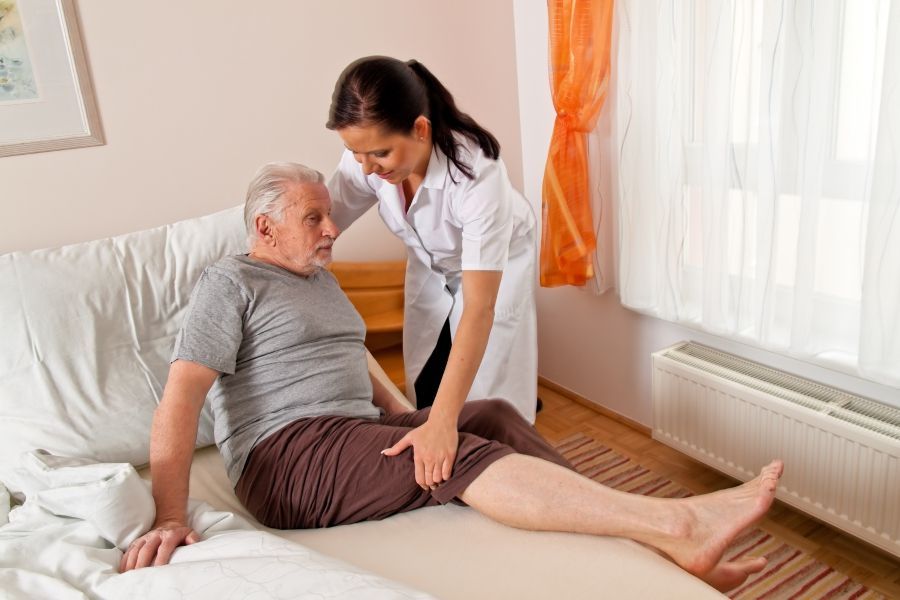
Recovering at Home After Knee or Hip Replacement: A Week-by-Week Guide
Recovering at Home After Knee or Hip Replacement: A Week-by-Week Guide

Coming home after knee or hip replacement can be a relief — but it can also be the point when families realize how much day-to-day help recovery may require.
A person who could move independently before surgery may temporarily need assistance getting out of bed, using the bathroom, bathing, dressing, preparing meals and reaching follow-up appointments. Pain, fatigue, swelling and medication side effects can make even a familiar home feel difficult to navigate.
The first six weeks after joint replacement usually involve pain management, progressive walking, prescribed rehabilitation, fall prevention and gradually increasing independence. Recovery varies considerably, so the surgeon's discharge instructions should always take priority over a general timeline.
This guide explains what families may encounter after a knee or hip replacement and how to prepare for recovery at home in New York City or Long Island.
Medical note: This article provides general educational information and does not replace individualized medical advice. The patient's surgeon, physical therapist and other treating clinicians should determine activity restrictions, equipment needs and the appropriate level of supervision.
What should families expect during the first six weeks?
Before discharge
Recovery period: Before discharge
What may happen: Home preparation, equipment planning and review of restrictions
Support that may be useful: Clear walking paths, appropriate bathroom equipment, medication plan and transportation home
Days 1–7
Recovery period: Days 1–7
What may happen: Pain, swelling, fatigue, limited mobility and frequent rest
Support that may be useful: Help with personal care, meals, transfers, household tasks and nighttime safety
Weeks 2–3
Recovery period: Weeks 2–3
What may happen: Gradual improvement with continued fatigue and therapy
Support that may be useful: Appointment escorts, meal preparation, safe walking support and household assistance
Weeks 4–6
Recovery period: Weeks 4–6
What may happen: Greater independence, but continued restrictions or use of an assistive device
Support that may be useful: Help during higher-risk activities and reinforcement of the prescribed recovery routine
After six weeks
Recovery period: After six weeks
What may happen: Continued strengthening and increasing activity
Support that may be useful: Support based on mobility, home layout and the surgical team's recommendations
This is a general pattern — not a promise. Some patients progress faster, while others need assistance for considerably longer.
Before surgery: How should the home be prepared?
Ideally, home preparation should begin before the day of surgery.
The hospital or surgical team may recommend an occupational therapy evaluation, specific equipment or changes based on the patient's home and procedure. A person recovering in a one-level Nassau County home may face different challenges from someone returning to a Manhattan apartment or Brooklyn walk-up.
A pre-surgery home-safety checklist:
- Create a clear route through the home. Remove loose throw rugs, electrical cords, low furniture and other tripping hazards from frequently used paths.
- Improve nighttime lighting. Place working lights or night-lights between the bed and bathroom.
- Plan a same-floor setup when possible. A bed or appropriate sleeping space, bathroom and primary sitting area on one level may reduce unnecessary stair use.
- Ask which bathroom equipment is appropriate. Depending on the patient's height, operation and mobility, the care team may recommend grab bars, a shower chair, a raised toilet seat or a bedside commode. These items are not automatically appropriate for every patient.
- Use stable seating. Chairs with arms and a firm seat may be easier to use than low, soft furniture.
- Keep essential items within easy reach. Place the phone, water, medications, charger and other necessities where the patient can reach them without bending, stretching or walking unnecessarily.
- Plan meals and household support. Arrange groceries, easy-to-prepare meals, laundry assistance, pet care and trash removal before surgery.
- Confirm how the patient will get home and attend follow-up appointments. A patient may be restricted from driving for a period determined by the surgeon.
MedlinePlus recommends removing loose wires and throw rugs, fixing uneven flooring, using good lighting with night-lights, and setting up a bedroom, bathroom or commode on the same floor before returning home after knee or hip surgery.
Days 1–7: What is the first week at home like?
The first week is often the most assistance-intensive period.
The patient may experience:
- Pain and swelling
- Significant fatigue
- Interrupted sleep
- Reduced appetite
- Constipation, particularly when taking opioid pain medication
- Difficulty getting in and out of bed or a chair
- A need for help with bathing, dressing or toileting
- Use of a walker, crutches or another prescribed assistive device
- A prescribed exercise or physical therapy program
Physical therapy and walking commonly begin soon after surgery, but the timing and intensity depend on the operation and care plan.
Can someone be left alone after joint replacement?
There is no universal rule. Whether a person can safely remain alone depends on the surgeon's instructions, mobility, mental clarity, medication effects, fall risk, bathroom access, home layout and ability to summon help.
Before discharge, families should ask:
- Does the patient need continuous supervision on the first night?
- Can the patient safely get out of bed and use the bathroom?
- Can the patient manage stairs?
- What level of weight-bearing is permitted?
- What symptoms require a call to the surgeon?
- Who should be contacted after hours?
- What equipment must be available before arrival home?
A person who is confused, unsteady, unable to transfer safely or unable to reach the bathroom should not be left alone until the treating team says it is appropriate.
Weeks 2–3: Why can fatigue continue even when walking improves?
Visible mobility often improves before endurance returns. A patient may begin walking farther, getting out of a chair more easily or needing less physical assistance, yet still become exhausted after therapy, bathing or an appointment. This does not necessarily mean recovery is going poorly.
During weeks two and three, families may still need to help with:
- Preparing meals and encouraging adequate hydration
- Bathing and dressing
- Laundry and light housekeeping
- Obtaining prescriptions and groceries
- Escorting the patient to physical therapy or medical appointments
- Keeping the walking route clear
- Following the surgeon's and therapist's instructions
- Observing and reporting meaningful changes to the appropriate clinician or home-care supervisor
For a patient in Forest Hills whose surgeon is in Manhattan — or someone in Great Neck traveling to an orthopedic practice elsewhere on Long Island — an appointment can require several hours of
transportation, waiting and mobility assistance. Planning that support in advance can make adherence to follow-up care easier. [Request a Free Consultation ]
Weeks 4–6: Is the patient fully recovered?
Usually not. Many patients become more independent during this period, but full recovery often takes longer than six weeks. Some may still use a cane or walker, experience swelling or stiffness, attend physical therapy and have restrictions on driving, stairs, bending or other activities.
The patient may feel confident before strength, balance and reaction time have fully returned. This is a reason to continue using prescribed assistive devices and to avoid improvising activities that the care team has not approved.
Families should not assume that a six-week appointment automatically means all restrictions have ended. The surgeon should determine when the patient may:
- Drive
- Use stairs independently
- Stop using an assistive device
- Resume exercise
- Return to work
- Bathe without assistance
- Sleep in a particular position
- Travel
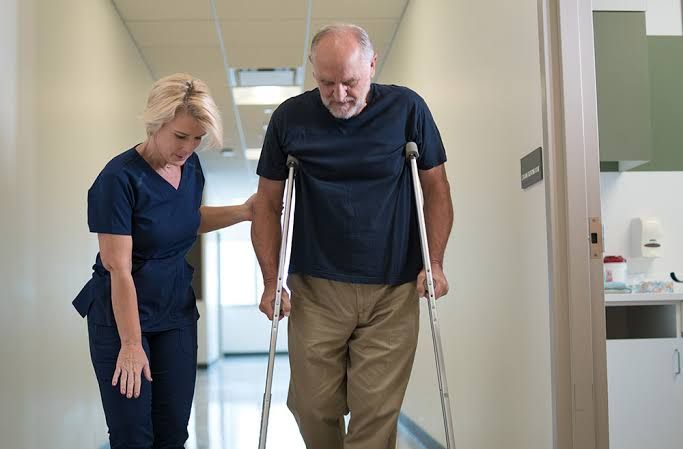
How is knee replacement recovery different from hip replacement recovery?
Both procedures may temporarily affect walking, transfers, personal care and the ability to live independently, but the specific challenges differ.
Knee replacement recovery often involves:
- Pain and swelling around the knee
- Stiffness
- Exercises intended to restore strength and range of motion
- Regular walking and rehabilitation
- Temporary use of a walker, crutches or cane
Patients should perform only the exercises prescribed by their physical therapist or surgical team. MedlinePlus notes that knee-strengthening exercises, keeping the knee straight during rest, and avoiding prolonged sitting in one position are important parts of recovery.
Hip replacement recovery: Some hip-replacement patients receive movement precautions intended to reduce the risk of dislocation. Those precautions vary according to the surgical approach, surgeon and patient. A patient should not rely on generic internet instructions for bending, crossing the legs, sleeping positions or chair height — the surgical team should provide the applicable restrictions in writing.
Which recovery is harder: knee or hip replacement?
Neither operation is universally harder. Some people describe knee rehabilitation as more painful or demanding because restoring movement can be challenging. Some hip-replacement patients have significant mobility restrictions or other complications. Individual health, surgical technique, preoperative function and support at home can matter more than the name of the operation.
How can families reduce fall risk after joint replacement?
Fall prevention should be part of the discharge plan. Helpful measures may include:
- Removing rugs, cords and clutter
- Using the prescribed walker, cane or crutches
- Wearing secure, nonslip footwear
- Keeping frequently used objects within reach
- Using adequate daytime and nighttime lighting
- Avoiding wet bathroom floors
- Installing only properly secured safety equipment
- Standing up slowly when dizziness is possible
- Keeping a phone or alert device accessible
- Avoiding stairs unless the care team has approved them
- Arranging assistance during bathing and other higher-risk activities
Falls are a leading cause of periprosthetic fracture — a break in the bone near the replacement joint. AAOS OrthoInfo notes that these fractures are rare but serious, are usually caused by a fall or high-energy injury, and almost always require surgery. Any fall should be reported to the surgical team according to their instructions, even if the patient feels able to keep walking.
What can a home health aide do after knee or hip replacement?
A home health aide or personal care aide supports the nonmedical parts of daily recovery according to the patient's authorized plan of care, agency policies and New York scope-of-task rules.
Depending on the plan, assistance may include:
- Bathing, grooming and dressing
- Toileting and continence care
- Assistance with permitted transfers and mobility
- Meal preparation
- Light housekeeping and laundry
- Medication reminders within the aide's authorized role
- Accompaniment or escort to appointments
- Overnight supervision or assistance
- Keeping frequently used areas orderly and free from obvious hazards
- Reporting observed changes to the supervising agency or nurse
An aide does not replace the surgeon, physical therapist, occupational therapist or nurse. Aides should not independently change exercises, evaluate an incision, diagnose a complication, alter medication instructions or decide when restrictions may end.
New York State publishes a scope-of-task matrix governing activities that may be assigned to home health aides and personal care aides. Care must remain consistent with the authorized plan and appropriate supervision.
What is the difference between home health care and nonmedical home care?
The terms are often confused.
Skilled home health care may include:
- Nursing
- Physical therapy
- Occupational therapy
- Speech-language pathology
- Certain part-time or intermittent home health aide services when Medicare requirements are satisfied
Nonmedical home care commonly supports:
- Bathing
- Dressing
- Toileting
- Meal preparation
- Companionship
- Household tasks
- Supervision
- Appointment accompaniment
- Overnight or extended-hour assistance
A family may use both. For example, a physical therapist may visit for skilled rehabilitation while a home health aide assists with personal care and the daily routine between therapy visits.
Does Medicare cover home care after joint replacement?
Medicare may cover eligible home-health services when the patient satisfies Medicare's requirements. Those requirements generally include being under the care of an authorized practitioner, having an established plan of care, meeting the applicable homebound standard and needing qualifying intermittent skilled care or therapy.
Medicare generally does not pay for ongoing custodial care when assistance with daily activities is the only service needed. Private payment, long-term care insurance, Medicaid eligibility or another benefit may cover some nonmedical services.
Coverage should be verified directly with the insurer and provider because eligibility, authorization and out-of-pocket responsibility vary. [Request a Free Consultation]
When should the family call for medical help?
Follow the discharge instructions provided by the surgeon. They should identify the correct telephone number and the symptoms that require urgent attention.
Call 911 for potentially life-threatening symptoms, such as:
- Chest pain
- Severe or sudden shortness of breath
- Fainting or loss of consciousness
- Severe bleeding
- Signs of a stroke
- Any condition that appears immediately life-threatening
Contact the surgical team promptly for:
- New or worsening calf pain, redness, tenderness or swelling
- Fever or chills according to the discharge parameters
- Increasing redness, drainage, odor or opening at the incision
- Pain that is suddenly much worse or not controlled as instructed
- Sudden inability to bear weight
- A new change in the position or appearance of the operated leg
- A fall
- New confusion or unusual drowsiness
- Any symptom specifically identified in the discharge paperwork
AAOS identifies calf and leg pain unrelated to the surgical incision as a sign of a possible blood clot that should be reported to the doctor immediately. Redness, warmth and swelling beyond what's expected from normal healing are also widely recognized clot warning signs and warrant the same prompt call.
Do not use a website article to decide whether a serious symptom can wait. Contact the treating team or emergency services.
How long is help usually needed after joint replacement?
There is no standard number of days. A relatively healthy adult in a one-level home may need limited support. An older adult who lives alone, uses stairs, has other health conditions or experienced limited mobility before surgery may need substantially more.
Families should base the schedule on:
- The discharge assessment
- The surgeon's restrictions
- Transfer and walking ability
- Bathroom safety
- Cognitive status
- Medication effects
- Nighttime needs
- Availability of reliable family support
- Progress in physical therapy
Some families begin with extended daytime or overnight assistance and reduce the schedule as the patient becomes safer and more independent.
Frequently asked questions
When can someone climb stairs after knee or hip replacement?
The surgeon or physical therapist should answer this based on the operation and the patient's demonstrated ability. Many patients receive supervised stair training before discharge, but permission and technique vary.
When can someone drive after joint replacement?
Driving should resume only after the surgeon approves it. The decision may depend on which leg was operated on, reaction time, mobility, pain and whether the patient is taking medication that impairs driving.
Is overnight care necessary?
Not for everyone. It may be appropriate when the patient cannot safely reach the bathroom, needs transfer assistance, is at elevated risk of falling, is confused or sedated, or has no reliable support overnight.
Can an aide help with physical therapy exercises? An aide may be able to remind or assist the patient with an established routine only when that role is permitted by the plan of care and agency supervision. The aide should not design, change or clinically evaluate the exercise program.
What equipment is needed after joint replacement?
Equipment varies. The care team may recommend a walker, cane, shower chair, grab bars, raised toilet seat, commode or other device after evaluating the patient and home. Families should avoid buying or installing equipment solely from a generic list.
How 7 Day Home Care supports joint-replacement recovery
7 Day Home Care provides nonmedical home care for families across Manhattan, Brooklyn, Queens, Nassau County, Suffolk County and surrounding communities. Our plans of care are developed and overseen by [our clinical team / a registered nurse — replace with actual clinical oversight description].
After an initial assessment and the development of an appropriate plan of care, support may include:
- Assistance with bathing, dressing and toileting
- Meal preparation
- Light housekeeping
- Mobility and transfer assistance within the authorized plan
- Medication reminders
- Appointment accompaniment
- Daytime, overnight or extended-hour schedules
- Ongoing care coordination as the patient's needs change
The appropriate schedule depends on the patient's discharge instructions, home environment, mobility and available family support. Services can be coordinated alongside the patient's surgeon, physical therapist and other clinical providers without replacing their medical responsibilities.
To discuss an upcoming discharge or current recovery needs, call (516) 408-0034 or request a consultation with 7 Day Home Care.