Your Parent Is Being Discharged Tomorrow: A NYC Family's 24-Hour Home Care Checklist
Your Parent Is Being Discharged Tomorrow: A NYC Family's 24-Hour Home Care Checklist
When a hospital discharge is 24 hours away, your immediate priorities are: get the discharge paperwork and medication list in writing, make the home safe tonight, arrange the right transportation, and confirm who will provide awake supervision — especially overnight — during the highest-risk days of recovery.
The call comes and suddenly the clock is ticking. The hospital says your parent is stable and going home tomorrow. It sounds like good news — and it is — but if you're the one responsible for making the home safe, stocking the fridge, sorting the medications, and figuring out who is watching Mom or Dad overnight, "tomorrow" can feel impossibly close.
This is a practical, do-this-next checklist for families across Manhattan, Queens, Brooklyn, and Long Island facing a fast hospital discharge. Work through it in order — from the hospital room tonight to the first week back home — and you'll walk into this transition prepared instead of panicked.
If you'd rather have a professional handle the coordination, 7 Day Home Care arranges hospital-to-home care across NYC and Long Island and can often have a caregiver in place within 24 to 48 hours. Call (516) 408-0034 any time, day or night.

Why the Days After Discharge Are the Highest-Risk Period of Recovery
The days immediately following a hospital discharge are among the riskiest of the entire recovery. According to Centers for Medicare & Medicaid Services data, nearly 1 in 5 Medicare beneficiaries aged 65 and older (approximately 17.3%) is readmitted to the hospital within 30 days of discharge — and research consistently shows that many of those readmissions are preventable with the right support at home.
This is when medication mix-ups happen. When a weakened parent falls reaching for the bathroom at 2 a.m. When small, manageable problems quietly turn into a return trip to the ER. The risks are even higher for those with frailty or dementia: a 2024 Yale study published in
JAMA Network Open found that older adults with dementia had a 39% readmission rate within 180 days of major surgery.
That's the whole point of this checklist: to close the gaps before they open.
Medicare's own discharge planning checklist — and the federal discharge planning rules hospitals are required to follow under 42 CFR 482.43 — make clear that a safe discharge requires a written plan, clear medication instructions, and honest answers about who will help with bathing, meals, medications, and follow-up appointments. Let's build that plan now.
Right Now: Before Your Parent Leaves the Hospital
Don't leave the building without these. Discharge day moves fast — pin the care team down while you still have them in front of you.
- Get the discharge summary in writing. Ask for a printed copy of the diagnosis, what was done, and what to watch for at home.
- Nail down the complete medication list. Which drugs are new, which were stopped, which changed in dose. Ask the nurse to walk you through anything different from before — this is where the most dangerous mistakes happen.
- Ask the "who helps with what" question. Bathing, dressing, toileting, stairs, cooking, transportation. Identify every task your parent cannot safely do alone right now, and tell the discharge planner. Their answers determine how much in-home help you'll need.
- Confirm equipment and supplies. Walker, wheelchair, commode, oxygen, wound dressings, blood pressure cuff. Find out exactly what is being delivered, what you must obtain yourself, and when each item arrives.
- Lock in follow-up appointments. Get dates, times, addresses, and the after-hours number. Write down what counts as an emergency requiring immediate contact.
- Ask about therapy and skilled nursing visits. Will there be physical or occupational therapy at home? Skilled nursing visits? These are separate from the day-to-day personal assistance your parent will need — both may be needed simultaneously.
Feeling behind before you've started? A quick call can take the coordination off your plate entirely. Reach 7 Day Home Care at
(516) 408-0034 or request a free consultation and we'll help you build the plan.
Tonight: Get the Home Ready
Your parent is coming home weaker and slower than they left. The home has to meet them where they are now, not where they were before the hospitalization. Walk through it tonight with these priorities in mind.
- Clear the path. Remove throw rugs, electrical cords, clutter, and anything between the bedroom and the bathroom. Falls almost always happen along this route.
- Set up the recovery zone. Within arm's reach of the bed or favorite chair: a lamp, phone or medical alert button, water, tissues, glasses, and the TV remote.
- Handle the stairs question now. If the bedroom or the only full bathroom is on a second floor and your parent cannot safely manage stairs yet, set up a temporary sleeping space on the main level tonight.
- Bathroom safety. Grab bars near the toilet and in the shower, a non-slip mat inside the shower and on the floor outside it, and a shower chair if standing isn't safe.
- Organize the medications. Fill a labeled weekly pill organizer using the highlighted list from the hospital. Physically set aside or remove anything that was discontinued so it cannot be taken by mistake.
- Stock easy food and fluids. Simple, soft meals and plenty of water. A dehydrated, poorly nourished parent recovers more slowly and is far more likely to return to the hospital.
- Charge everything and post the numbers. Phone, medical alert device, and a large-print fridge-door list: the doctor, pharmacy, and your own number.
Discharge Day: Getting Home Safely
- Arrange the right transportation. A standard car may not work for someone who cannot bend a knee or sit upright comfortably. Ask the hospital social worker or discharge planner about wheelchair-accessible transport if needed.
- Bring the mobility equipment to the hospital. Bring the walker or wheelchair so your parent can move from the room to the vehicle and from the vehicle into the home without improvising at every step.
- Plan the building entry. In a NYC co-op or high-rise, coordinate elevator access and let the doorman or concierge know that assistance is arriving. In a Long Island home, clear the driveway and front steps before you leave.
- Do a slow first tour. Walk your parent to the bathroom, the bed, and the chair so they know the safe routes before fatigue sets in.
- Give the first medication dose on schedule and write down the time. Starting the medication clock correctly on day one prevents confusion and missed doses all week.
The First 24 Hours at Home
This is the window this checklist is named for, and it is the one families most consistently underestimate. Someone needs to be present, alert, and actively watching — not simply nearby in another room.
- Do not leave them alone yet. Even an independent parent is unsteady, groggy from medications, and still learning their new physical limits on day one.
- Keep the doctor's after-hours number within reach. Review the warning signs listed below and know the threshold for calling immediately versus waiting.
- Track intake and output. Is your parent drinking enough fluids, eating, and using the bathroom normally? Changes here are early signals of trouble.
- Assist every transfer. Getting up from the bed, a chair, or the toilet is when post-discharge falls most often occur. Assist fully — don't watch from across the room.
- Keep the follow-up appointment. It is not optional. Missing the first post-discharge check-in is one of the most common reasons a recovery goes sideways.
Here is the honest problem most families face: working adults simply cannot provide safe, awake supervision around the clock for a parent who needs it — especially overnight. That gap is precisely what professional
overnight and 24-hour home care is built to fill.
No one available for the overnight hours? We are. Call
(516) 408-0034 to arrange overnight or 24-hour coverage, often starting the same day your parent comes home.
The Piece Families Underestimate: Continuous, Overnight Coverage
Many families plan carefully for discharge day and then hit a wall by night two — exhausted, sleep-deprived, and afraid to close their eyes. Recovery does not keep business hours.
A parent who needs help at noon still needs it at midnight, and overnight hours carry the highest fall and confusion risk of the entire post-discharge period. This is where 24-hour in-home care for seniors in New York makes a direct difference in outcomes.
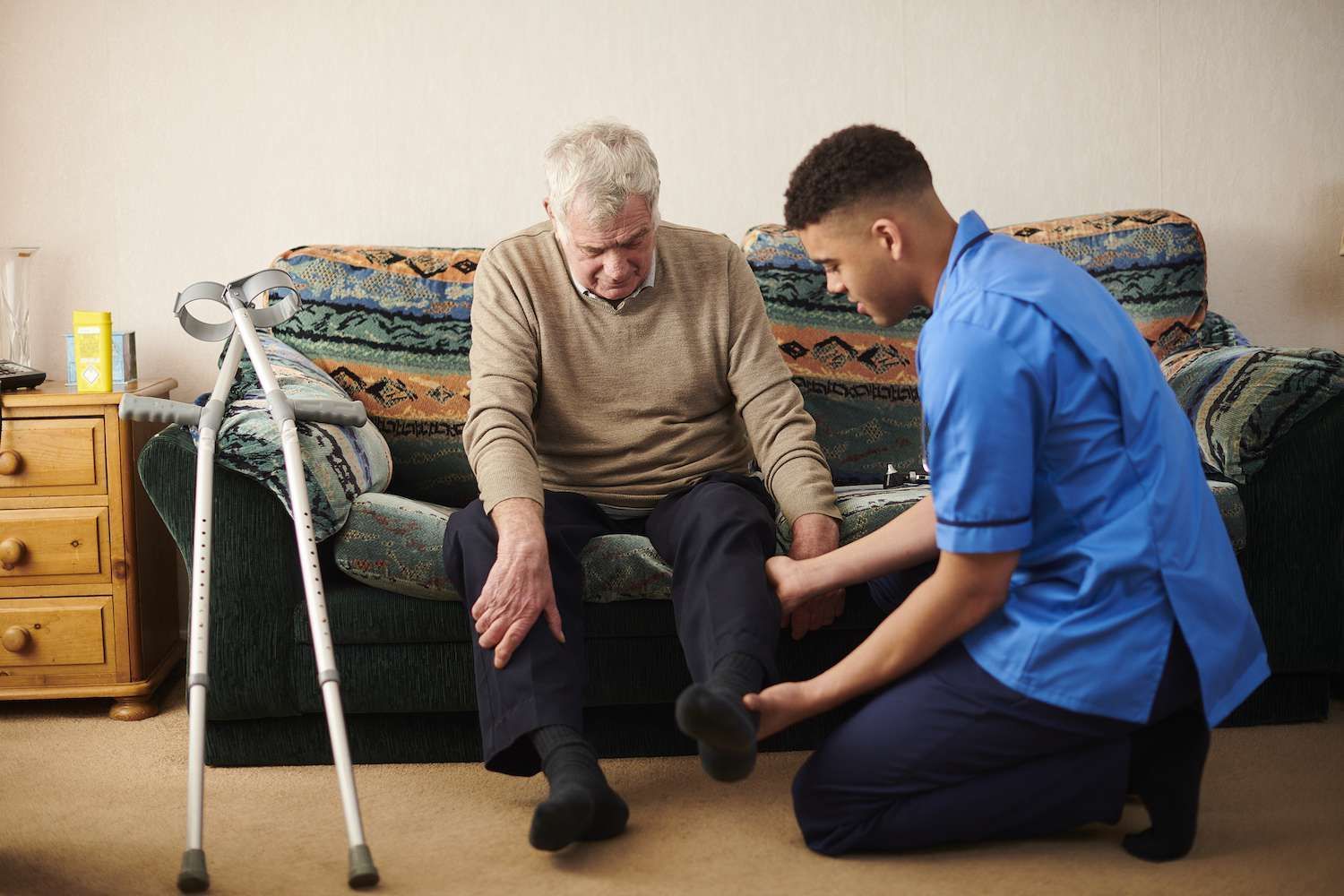
A certified home health aide provides continuous support: medication reminders on schedule, safe assisted trips to and from the bathroom, meal preparation, mobility assistance, and constant monitoring to catch a developing problem before it becomes an emergency. For parents recovering from a stroke, a fall, a cardiac event, or major surgery, that unbroken coverage is often the difference between a smooth recovery at home and an early readmission.
For families managing memory loss on top of a discharge, the stakes are higher still. A parent with cognitive decline may not remember discharge instructions, may wander, or may pull at a fresh dressing. Specialized dementia and Alzheimer's home care pairs your loved one with an aide trained to redirect gently and maintain a safe, calm environment around the clock.

How 7 Day Home Care Coordinates Hospital-to-Home in NYC & Long Island
The reason families call us the day they receive the discharge notice is straightforward: we start fast and we handle the logistics.
We coordinate before your parent leaves
Our team works directly with hospital and rehabilitation discharge planners — whether your parent is at NYU Langone Long Island, North Shore University Hospital, NewYork-Presbyterian, Mount Sinai, Jamaica Hospital, or a Brooklyn rehabilitation facility — so a caregiver is confirmed before the discharge wheels start rolling.
We move quickly
Care typically begins within 24 to 48 hours. In urgent post-discharge situations, we often place a caregiver the same day.
Every caregiver is supervised by a Registered Nurse
As a home care agency licensed by the New York State Department of Health, our certified home health aides deliver hands-on personal care — bathing, dressing, grooming, toileting, transfers, and medication reminders — under professional nursing oversight, with an RN-led home assessment that accounts for your parent's condition and your home's specific layout.
Shifts are never left uncovered
If a scheduled aide is unavailable, we arrange a qualified, vetted replacement. A recovering parent cannot wait, and neither do we.
Caregivers who speak your language
Our team speaks English, Spanish, French, Russian, Polish, Hindi, Tagalog (Filipino), and Farsi — so communication and comfort are not lost in translation during one of the most vulnerable periods of your parent's life.
We help with the insurance question
7 Day Home Care is a private-pay agency that also works extensively with long-term care insurance. We verify your policy, confirm covered benefits, and manage the claims paperwork so you are not fighting an insurance company during a medical crisis.
We serve families throughout
Manhattan,
Queens,
Brooklyn, Nassau County, and Suffolk County, with offices in Manhattan and Lake Success, Long Island. We answer the phone 24 hours a day, 7 days a week.
The discharge is scheduled and the clock is running. Call (516) 408-0034 or (917) 301-4914, or request your free consultation online. We'll take the coordination from here.
Warning Signs: When to Call the Doctor Right Away
Print this list and put it on the refrigerator. If any of these appear in the first days home, do not wait — call the doctor's office immediately, or call 911 for anything severe or rapidly worsening.
- Fever, chills, or increasing redness, warmth, swelling, or drainage around a surgical site or wound
- Chest pain, shortness of breath, or a racing or irregular heartbeat
- Sudden confusion, extreme drowsiness, or difficulty waking fully
- A fall, or a new inability to stand or bear weight
- Pain not controlled by the prescribed medication
- Little or no urine output, inability to keep fluids down, or visible signs of dehydration
- Any reaction to a new medication — rash, dizziness, nausea, or swelling
A trained in-home caregiver is often the first to notice these warning signs precisely because they are present and watching while family members are at work, sleeping, or simply cannot maintain constant vigilance alone.
Ready for Tomorrow
A discharge notice does not have to mean a sleepless, frightening scramble. Work the checklist from the top — lock down the paperwork and medications tonight, make the home safe, arrange transportation, and put real support in place for those critical first 24 hours and the days that follow. Do that, and you give your parent the best possible shot at recovering at home, where they want to be — and give yourself the peace of mind to breathe.
And you don't have to carry it alone. 7 Day Home Care specializes in exactly this moment: the fast, high-stakes transition from hospital to home in New York City and Long Island.
Your parent comes home tomorrow. Let's make sure someone's ready.
7 Day Home Care proudly serves families across Manhattan, Queens, Brooklyn, and Long Island (Nassau County & Suffolk County), New York.
📞 Call us at (516) 408-0034 or (917) 301-4914 — we're here 24 hours a day, 7 days a week.
Request a Free Consultation — compassionate, RN-supervised post-discharge home care, often starting within 24 hours. No pressure, just answers.
Frequently Asked Questions
How quickly can home care start after a hospital discharge?
7 Day Home Care typically places a caregiver within 24 to 48 hours of your request. In urgent post-discharge situations, same-day placement is often available. The sooner you call, the more smoothly we can coordinate directly with the hospital discharge team before your parent even leaves the building.
Does my parent need 24-hour care, or will a few hours a day be enough?
It depends on what your parent can safely do alone. Many families start with overnight care or full-day coverage immediately after discharge, then scale back as recovery progresses. A quick phone consultation and RN assessment can clarify exactly what's needed for your parent's specific situation — at no charge.
Will insurance cover post-discharge home care?
Non-medical home care (personal care and companionship) is typically private pay, but long-term care insurance often covers a significant portion. 7 Day Home Care verifies your policy benefits and handles the claims paperwork for you at no charge. Medicare may also cover short-term skilled nursing or therapy visits at home — these are different from personal care and are arranged through the hospital discharge team.
What is the biggest risk in the first days after hospital discharge?
The 30-day post-discharge period carries significant readmission risk for older adults. According to CMS data, nearly 1 in 5 Medicare patients 65 and older is readmitted within 30 days. The most common causes are medication errors, falls, dehydration, missed follow-up appointments, and inadequate monitoring — all of which can be substantially reduced with professional in-home support during recovery.
What if my parent lives in a co-op or high-rise in Manhattan or Queens?
We coordinate building access, elevator use, and entry protocols with doormen and concierge staff routinely across Manhattan and the outer boroughs. NYC apartment logistics are something we handle every day — it's never a barrier to getting care started.
My parent also has dementia. Does that change the type of care needed?
Yes, and significantly. A parent with cognitive decline may not recall discharge instructions, may wander, or may interfere with wounds or medical equipment. We match dementia patients with aides who have specific training in cognitive care — gentle redirection, safe supervision, and a calm environment that supports recovery without causing distress.
Which NYC and Long Island hospitals does 7 Day Home Care coordinate with?
Our team works with discharge planners at hospitals and rehabilitation facilities throughout the area, including NYU Langone Long Island, North Shore University Hospital, NewYork-Presbyterian, Mount Sinai, Jamaica Hospital, and Brooklyn rehabilitation facilities. If your parent is being discharged from a facility not on this list, call us — we coordinate across the region.