Parkinson's Home Care in NYC and Long Island: 10 Challenges, What to Watch For, and How to Get Help
Parkinson's Home Care in NYC and Long Island: 10 Challenges, What to Watch For, and How to Get Help
More than
1.1 million Americans are currently living with Parkinson's disease — and most of them are doing it at home, with family stepping in to fill the gaps. If you're caring for a parent or spouse with Parkinson's in New York City, Nassau County, or Suffolk County, you already know the gaps can get wide fast.
This guide covers the ten most common daily challenges Parkinson's patients face at home, the warning signs that mean it's time to bring in professional support, and how to find a Parkinson's home caregiver in New York who's actually the right fit.
What Is Parkinson's In-Home Care?
Parkinson's in-home care is non-medical, professional caregiver support provided inside a person's home to assist with daily tasks made difficult by Parkinson's disease — including mobility, personal hygiene, medication reminders, meal preparation, and companionship. It is distinct from medical home health care and does not involve clinical treatment.
For families in New York City and Long Island, in-home care is often the bridge that lets a person with Parkinson's remain safely at home rather than transition to a facility — often years longer than they could manage alone.
Why Parkinson's Requires Specialized Home Care
Parkinson's disease is a progressive neurological disorder affecting movement, balance, coordination, and — over time — cognition and mood. It is the
second most common neurodegenerative disease in the United States after Alzheimer's, with nearly
90,000 new diagnoses each year — a 50% increase from earlier estimates.
What makes Parkinson's uniquely challenging for home care is its unpredictability. Symptoms fluctuate — often hour to hour — based on medication timing, sleep quality, stress, and disease stage. A person who walked steadily at breakfast may freeze mid-step by afternoon. A caregiver unfamiliar with this pattern can miss critical safety windows.
The economic burden of Parkinson's reached $82.2 billion in 2024, with indirect costs — including unpaid family caregiver time — representing the largest share. Nearly 40% of people with Parkinson's rely entirely on family members for daily care, a role that, without outside support, typically leads to caregiver burnout
10 Daily Challenges Parkinson's Patients Face at Home
1. Moving Safely from Room to Room
Parkinson's progressively alters gait. Steps become shorter, shuffled, and slower.
Festination — the tendency to accelerate involuntarily — makes stopping difficult.
Freezing of gait, where the feet momentarily "stick" mid-step, is one of the most common causes of falls.
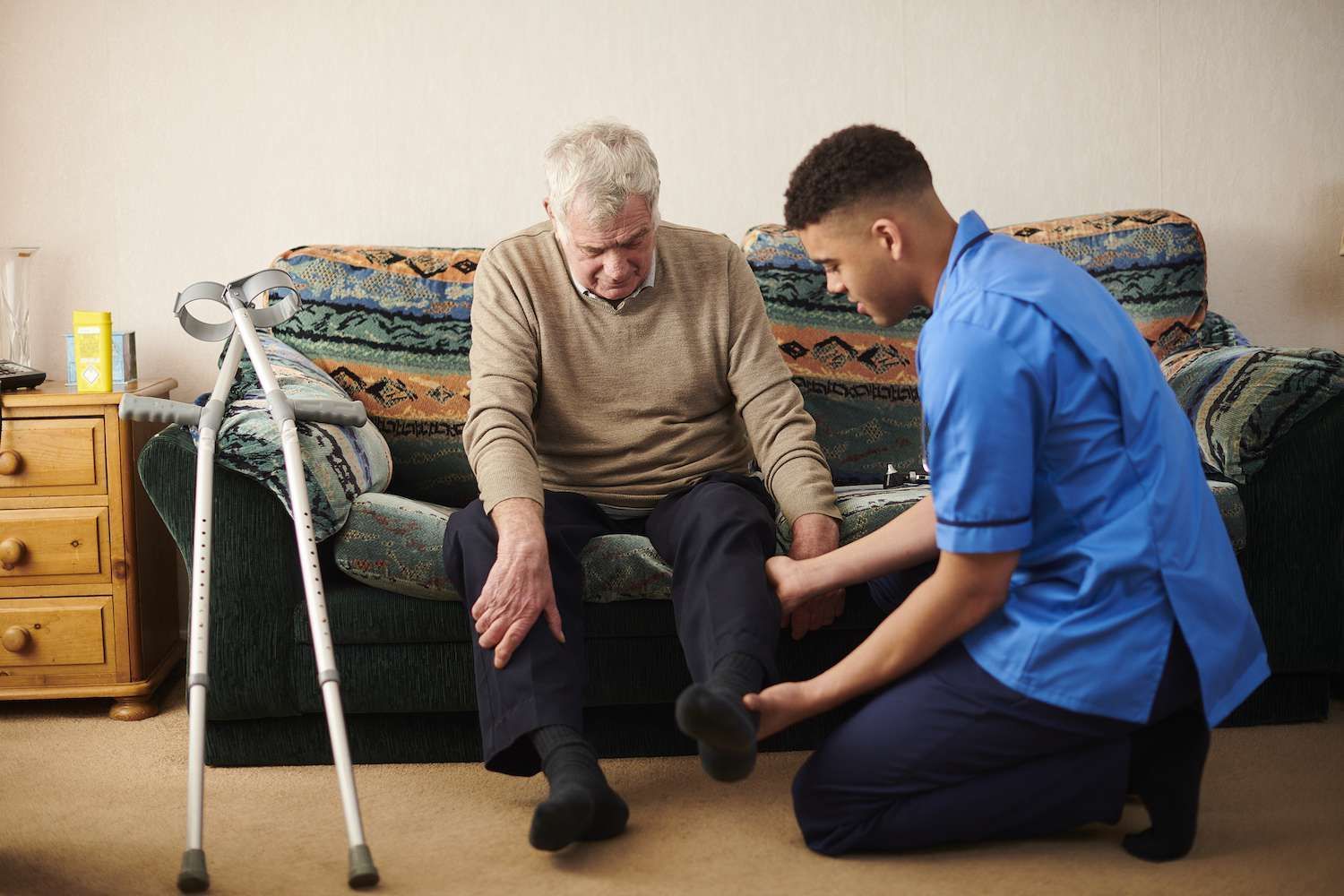
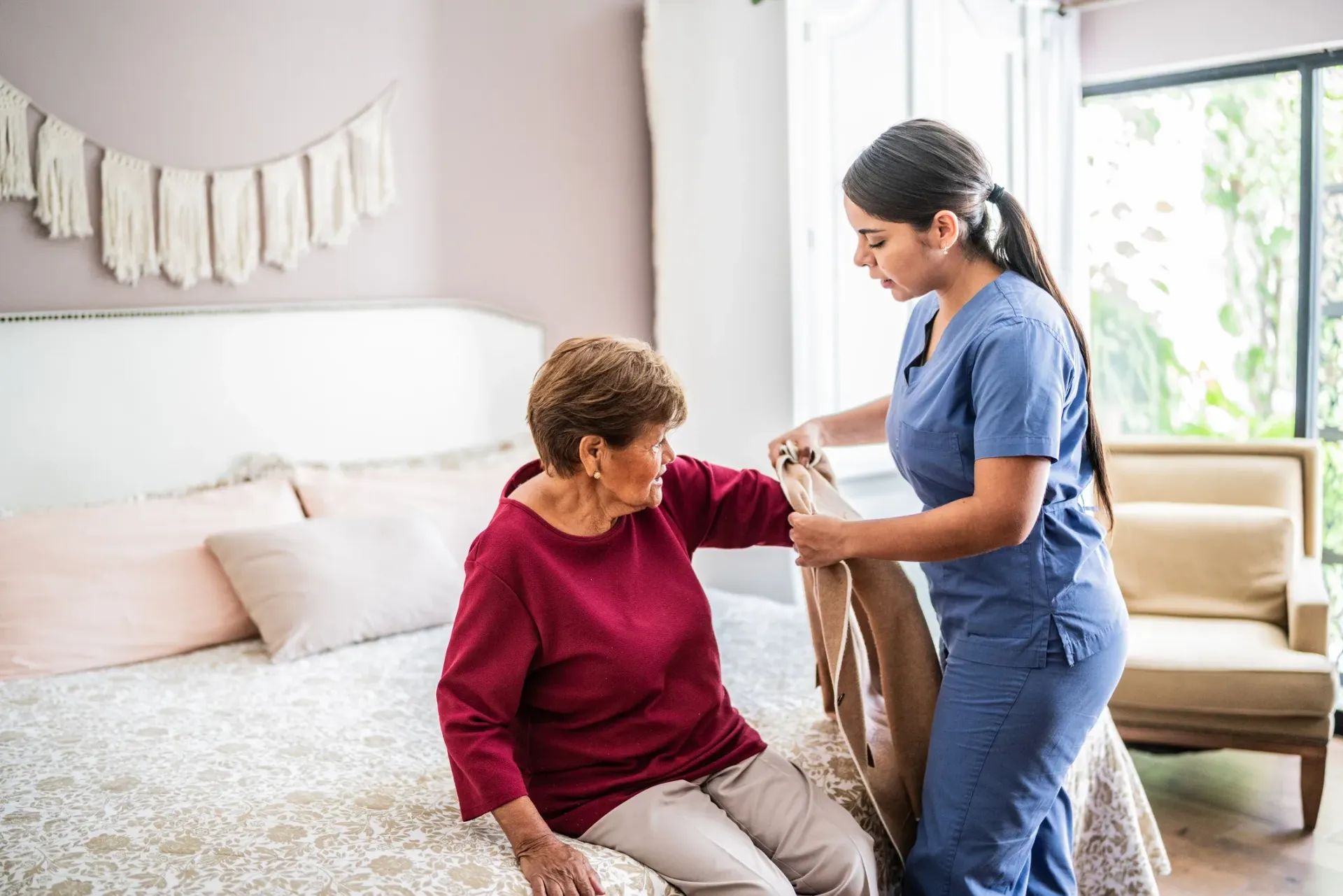
Common household hazards — loose rugs, uneven thresholds, dimly lit hallways, slippery bathroom floors — become serious dangers. A trained Parkinson's home caregiver knows how to create clear pathways, use cueing techniques (visual cues like floor tape, or auditory cues) to break a freeze, and provide steady arm support during transitions.
2. Fall Risk and Fall Prevention
Nearly 60% of people with Parkinson's fall at least once per year, and many fall repeatedly. Postural instability — the loss of automatic righting reflexes — combined with slower reaction times means that when a person with Parkinson's begins to tip, they often cannot self-correct in time.
Effective Parkinson's fall prevention at home includes:
- Removing tripping hazards: rugs, cords, and clutter
- Installing grab bars in bathrooms, hallways, and near beds
- Ensuring adequate lighting in all rooms, especially at night
- Using non-slip footwear at all times indoors
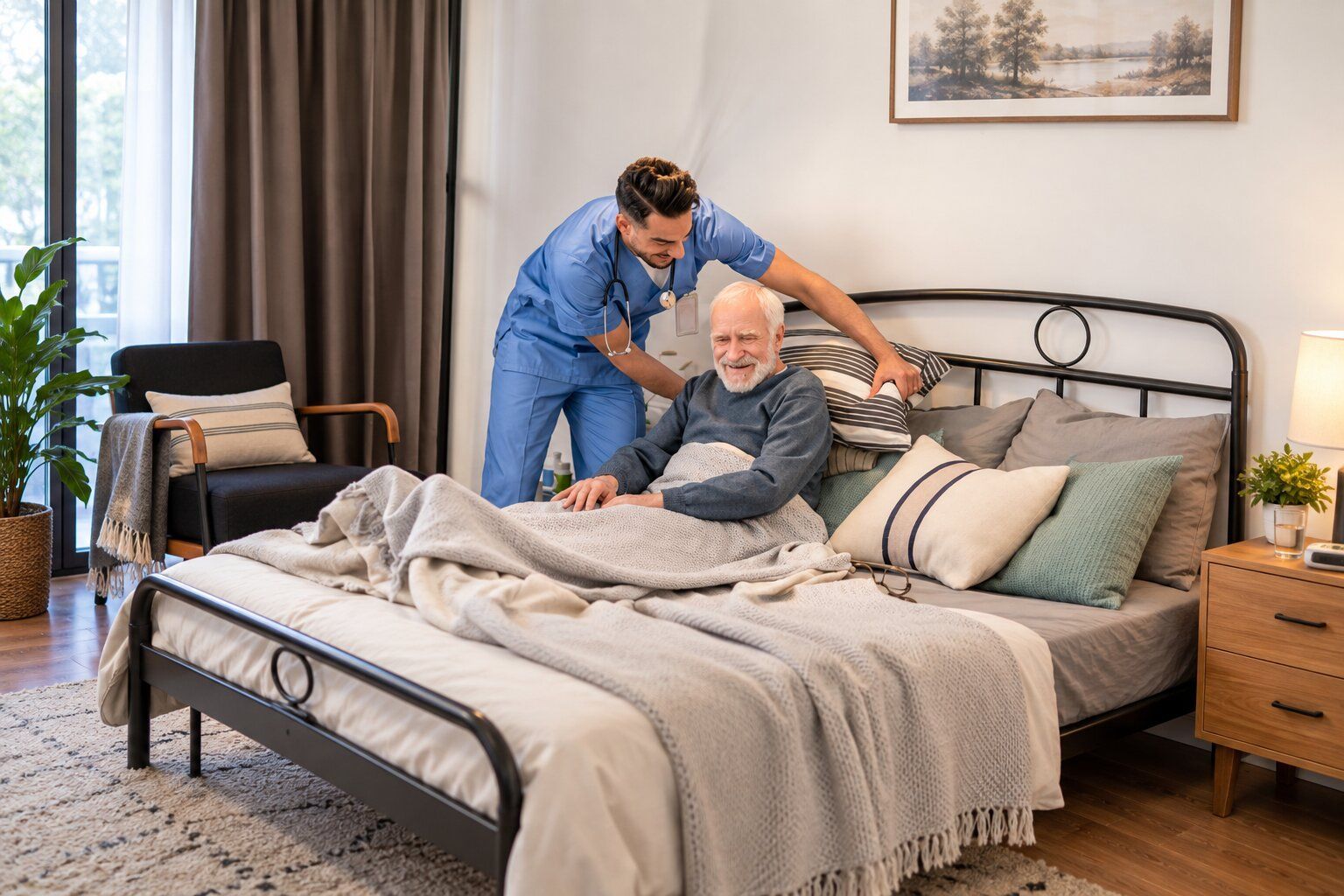
- Caregiver presence during high-risk transitions: rising from bed, entering and exiting the shower, standing from a seated position
Professional caregivers are trained to anticipate falls before they happen — not just respond after.
3. Bathing, Dressing, and Personal Hygiene
Fine motor control loss makes buttons, zippers, and shoelaces significant obstacles. The bathroom — with its wet surfaces, step-over tub edges, and limited grab points — is statistically the most dangerous room in the home for someone with Parkinson's.
Many people quietly reduce how often they bathe rather than ask for help. They wear the same outfit for days — not from neglect, but from exhaustion and the fear of falling alone. Personal care assistance restores both safety and dignity. A skilled caregiver provides as much — or as little — physical support as needed, protecting privacy throughout.
4. Medication Management and Timing
Levodopa and other Parkinson's medications are
highly time-sensitive. Missing a dose — or taking it even an hour late — can cause symptoms to return sharply: stiffness, tremor, difficulty walking. This is called an "off" period, and for people with advanced Parkinson's, off periods can be severe enough to require hospitalization.
Most people with Parkinson's take multiple medications on different schedules. Managing refills, tracking side effects, and ensuring no dose is doubled or skipped is a meaningful cognitive and logistical challenge — especially for someone also managing memory changes.
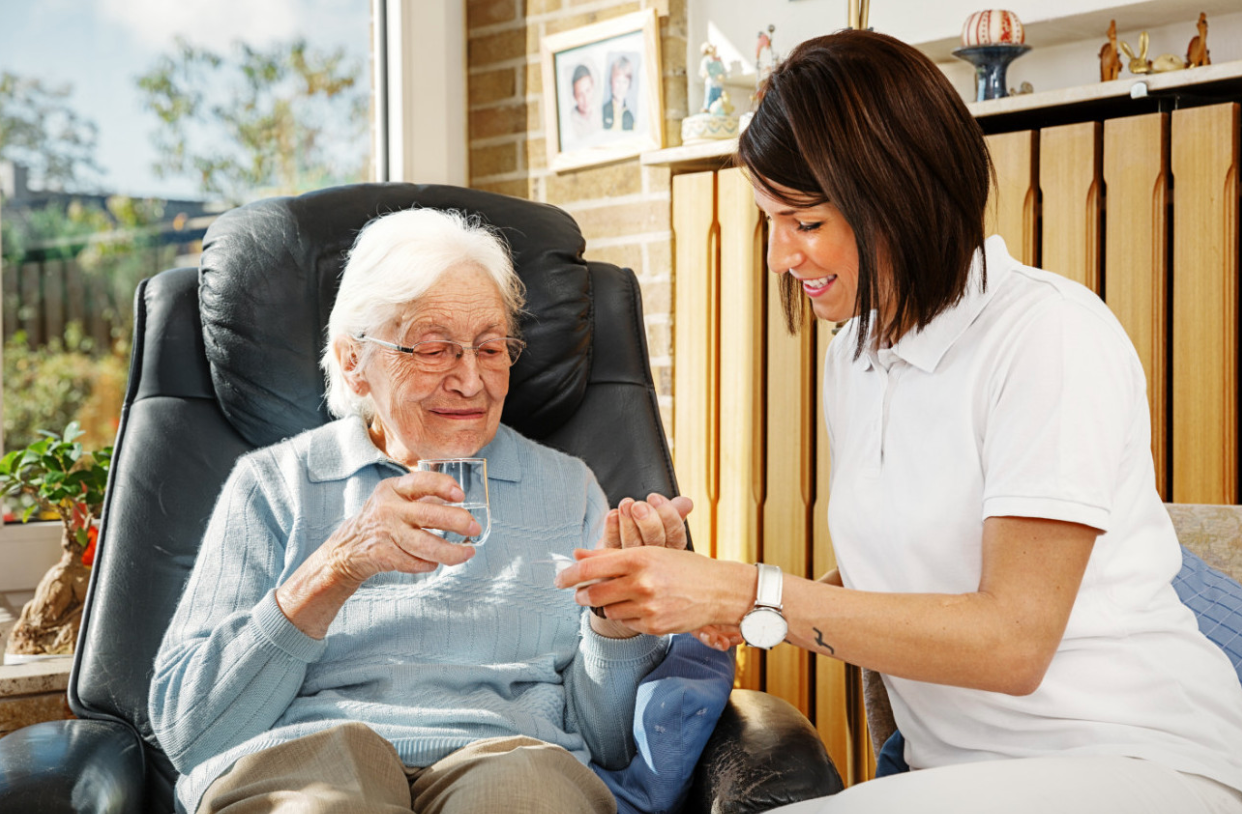
Home caregivers provide
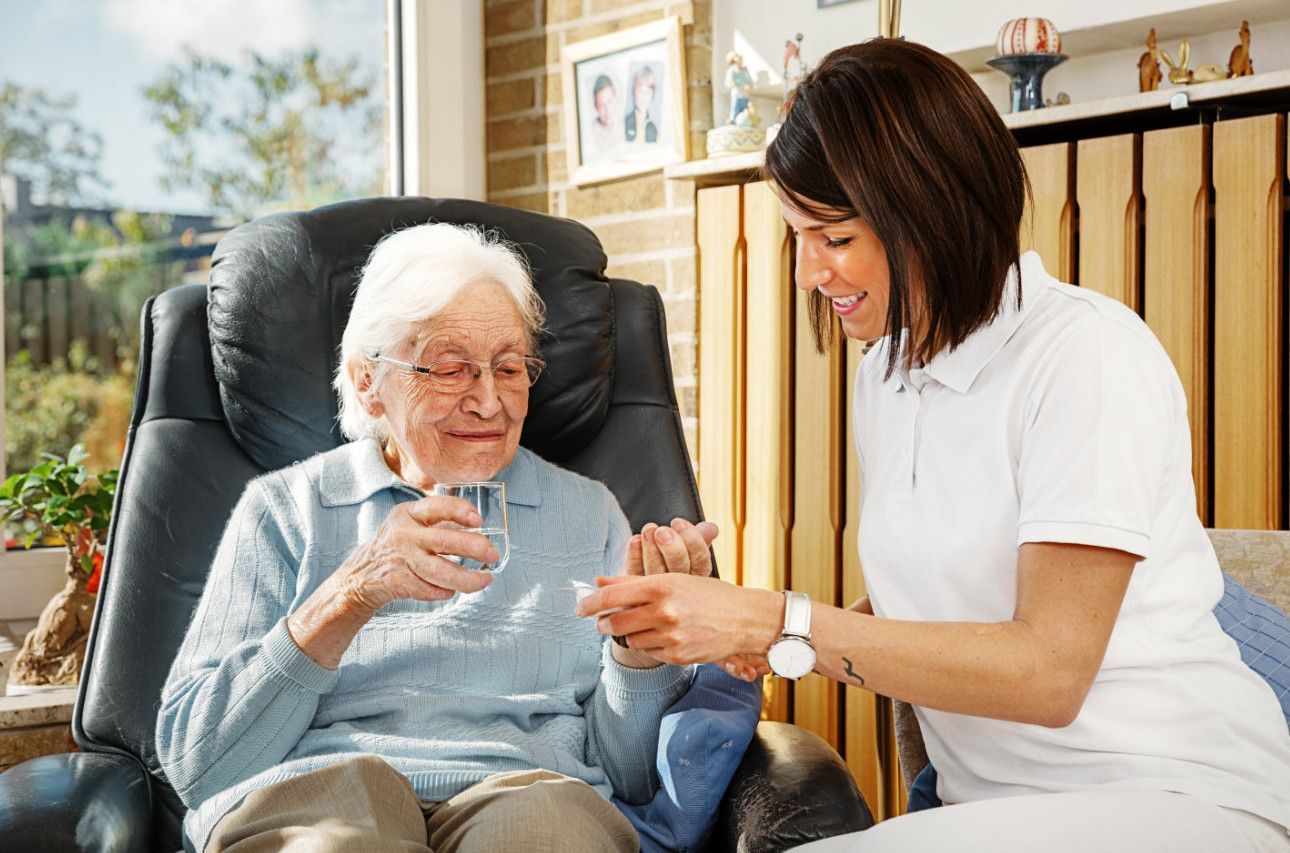
medication reminders (not administration), keeping schedules visible and consistent, and alerting family members or healthcare providers when patterns change.
5. Eating, Nutrition, and Swallowing Difficulties
Tremors make utensils unreliable.
Dysphagia — difficulty swallowing — affects up to 80% of people with Parkinson's at some point and increases the risk of aspiration pneumonia, a leading cause of death in late-stage PD. Drooling, slow chewing, and difficulty managing liquids all make mealtimes frustrating.
Rather than face the embarrassment, many people skip meals. Over weeks, the result is unintended weight loss, fatigue, and accelerated decline. In-home meal support includes preparing softer foods, using
weighted utensils that reduce tremor interference, positioning the person safely for eating, and monitoring for signs of swallowing difficulty to report to a physician.
6. Sleep Disruption and Overnight Safety
Parkinson's disrupts sleep in multiple ways: rigidity makes rolling over painful and difficult;
REM sleep behavior disorder (RBD) causes vivid, often violent dreams that the person physically acts out; restless legs, nightmares, and frequent urination create broken sleep cycles.
Overnight bathroom trips in the dark are among the highest-risk moments of the day. Bare feet, low lighting, half-asleep balance — this is when falls happen.
Overnight or live-in caregivers provide a safety net during these vulnerable hours. For many families, overnight coverage is the single change that finally lets everyone in the household sleep.
7. Social Isolation and Depression
When walking is difficult, leaving the house becomes hard. Friends visit less. Outings stop. The world contracts to a few rooms. Research consistently shows that
depression affects 40–50% of people with Parkinson's — significantly higher than the general senior population — and social isolation is a major contributing factor.
Companionship care is one of the most underestimated services in home care. Not therapy — just consistent human presence. A caregiver who shows up, makes tea, plays cards, follows the Mets, listens to the same stories with genuine attention. That kind of connection has measurable effects on mood, cognition, and quality of life.
8. Speech and Communication Changes
Parkinson's frequently causes
hypophonia — a softening and flattening of the voice — and reduced facial expression (hypomimia). Conversations become shorter. Phone calls get avoided. Families sometimes misread the flat affect as sadness or withdrawal when it is a neurological symptom, not an emotional one.
Caregivers experienced in Parkinson's communication support know to slow down, give extra processing time, use yes/no questions when needed, and read nonverbal cues rather than rely exclusively on speech.
9. Cognitive Changes and Dementia
Parkinson's disease dementia (PDD) develops in approximately
50–80% of people with PD over time, typically in later disease stages. Even before full dementia, many people experience slowed thinking, difficulty with multitasking, mild confusion about time or place, and reduced judgment.
Parkinson's dementia home care relies on structured daily routines, gentle redirection, supervision during tasks that involve safety risks (cooking, driving, managing finances), and calm, consistent presence. It also means family caregivers are not on call every hour — which matters enormously for long-term sustainability.
10. Family Caregiver Burnout
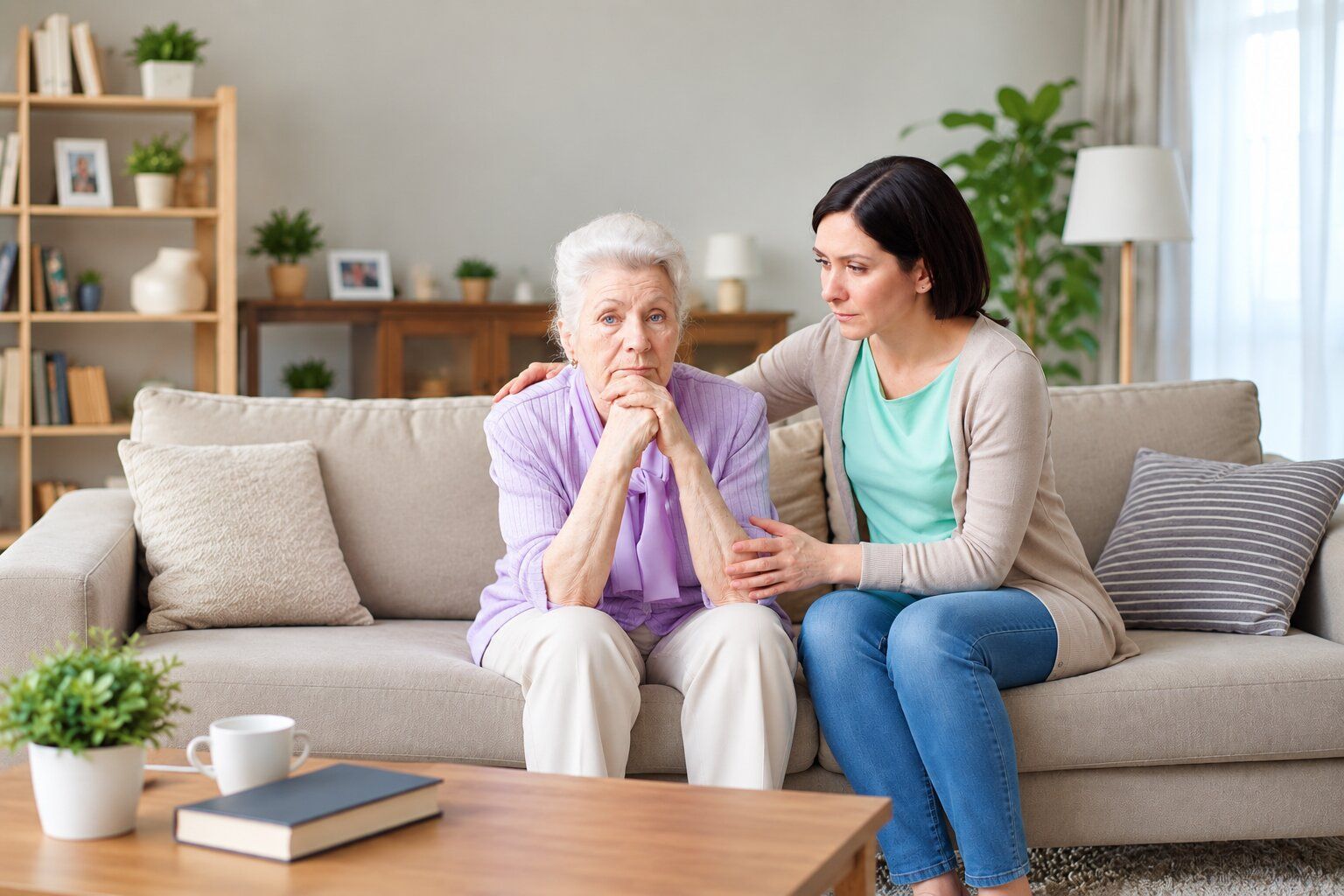
Behind most people with Parkinson's is a spouse, adult child, or sibling absorbing more than anyone outside the household sees. Sleep deprivation, missed workdays, physical strain, emotional exhaustion, and the guilt of admitting any of it — these are the predictable consequences of unsupported family caregiving.
Respite care — professional in-home care provided specifically to give family caregivers a break — is not a luxury. It is a clinical recommendation. Even a few hours a week of consistent professional backup changes the emotional climate of the whole household and extends the family's capacity to continue providing care over the long term.

When Should a Parkinson’s Patient Get a Home Caregiver?
Most families wait too long. By the time a crisis forces the decision, fall injuries, medication errors, or caregiver burnout have already done harm.
Consider in-home Parkinson’s care when you notice any of the following:
Warning Signs & What They May Indicate
Unexplained bruises or recent falls
Mobility and balance have declined beyond safe self-management.
Skipped meals or unintended weight loss
Self-feeding has become too difficult or frustrating.
Missed, doubled, or refused medication
Medication management needs consistent oversight.
Same clothes worn multiple days
Personal hygiene has become unsafe or exhausting alone.
Withdrawal from phone calls or visits
Isolation and possible depression are increasing.
Confusion, wandering, or unsafe behaviors
Cognitive changes require supervised support.
Family caregiver is exhausted or unwell
Unsupported caregiving is reaching a crisis point.
In-home care typically starts modestly — a few hours several days a week — and scales with the person’s changing needs.
Plans can include:
- Mobility assistance
- Personal care
- Meal support
- Medication reminders
- Companionship
- Transportation to medical appointments
- Overnight care
- Live-in coverage as Parkinson’s progresses
Parkinson’s Home Care in NYC and Long Island: What to Look For
Not all home care agencies have meaningful experience with Parkinson’s.
When evaluating providers, ask:
- Do caregivers receive specific Parkinson’s disease training, including gait freezing, fall prevention, and medication timing?
- Is there caregiver continuity — will the same person show up reliably, building familiarity and trust?
- Can the care plan be adjusted quickly when symptoms change?
- Does the agency serve both NYC boroughs and Long Island counties?
- Is there a care coordinator available when the family has questions?
Caregiver continuity matters especially in Parkinson’s care.
Trust is built through repetition — the same face, the same routine, the same voice.
Frequent caregiver changes undermine the comfort and safety that make home care effective.
How 7 Day Home Care Supports Parkinson’s Patients in NYC and Long Island
7 Day Home Care has spent years building home care services throughout New York City —
Manhattan,
Brooklyn,
Queens — and across Nassau County and Suffolk County on Long Island.
Caregivers are carefully matched to each family based on experience, temperament, and the specific demands of the person’s care needs.
For families managing Parkinson’s disease, services include:
✓ Mobility and fall prevention support during high-risk daily transitions
✓ Personal care assistance for bathing, dressing, and hygiene — handled with skill and dignity
✓ Medication reminders to keep time-sensitive Parkinson’s medications on schedule
✓ Meal preparation and eating support, including soft foods and adaptive equipment
✓ Overnight and live-in care for families navigating nighttime safety risks
✓ Companionship and social engagement to reduce isolation and depression
✓ Respite care for family caregivers who need consistent, reliable relief
✓ Transportation to neurologist appointments, therapy, and community programs
Care plans are personalized — not templated — and flexible enough to grow with your loved one’s needs without requiring you to start over with a new agency.
Frequently Asked Questions About Parkinson’s Home Care
What stage of Parkinson’s requires a home caregiver?
There is no single stage at which home care becomes necessary — it depends on the individual.
However, most families benefit from introducing caregiver support during Stage 3 (when balance impairment and falls become a risk), or earlier if the family caregiver is showing signs of burnout.
Starting support early helps prevent falls, injuries, and hospitalizations.
Can a person with Parkinson’s disease safely live at home?
Yes — in most cases, and often for longer than families expect.
With the right home modifications and caregiver support, living at home remains safe and preferred.
Research suggests familiar environments reduce confusion and improve quality of life.
What does a Parkinson’s home caregiver actually do?
A non-medical Parkinson’s caregiver helps with:
- Mobility assistance
- Bathing
- Dressing
- Meal preparation
- Medication reminders
- Companionship
- Transportation
They do not diagnose, prescribe, or provide clinical treatment.
Their role is safety, consistency, and quality of life.
How do I find a home caregiver for a parent with Parkinson’s in NYC?
Start by contacting agencies with documented Parkinson’s experience.
Ask about:
- Caregiver training
- Continuity of care
- Care plan flexibility
7 Day Home Care serves families throughout NYC and
Long Island and offers
a free consultation.
Does home care reduce falls in Parkinson’s patients?
Yes.
Trained caregivers:
- Identify home hazards
- Assist during high-risk transitions
- Stay present during the moments falls are most likely
Examples include:
- Getting out of bed
- Entering/exiting the shower
- Standing up from a seated position
Professional caregiver presence is one of the strongest fall prevention tools available.
Where does 7 Day Home Care provide Parkinson’s home care services?
Service areas include:
- Manhattan
- Brooklyn
- Queens
- Nassau County
- Suffolk County
Phone:
(516) 408-0034
Ready to Talk? We’re Here to Help.
If your loved one’s daily routines are slipping — or you’ve been carrying this alone longer than you should have — now is the right time to ask for help.
Earlier support prevents:
- Falls
- Hospitalizations
- Caregiver burnout
Call:
(516) 408-0034
No pressure. No script. Just an honest conversation about what your family is dealing with and what level of support may help.
Serving:
Manhattan •
Brooklyn •
Queens • Nassau County • Suffolk County
7 Day Home Care provides non-medical in-home care support. Caregivers do not diagnose, prescribe, or provide medical treatment. All health concerns should be addressed with a licensed physician or specialist. Statistics referenced from the Parkinson's Foundation (2024), Michael J. Fox Foundation (2025), and peer-reviewed clinical literature.