Overnight Home Care for Seniors | 7 Day Home Care
Overnight Home Care for Seniors: Sleep, Safety, and Peace of Mind
Serving Families Across Manhattan, Brooklyn, Queens, Nassau County, and Suffolk County
Overnight home care for seniors is a professional caregiving service in which a trained caregiver is present in the home through the night — typically from evening through early morning — to assist with nighttime needs, prevent falls, and ensure a safe response if a medical or behavioral emergency occurs. For families caring for an aging parent or spouse, overnight care is often the difference between restful sleep and lying awake in fear.
For most families, the hardest part of the day doesn't end at sunset — it begins.
The hours between midnight and morning carry a particular kind of anxiety for those caring for an aging loved one. You've managed the daytime — medications, meals, appointments. But once the house goes quiet, a different set of worries settles in. What if she gets up and falls? What if he needs help and no one hears? What if she wanders?
These aren't irrational fears. Nighttime is genuinely the highest-risk period for older adults living at home. The combination of disrupted sleep, reduced balance, impaired night vision, and cognitive changes creates a window of vulnerability that daytime caregiving alone cannot address.
This guide explains why nights are so challenging for seniors, what risks they face, and how professional overnight care makes a meaningful difference — for your loved one, and for your entire family.
Why Sleep Becomes More Challenging With Age
Sleep changes significantly with age. Older adults typically spend less time in deep, restorative sleep and more time in lighter sleep stages, making them far more prone to nighttime waking. According to the National Institutes of Health, these shifts in sleep architecture are among the most consistent and well-documented physiological changes of aging.
Shifting Sleep Architecture
As we age, the structure of sleep changes. Older adults spend less time in deep slow-wave sleep and more time in lighter stages, meaning they wake more easily from minor disturbances — a passing car, a noise from another room, or simply the need to shift position.
Frequent Nighttime Bathroom Trips (Nocturia)
Nocturia is the medical term for the need to urinate two or more times per night. It affects approximately 50% of adults over 65, according to peer-reviewed urology literature published in NCBI. The consequences extend well beyond disrupted sleep: a quarter of all falls in older adults happen overnight, and of those overnight falls, 25% are directly linked to nocturia. Seniors who make two or more nighttime bathroom trips face more than double the risk of fractures and fall-related trauma.
Sleep Disorders That Often Go Unmanaged
Conditions including restless leg syndrome, sleep apnea, and REM sleep behavior disorder become more common with age. Many older adults — and their families — attribute poor sleep to "just getting older" rather than to a treatable underlying disorder, delaying care that could meaningfully improve quality of life.
Anxiety and Nighttime Dread
For seniors who live alone or are acutely aware of their own physical vulnerabilities, nighttime can amplify feelings of isolation and fear. Lying awake worrying about health, finances, or what would happen if something went wrong when no one is around makes restorative sleep nearly impossible.
Medications That Disrupt Sleep
Many older adults manage multiple chronic conditions and take several medications as a result. Certain blood pressure drugs, diuretics, steroids, antidepressants, and cardiac medications are documented sleep disruptors. Managing timing and dosage in a way that minimizes nighttime impact requires careful attention — and is something a professional caregiver can actively support.
The Nighttime Risks Seniors Face at Home
Poor sleep is only part of the overnight challenge. Nighttime creates a distinct set of safety risks that deserve serious, specific attention.
Falls — The Leading Cause of Senior Injury
According to the CDC, falls are the leading cause of injury-related death among adults 65 and older. In 2024, 43,020 older adults died from preventable falls — a 21% increase in the age-adjusted death rate since 2018. A disproportionate share of these falls happen overnight, when a senior navigates from bed to bathroom in the dark, groggy from disrupted sleep and without full balance control. A fall in the middle of the night with no one nearby can mean hours on the floor before anyone responds — and delayed response is one of the key factors in how serious the outcome becomes.
Wandering in Seniors With Dementia
The Alzheimer's Association estimates that 60% of people living with dementia will wander at some point. Nighttime wandering — driven by disorientation, sundowning, or disrupted sleep-wake cycles — is among the most dangerous and frightening behaviors families face. Sundowning syndrome, which causes confusion and agitation during evening and overnight hours, affects up to 80% of people with dementia at some point in the course of their illness. An experienced overnight caregiver trained in dementia care is the most reliable intervention for preventing nighttime wandering and elopement.
Medical Emergencies Without Witnesses
Heart events, strokes, severe hypoglycemia, and respiratory distress do not keep business hours. When a senior is alone overnight, these events can unfold without anyone present to recognize warning signs or call for help. Time is a critical variable in virtually every medical emergency — and having someone present through the night changes outcomes.
Mobility Challenges After Dark
Stiff joints, reduced muscle strength, and impaired balance are daily realities for many older adults. Getting in and out of bed safely — on a hard floor, in the dark — is harder than it appears. A senior who manages well during the day with assistive devices may genuinely need hands-on support to move safely at night.
Overnight Medication Errors
A senior who wakes in the night and isn't fully clear-headed may take medications at the wrong time, forget whether they've already taken them, or take an incorrect dose. Depending on the medication, these errors can have significant consequences. A caregiver can ensure any nighttime medications are taken correctly and on schedule.
How Overnight Care Affects Family Caregivers
Family caregivers carry an enormous amount already. What many don't fully account for is what sustained nighttime worry does to them over time.
Adult children who share a home with an aging parent often wake at every unusual sound — a creak of the floor, a toilet flushing at 3 a.m. Over weeks and months, that fractured sleep accumulates. Spouses who share a home with a partner whose sleep is restless face the same erosion.
Family caregivers who live separately face a different but equally exhausting experience: going to bed not knowing whether the person they love is safe through the night.
2026 caregiver burnout research from A Place for Mom found that one in two family caregivers report having trouble sleeping at least once a week — and that burnout consistently overlaps with disrupted sleep, emotional stress, and social withdrawal. Caregivers who spend more than 30 hours per week providing care — nearly 30% of all family caregivers — are at the highest risk of psychological and physical health decline.
Getting professional overnight support in place is as much about protecting the caregiver as protecting the senior. When families are finally able to sleep through the night, they show up better — as caregivers, spouses, parents, and coworkers — during every hour that follows.
How Overnight Care Improves Sleep for Seniors
Having a trained caregiver present through the night changes the experience of sleep in ways that go beyond supervision.
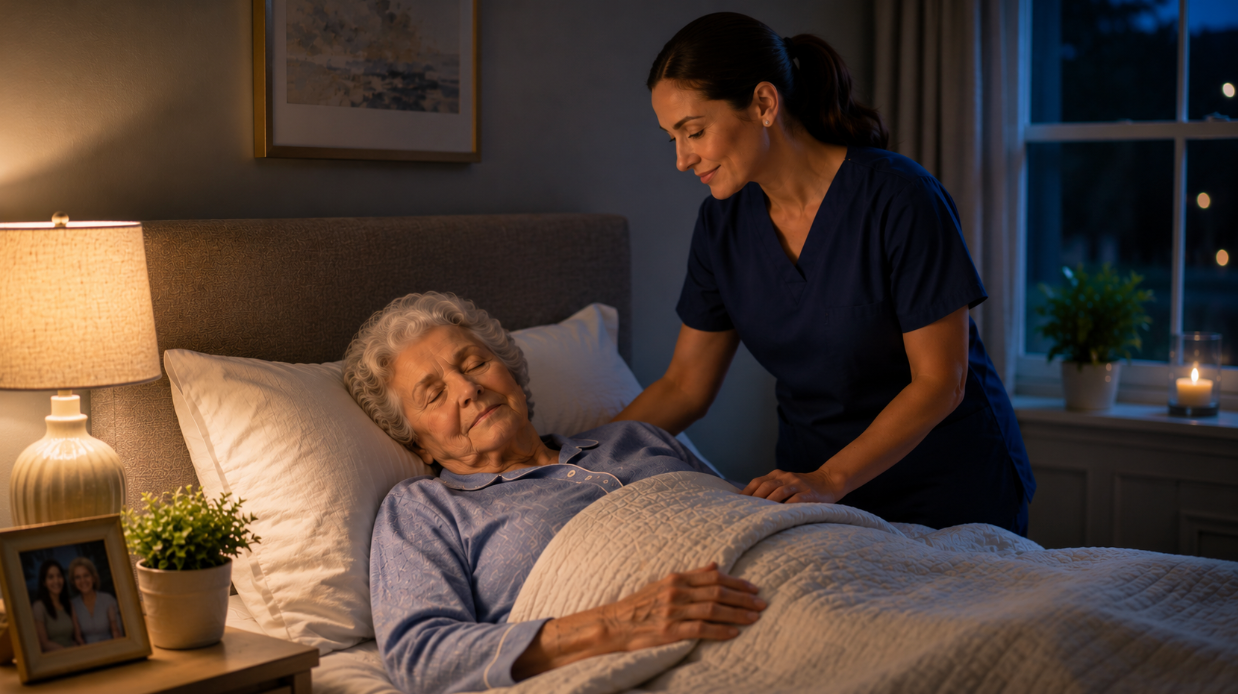
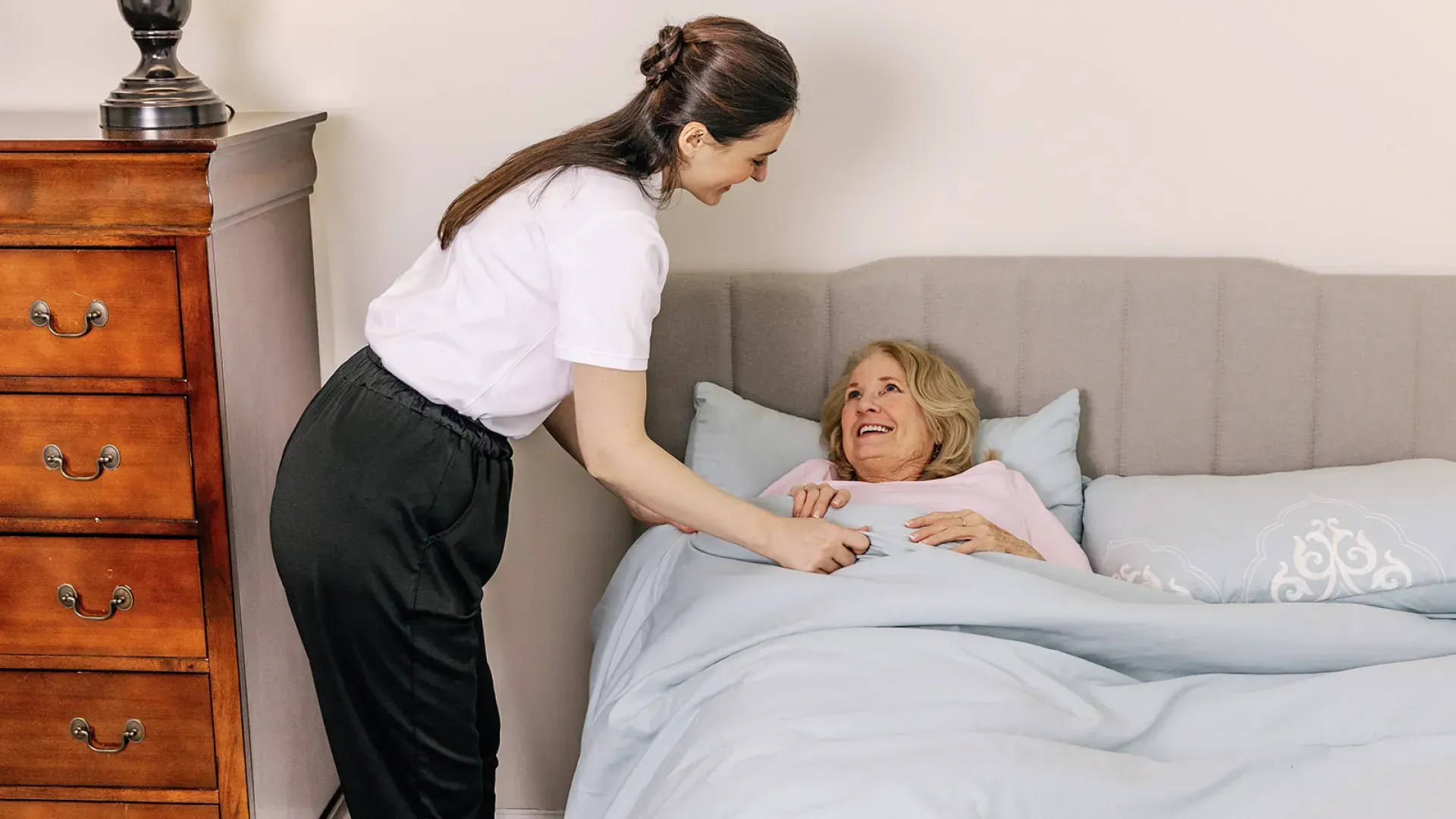
Immediate support during nighttime awakenings. When a senior wakes at 2 a.m. confused, anxious, or needing the bathroom, a caregiver is right there. Whether that means steady physical assistance to the bathroom, repositioning in bed, offering water, or providing calm reassurance, having someone immediately available changes what those awakenings look like — and how quickly the senior can return to sleep.
Reducing anxiety through consistent presence. One of the quieter benefits of
overnight care is what it does for a senior's sense of security. Knowing someone is nearby — someone who will hear them if they call, who will notice if something is wrong — shifts the emotional quality of nighttime from apprehension to safety. Many seniors sleep more soundly simply because that background anxiety has been removed.
Building healthy nighttime routines. A caregiver can help establish consistent bedtime routines that sleep specialists recommend for everyone: winding down at the same time each night, limiting late fluids, ensuring appropriate lighting, and creating a calm sleep environment — all of which contribute to better sleep quality over time.
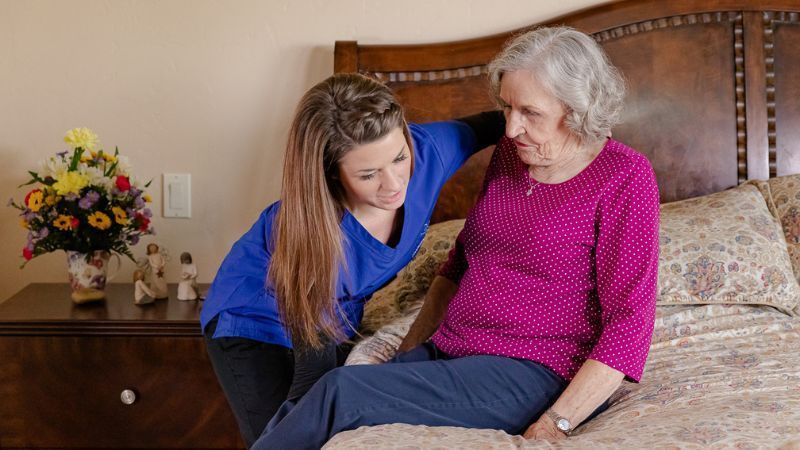
How Overnight Care Improves Safety at Home
The safety benefits of professional overnight care are both immediate and ongoing:
Fall prevention during bathroom trips. A caregiver accompanies the senior to and from the bathroom, providing steady physical support through the highest-risk movement of the overnight hours.
Immediate emergency response. If something goes wrong — a fall, chest pain, sudden confusion, or respiratory distress — there is someone present to assess the situation and call for help without delay.
Wandering supervision for seniors with dementia. An
overnight caregiver prevents wandering behaviors that would otherwise go undetected until morning, and responds calmly to sundowning episodes using dementia-informed care techniques.
Medication safety. Caregivers ensure that any nighttime medications are taken at the right time and in the correct dose.
Early detection of subtle changes. Trained caregivers notice things families sometimes miss — changes in breathing, color, restlessness, or behavior that may indicate a developing problem before it becomes a crisis.
Types of Overnight Senior Care
1. Awake Overnight Care
- Caregiver stays awake all night.
- Provides immediate help whenever needed.
- Best for seniors with dementia, frequent nighttime needs, or a high risk of falls.
2. Sleep Overnight Care
- Caregiver sleeps in the home and assists when needed.
- Suitable for seniors who only need occasional help during the night.
3. Live-In Care
- Caregiver lives in the home and provides support throughout the day and night, with scheduled rest breaks.
- Ideal for seniors who need ongoing, around-the-clock assistance.
Which Option Is Right?
The best choice depends on how often and how urgently a senior needs help during the night. A professional care assessment can help determine the most suitable level of care.
Signs a Senior May Benefit From Overnight Care
Not every family immediately recognizes when overnight support has become necessary. These are among the clearest indicators:
- A recent fall or near-fall, especially one that happened during the night
- Visible signs of disrupted sleep: exhaustion, irritability, or cognitive cloudiness during the day
- A diagnosis of dementia, Alzheimer's, Parkinson's, or another condition associated with nighttime behavioral changes
- Urinary or bowel incontinence that requires nighttime management
- Recent hospitalization or a new diagnosis that increases overnight risk
- A senior who is anxious about being alone at night and has started calling family members repeatedly after hours
- Family caregivers who are not sleeping well due to worry or nighttime disruption
- Increasing mobility difficulty that makes unsupported overnight movement genuinely unsafe
How Overnight Care Supports Aging in Place
Most older adults have a clear preference: they want to remain in their own homes for as long as possible. Aging in place — with familiar surroundings, autonomy, and connection to neighborhood and community — supports both emotional wellbeing and, in many cases, physical health outcomes.
Professional overnight care makes that possible in a way that family-only caregiving often cannot sustain over time. For families seeking overnight home care in
Queens, a senior living on the Upper East Side, a household in Forest Hills managing a parent with dementia, or a family in Nassau County navigating post-hospitalization recovery —
7 Day Home Care builds a plan that fits the specific situation.
Overnight care is one part of a broader continuum that can be tailored as needs evolve:
Companion care — Social engagement, conversation, light household help, and emotional support.
Personal care — Assistance with bathing, dressing, grooming, and hygiene.
Overnight care — Dedicated support through nighttime hours, typically evening through early morning.
Live-in care — A caregiver who resides in the home to provide continuous day-and-night coverage.
Respite care — Planned relief for family caregivers who need a break from ongoing responsibilities.
Why Families Trust 7 Day Home Care
7 Day Home Care has built its reputation across
Manhattan,
Brooklyn,
Queens, Nassau County, and Suffolk County on one foundation: providing the kind of care families would choose for their own parents — attentive, dignified, and genuinely personalized.
Every care relationship begins with a thorough assessment of the senior's needs, preferences, and home environment. Care plans reflect not just what assistance is needed, but how it should be provided. Some families in Garden City or Bayside need overnight coverage a few nights a week. Others in Manhattan or Forest Hills need seven-night-a-week support. Whatever the situation,
7 Day Home Care works to build a plan that fits — and adjusts it as needs evolve.
Caregivers are selected not only for professional training but for warmth, reliability, and genuine commitment to the people they serve. The families we support tell us that finding the right caregiver — someone their loved one actually looks forward to seeing — makes all the difference.
Frequently Asked Questions About Overnight Senior Home Care
What is overnight home care for seniors?
Overnight home care is a professional caregiving service in which a trained caregiver is present in a senior's home through the night — typically from around 9 p.m. to 7 a.m. The caregiver assists with nighttime needs, prevents falls, supports bathroom trips, manages medications, and responds immediately if an emergency occurs.
How is overnight care different from live-in care?
Overnight care covers a defined nighttime window, typically eight to ten hours, after which the caregiver's shift ends. Live-in care means a caregiver resides in the home on an ongoing basis and is available around the clock, with designated rest periods built in. Families who need continuous 24-hour coverage often combine both arrangements.
How do I know if my parent needs overnight care or just daytime support?
Pay attention to what's happening after dark. Anxious late-night phone calls, nighttime falls, concern about wandering, or your own disrupted sleep from worry are all clear indicators that nighttime coverage deserves consideration. A professional care assessment helps clarify the appropriate level of support.
What is the difference between awake overnight care and sleep overnight care?
Awake overnight care means the caregiver remains awake and alert throughout the shift — appropriate for seniors who need frequent assistance, have dementia-related wandering, or require consistent monitoring. Sleep overnight care means the caregiver sleeps at the home and is available if the senior needs them. The right choice depends on the frequency and urgency of the senior's nighttime needs.
Can overnight care help a senior with dementia?
Yes — overnight care is particularly valuable for seniors living with Alzheimer's or other forms of dementia. The Alzheimer's Association estimates 60% of people with dementia will wander at least once, and sundowning affects up to 80% at some point. An experienced overnight caregiver trained in dementia care responds calmly to these behaviors while keeping the senior safe.
My parent doesn't want a stranger in the house at night. What do we do?
This is one of the most common concerns families share. The most effective approach is a gradual introduction: starting with a few overnight visits so the senior and caregiver can build familiarity, framing the caregiver as helpful company rather than supervision, and involving the senior in choosing their caregiver whenever possible. Most seniors become comfortable quickly once the relationship is established.
Does insurance cover overnight home care?
Long-term care insurance policies frequently cover overnight and live-in home care. In New York, the Medicaid-funded CDPAP and MLTC programs may cover home care services for eligible individuals. Traditional Medicare does not cover non-medical overnight care, though Medicare Advantage plans vary. 7 Day Home Care can help walk you through available options.
When should a family consider 24-hour home care?
24-hour home care becomes appropriate when a senior's safety cannot be reasonably assured without consistent overnight supervision — especially after a fall, during recovery from illness, or when cognitive changes make nighttime wandering a concern. Families across Manhattan, Brooklyn, Queens, and Nassau and Suffolk counties can arrange continuous coverage through 7 Day Home Care.
How do I talk to siblings about getting overnight care for a parent?
Approach the conversation around specific observations rather than general concerns. Describe what you've seen, what worries you, and what the actual risks are. If there's disagreement, suggesting a professional care assessment as a neutral next step often moves the conversation forward constructively.
The Difference One Night of Good Sleep Makes
Nighttime doesn't have to be the hardest part. With the right support in place, the hours after dark can become a source of genuine rest and security — for the senior, and for every family member who loves them.
Overnight care is not about stepping back from caregiving. It is about making caregiving sustainable. It ensures your loved one is safe during the hours when falls happen, emergencies go unnoticed, and anxiety peaks. And it gives you the sleep your body and mind need to continue showing up — fully — during every hour that follows.
If you've been lying awake worrying, know that families across New York City and Long Island have found a way through — with the right overnight care team, a plan that fits, and finally, a full night's rest.
Request a Free Consultation
Call
(516) 408-0034 to speak with the 7 Day Home Care team about overnight support for your loved one.
7 Day Home Care serves families across
Manhattan,
Brooklyn,
Queens, Nassau County, and Suffolk County. We understand that every situation is different — which is why every conversation begins with listening.
Our team will walk you through what overnight care looks like in practice, help you identify the right level of support, and build a care plan that gives everyone greater confidence and peace of mind. There is no obligation — just an honest conversation about how we can help.
Available seven days a week — because the people you love deserve care that doesn't take days off.