Is It Safe to Leave an Elderly Parent Alone in the Hospital? A Guide for Families
Is It Safe to Leave an Elderly Parent Alone in the Hospital? A Guide for Families
When your mother or father is hospitalized, it's natural to want to be by their side.
You want to know they're comfortable, understand what's happening, and have someone familiar nearby. But between work, family responsibilities, and the need for rest, being at the hospital every hour isn't always possible.
That often leads to an important question: Is it safe to leave my elderly parent alone in the hospital?
For many older adults, the answer is yes. Hospitals have trained medical professionals, nursing teams, established safety procedures, and systems to monitor and respond to patients' needs.
However, some older adults may benefit from additional companionship and reassurance, particularly when they're experiencing confusion, anxiety, communication difficulties, or challenges adjusting to an unfamiliar environment.
A private hospital companion can provide an extra layer of personalized, non-medical support while working alongside the hospital's healthcare team.
At 7 Day Home Care, we help families throughout New York City and Long Island arrange compassionate, one-on-one caregiver support during hospitalization and after discharge.
This guide explains when additional bedside companionship may be helpful, what a private hospital sitter can and cannot do, and how families can work with the hospital team to support their loved one's comfort and well-being.
Is It Safe to Leave an Elderly Parent Alone in the Hospital?
Yes. Many elderly patients can safely spend time without a family member or private caregiver at their bedside. Hospitals provide professional medical and nursing care, and the appropriate level of patient monitoring is determined by the clinical team.
Whether additional companionship would be beneficial depends on your parent's medical condition, cognitive abilities, emotional needs, communication preferences, and individual circumstances.
Some patients feel comfortable resting independently between visits. Others appreciate having someone nearby to offer conversation, encouragement, and a familiar presence.
For example, additional companionship may be especially meaningful for someone who:
- Has Alzheimer's disease or another form of dementia.
- Experiences confusion or anxiety in unfamiliar surroundings.
- Has hearing, vision, or communication difficulties.
- Finds comfort in familiar routines and conversation.
- Would benefit from assistance communicating everyday preferences.
- Has family members who cannot remain at the bedside for extended periods.
- Would simply enjoy having someone to talk with during recovery.
A private hospital companion is not a replacement for hospital care. Rather, the companion can provide individualized attention and emotional support that complements the care already being delivered by the hospital's physicians, nurses, and other healthcare professionals.
If you have concerns about your parent's clinical safety or need for continuous observation, discuss them directly with the hospital team.
Why Companionship Can Be Especially Meaningful During a Hospital Stay
Hospitals provide essential medical treatment, often during some of the most challenging moments in a person's life.
For older adults, hospitalization can also involve significant changes to familiar routines, surroundings, and daily activities.
An attentive, reassuring presence can help make the experience more comfortable.
Familiarity and reassurance in a new environment
Even when receiving excellent medical care, an older adult may find the hospital environment unfamiliar.
A different bed, new surroundings, changing schedules, and unfamiliar sounds can take some getting used to.
A companion can offer conversation, help maintain familiar routines when appropriate, and provide reassurance throughout the day.
Sometimes, simply having someone nearby to talk with or share a quiet moment can make the experience more pleasant.

Additional support for patients with dementia
For someone living with Alzheimer's disease or another form of dementia, changes in environment and routine can be particularly challenging.
A private companion who understands the person's preferences may help provide continuity through familiar conversation, gentle reassurance, and meaningful activities.
For example, knowing that your father enjoys talking about baseball or that your mother finds comfort in listening to familiar music can help personalize her hospital experience.
A companion can also help keep glasses, hearing aids, and personal items accessible, subject to hospital guidance.
If your parent experiences sudden or worsening confusion, the hospital team should be notified promptly. Such changes may indicate delirium or another medical concern requiring clinical assessment.
Meaningful social interaction
Hospitalization often means spending time away from familiar people and activities.
A companion can help make the day more enjoyable through conversation, reading, music, games, or simply spending time together.
For patients who enjoy company, these interactions can provide a welcome sense of normalcy.
Support with everyday communication
Some older adults have difficulty expressing preferences or communicating comfortably because of hearing loss, cognitive impairment, or language differences.
A caregiver familiar with the person's routines and preferences may help communicate non-medical needs to the hospital team.
Hospitals remain responsible for providing appropriate professional interpretation and accessible communication services when required. A private companion does not replace those services.
Reassurance for family members
Families naturally want to remain involved in their loved one's care.
When work, childcare, travel, or other responsibilities make continuous visits difficult, having a trusted companion at the bedside may provide additional peace of mind.
A caregiver can share appropriate non-medical observations and updates with authorized family members while respecting patient privacy and hospital policies.
The goal is to help families remain connected and supported throughout the hospital stay.
When Might an Elderly Parent Benefit From a Private Hospital Sitter?
Not every hospitalized older adult needs a private sitter.
However, there are situations in which additional one-on-one companionship may be particularly valuable.
Consider discussing private companion care with your parent and the hospital team if:
- Your parent has dementia or memory loss. Familiar conversation and personalized reassurance may help them feel more comfortable.
- They feel anxious when family members leave. A consistent companion may provide emotional support during those times.
- They have difficulty hearing or communicating. Someone familiar with their preferences may help with everyday communication.
- They enjoy frequent conversation and interaction. A companion can provide social engagement during quieter periods.
- They are recovering from a difficult illness or procedure. Additional encouragement and companionship may make the experience more comfortable.
- They are experiencing changes in routine or surroundings. A familiar presence can help maintain a sense of continuity.
- Family members live far away or cannot visit frequently. A private caregiver can provide additional personal attention during scheduled hours.
- They need help keeping personal items accessible. A companion can assist with appropriate non-medical tasks in coordination with hospital staff.
- They would simply prefer someone nearby. Personal preference is itself a meaningful consideration when arranging supportive care.
These circumstances do not automatically mean that a patient requires continuous observation.
If your parent is at risk of falling, attempting unsafe movement, interfering with medical equipment, or experiencing acute confusion, notify the nursing team so the hospital can evaluate and address those concerns.
What Is a Private Hospital Sitter?
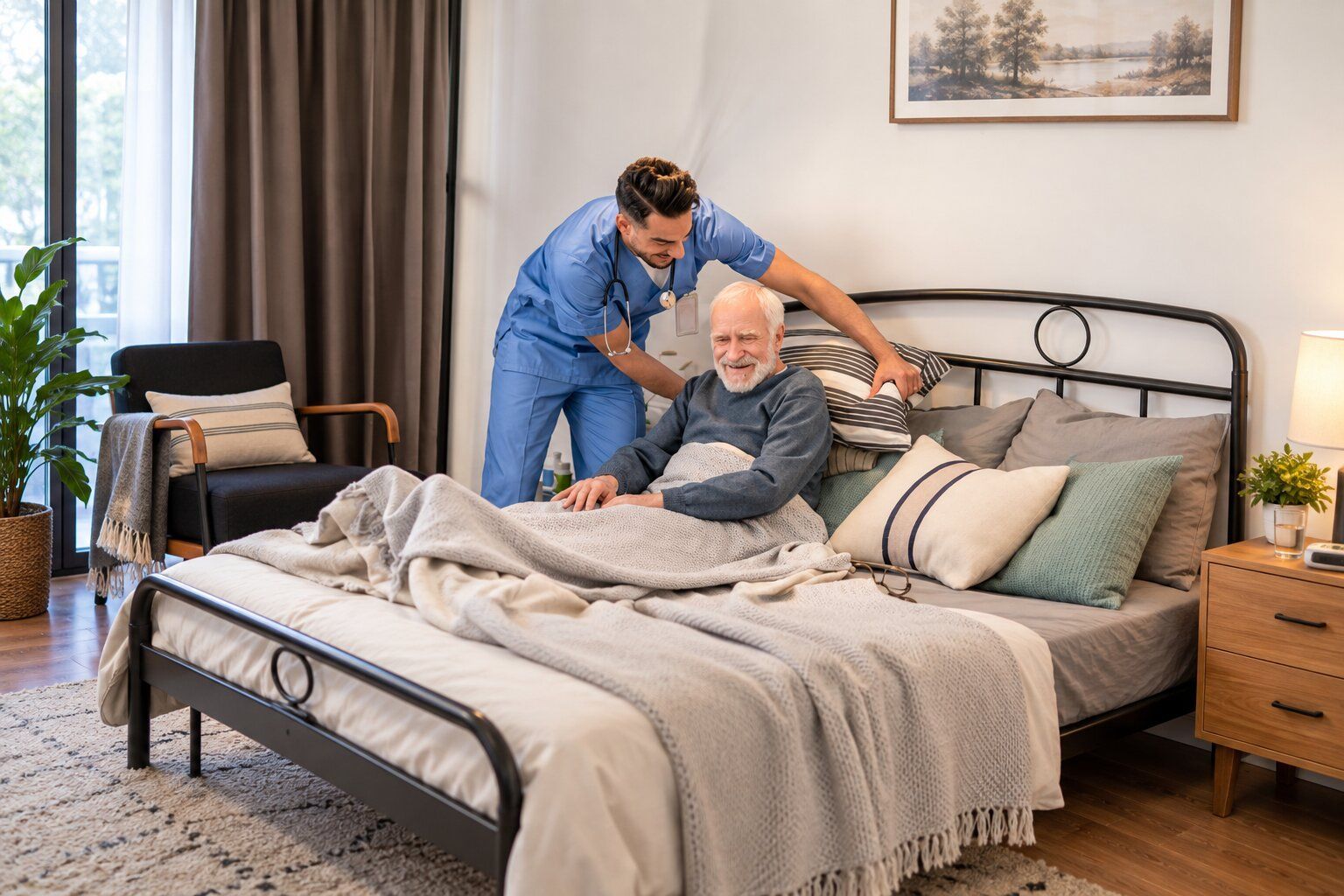
A private hospital sitter, also called a hospital companion or bedside caregiver, is a non-medical caregiver who provides individualized companionship, reassurance, and appropriate personal support to a hospitalized patient.
Families may arrange a private sitter for daytime visits, evenings, overnight hours, or extended coverage, depending on the patient's needs, hospital policies, and caregiver availability.
Private companions can be particularly helpful when families want a consistent, familiar presence during a loved one's hospital stay.
The sitter works in cooperation with the hospital team and follows all applicable hospital rules.
Private hospital companion versus hospital-provided sitter
The term
hospital sitter can refer to two different roles.
Hospital-provided sitter or observer: A staff member or observer assigned by the hospital when clinically indicated, according to the facility's assessment and policies. Responsibilities may include specific patient-observation and safety duties.
Privately arranged hospital companion: A caregiver hired by the patient or family to provide supplementary non-medical companionship, reassurance, and permitted assistance.
The roles are not interchangeable.
A private companion does not replace a hospital-assigned observer, required clinical monitoring, nursing care, or other medically necessary services.
Families should ask the hospital team whether private companion care is permitted and how it can be coordinated with the patient's care.
What Can a 7 Day Home Care Hospital Companion Do?
Our goal is to provide thoughtful, personalized support that complements the hospital's medical and nursing services.
Depending on the patient's needs, hospital authorization, and applicable policies, a caregiver may:
- Provide friendly conversation and companionship.
- Offer reassurance and emotional support.
- Help maintain familiar routines and preferences.
- Read aloud, play cards, or engage in quiet activities.
- Help keep glasses, hearing aids, phones, and other personal belongings within reach.
- Assist with phone or video calls to loved ones.
- Provide gentle orientation to the day and surroundings when appropriate.
- Encourage approved activities and participation in daily routines.
- Communicate non-medical preferences or concerns to hospital staff.
- Observe and promptly report concerning changes to the nursing team.
- Provide appropriate updates to authorized family members.
- Offer a consistent, familiar presence during scheduled hours.
All activities must be consistent with the hospital's policies, the patient's condition, and the caregiver's permitted responsibilities.
What hospital companions do not do
Our private hospital companions do not replace the hospital's medical professionals.
They do not independently:
- Administer medications, injections, or medical treatments.
- Adjust IV lines, oxygen equipment, monitors, or other medical devices.
- Provide wound care or perform medical procedures.
- Diagnose medical conditions.
- Make clinical decisions.
- Change prescribed treatments or medication schedules.
- Independently perform transfers or other hands-on activities that require hospital approval.
- Provide clinical observation in place of hospital-required monitoring.
The hospital's medical and nursing teams remain responsible for the patient's clinical care and safety.
We view hospital companion care as a partnership built around the patient's comfort, dignity, and individual needs.
Can You Hire a Private Caregiver to Stay With Someone in a New York Hospital?
In many circumstances, yes. However, arrangements depend on the hospital's policies, the patient's needs, and applicable patient rights.
New York State recognizes the important role that family members, caregivers, and support persons can play during hospitalization.
State guidance distinguishes general visitors from support persons who may assist patients with disabilities or cognitive impairments.
A support person may include a family member, personal care assistant, or another paid or unpaid attendant selected to help with physical or emotional support or effective communication.
Certain patients with cognitive impairments or intellectual or developmental disabilities have specific rights concerning support-person access.
However, not every privately hired companion automatically qualifies for unrestricted access, and hospitals may have additional requirements based on the unit, patient's condition, or infection-control considerations.
Questions to ask the hospital
Before arranging a private companion, ask:
- Does the hospital permit privately hired bedside caregivers or companions?
- Does my parent qualify for a designated support person?
- Are overnight companions permitted on this unit?
- What identification, documentation, or registration is required?
- Are there restrictions related to infection control, shared rooms, or specific procedures?
- Which activities may the companion assist with?
- Who should the caregiver contact if the patient's needs or condition change?
The nursing team, nurse manager, patient relations department, or hospital administration can help clarify the applicable procedures.
For additional information, review the New York State Department of Health's Patients' Bill of Rights and hospital visitation guidance.
How 7 Day Home Care Provides Hospital Companion Services
At 7 Day Home Care, we understand that hospitalization can be an emotional time for both patients and families.
Our approach is centered on compassion, dependability, respectful communication, and personalized attention.
Thoughtful caregiver matching
We take time to understand your parent's needs, preferences, personality, and daily routines.
Whenever possible, we consider factors such as communication style, language preferences, and the type of companionship that would be most comfortable.
New York State-certified home health aides
7 Day Home Care is a New York State-licensed home care services agency employing certified home health aides.
Our caregivers are screened and trained, and our agency provides Registered Nurse supervision.
Hospital assignments remain subject to the facility's policies and the specific non-medical responsibilities authorized for the caregiver.
Flexible scheduling
Families may need assistance for a few hours, during the evening, overnight, or across multiple shifts.
We work with families to discuss suitable scheduling arrangements based on their needs, hospital requirements, and caregiver availability.
Communication with families
We recognize how important it is for families to feel connected, even when they cannot be physically present.
Caregivers can provide appropriate non-medical updates, share observations, and communicate concerns through established channels.
Medical updates, test results, diagnoses, and treatment decisions should come from the hospital's clinical team.
Respect for hospital professionals
Our caregivers understand that they are guests within the hospital's care environment.
We emphasize courtesy, cooperation, adherence to facility policies, and prompt communication with nursing staff whenever a concern arises.
The objective is to contribute positively to the patient's overall experience while supporting the work of the hospital team.

Hospital Companion Care in New York City and Long Island
7 Day Home Care serves families throughout Manhattan, Brooklyn, Queens, Nassau County, and Suffolk County.
We understand that families may be traveling between home, work, and hospitals throughout the region.
Whether your loved one is receiving care at a major medical center in Manhattan, a community hospital in Queens or Brooklyn, or a hospital on Long Island, our team can discuss available private companion arrangements.
Caregiver placement inside a hospital is subject to the hospital's authorization, unit policies, patient needs, and staffing availability.
Our service areas include:
- Manhattan: Private hospital companionship for families in New York City.
- Brooklyn: Bedside companionship and assistance coordinating care after discharge.
- Queens: Personalized hospital companion services for older adults and their families.
- Nassau County: Hospital companionship and home care throughout Nassau communities.
- Suffolk County: Private caregiver support during hospitalization and after returning home.
Explore our New York City and Long Island home care service areas.
Seven Ways Families Can Support an Elderly Parent During Hospitalization
Whether or not you arrange a private companion, there are meaningful ways to help your parent feel more comfortable and connected.
1. Share important personal information with the care team
Consider preparing a brief information sheet that includes your parent's preferred name, communication needs, familiar routines, interests, and emergency contacts.
For someone with dementia, include approaches that are typically reassuring or comforting.
Ask hospital staff how best to share this information.
2. Help keep familiar personal items accessible
Glasses, hearing aids, dentures, a phone, and other approved personal belongings can support comfort and communication.
Check with hospital staff about what items are appropriate to keep at the bedside.
3. Encourage familiar activities
A favorite book, family photographs, music, or a short conversation about familiar subjects may help your parent feel connected to everyday life.
Follow the hospital's guidance regarding personal belongings and electronic devices.
4. Stay in touch through phone or video calls
Regular calls can be a wonderful way to maintain family connections.
For some older adults, a predictable time to speak with loved ones provides reassurance and something enjoyable to anticipate.
5. Communicate openly with the nursing team
Introduce yourself, share your concerns respectfully, and ask how best to communicate with the staff caring for your parent.
Hospitals often have established procedures for family updates, patient representatives, and care discussions.
6. Ask about mobility, meals, and daily routines
Find out what assistance your parent needs and what activities are permitted.
For example, a patient may have dietary restrictions, swallowing precautions, or specific instructions about getting out of bed.
Never encourage eating, drinking, walking, or transfers contrary to the clinical team's instructions.
7. Begin planning for discharge early
Ask the hospital team what support your parent may need after leaving the hospital.
Planning ahead can help families coordinate home care, equipment, therapy, transportation, and other services.
Planning for a Smooth Transition From Hospital to Home
A hospital stay is often followed by an important transition.
Some older adults return home with the same level of independence they had before admission. Others may temporarily or permanently need additional help with daily activities.
The hospital's discharge planning team plays a central role in identifying medical and post-discharge needs.
Families can support that process by asking several practical questions.
What level of personal care will be needed at home?
Will your parent need assistance with bathing, dressing, toileting, meals, or mobility?
If hands-on transfers are required, ask for specific instructions and clarification about any equipment or staffing needs.
Will skilled services be necessary?
Your parent may need visiting nursing, physical therapy, occupational therapy, or other clinical services.
These are distinct from private-duty home health aide services.
Is special equipment recommended?
Ask whether a hospital bed, wheelchair, walker, bedside commode, or other equipment should be arranged before discharge.
Will assistance be needed overnight?
Some people need only daytime help, while others require awake overnight assistance or continuous caregiver coverage.
Discuss nighttime needs with the discharge team and prospective home care agency.
Who will help once your parent arrives home?
Arranging care before discharge can help create a more comfortable transition.
At 7 Day Home Care, we work with families to coordinate appropriate home care services based on the individual's needs, nursing assessment, and caregiver availability.
Our personal care services, overnight care, and Alzheimer's and dementia care can provide support after hospitalization.
When practical and appropriate, continuity with a familiar caregiver may also be considered.
How to Arrange Private Hospital Companion Care With 7 Day Home Care
Step 1: Contact our team. Tell us where your loved one is hospitalized, the type of companionship you're seeking, and the hours of coverage you have in mind.
Step 2: Confirm hospital arrangements. Check whether the hospital permits the proposed private companion arrangement and whether any authorization or documentation is required.
Step 3: Discuss your parent's needs. We'll review preferences, communication needs, scheduling, and the appropriate scope of non-medical support.
Step 4: Coordinate caregiver availability. We work to identify a suitable caregiver or care team, subject to staffing and hospital requirements.
Step 5: Plan for ongoing support. If your parent will need assistance after discharge, we can discuss home care arrangements and coordinate next steps.
Our team is available by phone 24 hours a day to discuss care needs and potential arrangements.
Frequently Asked Questions About Hospital Sitters
Is it safe to leave my elderly mother or father alone in the hospital?
For many older adults, yes. Hospitals provide medical and nursing care, and the clinical team determines appropriate monitoring. Some patients may benefit from additional companionship, particularly when they have dementia, communication difficulties, anxiety, or a preference for someone familiar nearby.
Can I hire someone to sit with my parent in the hospital?
Yes, private hospital companion care may be available, depending on the hospital's policies and the patient's circumstances. Contact the hospital to confirm whether an outside caregiver can be present and what requirements apply.
Can a private hospital sitter stay overnight?
Some hospitals permit overnight companions, while others have unit-specific rules or restrictions. Patients who qualify for a support person may have additional rights under applicable New York State guidance. Confirm the arrangements directly with the hospital.
What does a private hospital sitter do?
A private hospital sitter provides non-medical companionship, reassurance, appropriate everyday assistance, and communication of concerns to hospital staff. Responsibilities must remain within the caregiver's permitted role and the hospital's policies.
Can a hospital sitter help someone with dementia?
Yes. A companion can offer familiar conversation, reassurance, gentle orientation, and support with appropriate routines. The hospital team remains responsible for evaluating and treating delirium, agitation, or other medical concerns.
Can a private sitter prevent hospital falls?
No caregiver can guarantee that falls will not occur. A private companion may notice a patient attempting to get up and promptly alert hospital staff, but fall-risk assessment, prevention planning, and medically necessary observation remain the hospital's responsibility.
Is a private hospital sitter the same as a nurse?
No. A private hospital companion provides non-medical support. Nurses and other hospital professionals provide medical assessment, treatment, medications, and clinical monitoring.
Does Medicare cover private hospital sitter services?
Medicare generally does not pay for a privately hired, non-medical bedside companion simply to provide companionship during hospitalization. Some long-term care insurance policies may offer relevant benefits, but coverage depends on the policy and the circumstances. Families should confirm eligibility and reimbursement requirements with their insurer.
How quickly can 7 Day Home Care arrange a hospital companion?
Our team can discuss requests at any time. The actual start of care depends on caregiver availability, the patient's needs, hospital authorization, and any applicable onboarding requirements. Contacting us early allows more time to coordinate arrangements.
Does 7 Day Home Care provide hospital sitters in Manhattan, Brooklyn, Queens, Nassau, and Suffolk?
We serve families throughout these areas and can discuss private hospital companion arrangements at facilities that permit them, subject to caregiver availability and the patient's needs.
Compassionate Support for Your Loved One, Peace of Mind for Your Family
When someone you love is in the hospital, you naturally want them to feel cared for, comfortable, and connected.
The hospital's doctors, nurses, and healthcare professionals provide the essential medical care your loved one needs. Family members bring familiarity, encouragement, and emotional support.
A private hospital companion can offer another meaningful source of comfort.
At 7 Day Home Care, we believe the most supportive arrangements are built on cooperation, communication, and respect for everyone involved in a patient's care.
Whether your parent would enjoy additional companionship during the day, a reassuring presence in the evening, or help preparing for the transition home, we're here to discuss how we may be able to assist.
Your loved one's comfort matters. So does your peace of mind.
Call 7 Day Home Care: (516) 408-0034
Serving families throughout Manhattan, Brooklyn, Queens, Nassau County, and Suffolk County.
Medical, Hospital Access, and Insurance Disclaimer
This article is provided by 7 Day Home Care for general educational and informational purposes only. It is not medical, nursing, legal, or insurance advice and should not be relied upon to make decisions about clinical supervision, patient safety, medical treatment, or hospital discharge.
7 Day Home Care is a New York State-licensed home care services agency providing private-duty, non-medical personal care and companionship. Our caregivers do not replace hospital physicians, nurses, therapists, hospital-employed patient observers, or other clinical personnel. Hospitals retain responsibility for their patients' medical treatment, clinical monitoring, and safety protocols.
The availability and permitted responsibilities of a private hospital companion depend on the patient's individual circumstances, the hospital's policies and authorization procedures, applicable patient and support-person rights, infection-control requirements, caregiver qualifications, and staffing availability. Private companion services do not guarantee the prevention of falls, delirium, injuries, or other medical complications.
Any concerns involving sudden confusion, changes in consciousness, breathing difficulties, pain, unsafe mobility, or other changes in condition should be reported immediately to the hospital's nursing or medical team. Outside the hospital, call 911 for a medical emergency.
Insurance coverage varies by policy, eligibility, benefit limitations, and service type. Families should verify coverage directly with Medicare, their insurance carrier, or their benefits administrator.
References and Helpful Resources
- New York State Department of Health — Patients' Bill of Rights
- New York State Department of Health — Hospital Visitation Guidance
- Agency for Healthcare Research and Quality — Fall TIPS: Patient-Centered Fall Prevention
- Hospital Elder Life Program — Evidence on Delirium Prevention