Complete Guide to In-Home Care Services in New York (2026): Costs, Benefits, and Choosing the Right Caregiver
Complete Guide to In-Home Care Services in New York (2026): Costs, Benefits, and Choosing the Right Caregiver

At first, it usually does not feel like a major crisis.
It feels like small things.
Your father forgets to take his medication. Your mother stops cooking full meals. A neighbor mentions that your loved one seemed confused in the hallway. A building superintendent calls because your parent had trouble getting back into the apartment. Someone falls, but insists they are “fine.” A hospital discharge happens, and the family quietly realizes no one can actually cover the next two weeks.
For many New York families, that is the moment the conversation changes. It is no longer just about aging. It becomes a question of safety, routine, and whether a loved one can continue living at home without more support.
That is where in-home care often enters the picture.
For older adults who want to remain in familiar surroundings, professional home care can provide the structure, assistance, and peace of mind that families cannot always sustain on their own. Instead of forcing a move into assisted living or a nursing facility, in-home care allows seniors to stay where they are most comfortable while receiving help with the parts of daily life that have become difficult.
For some families, that means a few hours of support each day. For others, it means live-in care, overnight supervision, or full 24-hour coverage. The right arrangement depends on the person, the home, the health condition, and the family’s capacity.
This guide explains what in-home care services in New York actually include, who typically needs them, how costs work, what families should look for in a provider, and how to know when it is time to start.
If your family is already noticing safety concerns, call (516) 408-0034 to discuss care options. Many families say they wish they had reached out sooner.
Table of Contents
- Why In-Home Care Is Becoming the Preferred Choice in New York
- What In-Home Care Services Include
- How In-Home Care Works
- Who Typically Needs In-Home Care
- Common Types of In-Home Care
- The Benefits of In-Home Care for Seniors and Families
- Signs It May Be Time to Start Care
- Understanding the Cost of Home Care in New York
- How to Choose the Right Home Care Agency
- Home Health Aide vs In-Home Caregiver
- How Families Can Prepare for In-Home Care
- What the First Week of Care Usually Looks Like
- Frequently Asked Questions
- Choosing the Right Care for Your Family
Why In-Home Care Is Becoming the Preferred Choice in New York
More New York families are choosing in-home care because it solves a problem that institutional settings often do not: it supports safety
without requiring a loved one to leave home.
That matters more than ever. Older adults are living longer. Families are spread across different boroughs, suburbs, and states. Adult children are balancing careers, children, travel, and caregiving at the same time. Many seniors want help, but they do not want to leave the apartment, house, neighborhood, or routines they have known for decades.
In-home care works because it meets people where they are.
A senior can continue waking up in the same bedroom, sitting in the same kitchen, seeing the same neighbors, and following familiar daily rhythms — while still receiving help with bathing, meals, mobility, supervision, or companionship. That combination of familiarity and support is often what makes care feel sustainable.
It also gives families flexibility. Care can begin with a few hours a week and expand as needs change. A family might first arrange care after surgery, then keep part-time support in place because they realize how much safer and easier daily life becomes with help. In other cases, memory loss or mobility decline means the care plan eventually becomes overnight, live-in, or 24-hour.
For many families, the goal is not just to avoid a nursing home. It is to help a loved one remain stable, dignified, and safe at home for as long as possible.
What In-Home Care Services Include
In-home care means professional support provided directly in the senior’s home.
For most families, this is
non-medical care delivered by trained caregivers such as Certified Home Health Aides. Depending on the care plan,
servicesmay include help with bathing, dressing, meal preparation, mobility, toileting, medication reminders, light housekeeping, safety supervision, and companionship.
The purpose is not to take over someone’s life. The purpose is to support the parts of daily life that have become difficult, unsafe, or inconsistent.
A good caregiver helps restore structure. Meals happen regularly. Medications are remembered. Fall risks are reduced. Hygiene improves. Isolation decreases. Family members stop wondering all day whether their loved one has eaten, showered, or gotten out of bed.
Some seniors need only light daily support. Others need hands-on personal care. Others need supervision because of memory loss, confusion, or wandering risk. The right care plan depends on the individual.
How In-Home Care Works
Most families begin with a conversation.
The agency learns what is happening, what support is needed, and what concerns the family is trying to solve. Sometimes the concern is recent hospital discharge. Sometimes it is increasing forgetfulness. Sometimes it is much simpler: a parent is still technically independent, but daily life is becoming disorganized and unsafe.
From there, a care plan is built around the person’s needs.
That plan usually addresses:
- the hours of care needed
- the type of support required
- the daily routine
- mobility and safety issues
- memory or cognitive concerns
- family communication preferences
Care can be arranged in several formats. Some families need only a few hours during the morning. Others want daytime coverage while they work. Some need overnight supervision. Others require live-in or 24-hour care.
The best care plans are not static. They evolve. A client recovering from surgery may start with intensive support and gradually step down. A client with dementia may begin with part-time companionship and eventually need much more structure.
That flexibility is one of the biggest advantages of home care.
Who Typically Needs In-Home Care
In-home care is not only for people with severe illness. In reality, many different families use it for many different reasons.
A senior living alone may need support because daily routines have become harder to manage. A person recovering from surgery may need temporary help bathing, walking safely, and keeping up with medications. Someone with dementia may need ongoing structure and supervision. A spouse may still be present, but no longer physically able to provide all the care alone.
One common New York scenario looks like this: a daughter works full-time in Midtown, visits her mother every evening, and realizes that although she is “close by,” she still cannot make lunch happen, monitor medications, prevent falls, or be there when something goes wrong at 2 PM. Proximity is not the same as coverage.
Another common scenario is hospital discharge. A family thinks they can manage after surgery or illness, but within a week it becomes clear that the senior needs more help than anyone expected.
And in many cases, the issue is not medical at all. It is loneliness, poor nutrition, missed medications, confusion, clutter, poor hygiene, or slow functional decline that has been building for months.

Common Types of In-Home Care
Not every client needs the same type of support. That is why home care is usually divided into several care formats.
Companion Care
Companion care is often the right starting point when the senior is still fairly independent but needs structure, supervision, and social support.
This may include conversation, accompaniment on walks, help with meals, light housekeeping, reminders, and helping someone stay engaged in the day instead of becoming isolated.
Personal Care Assistance
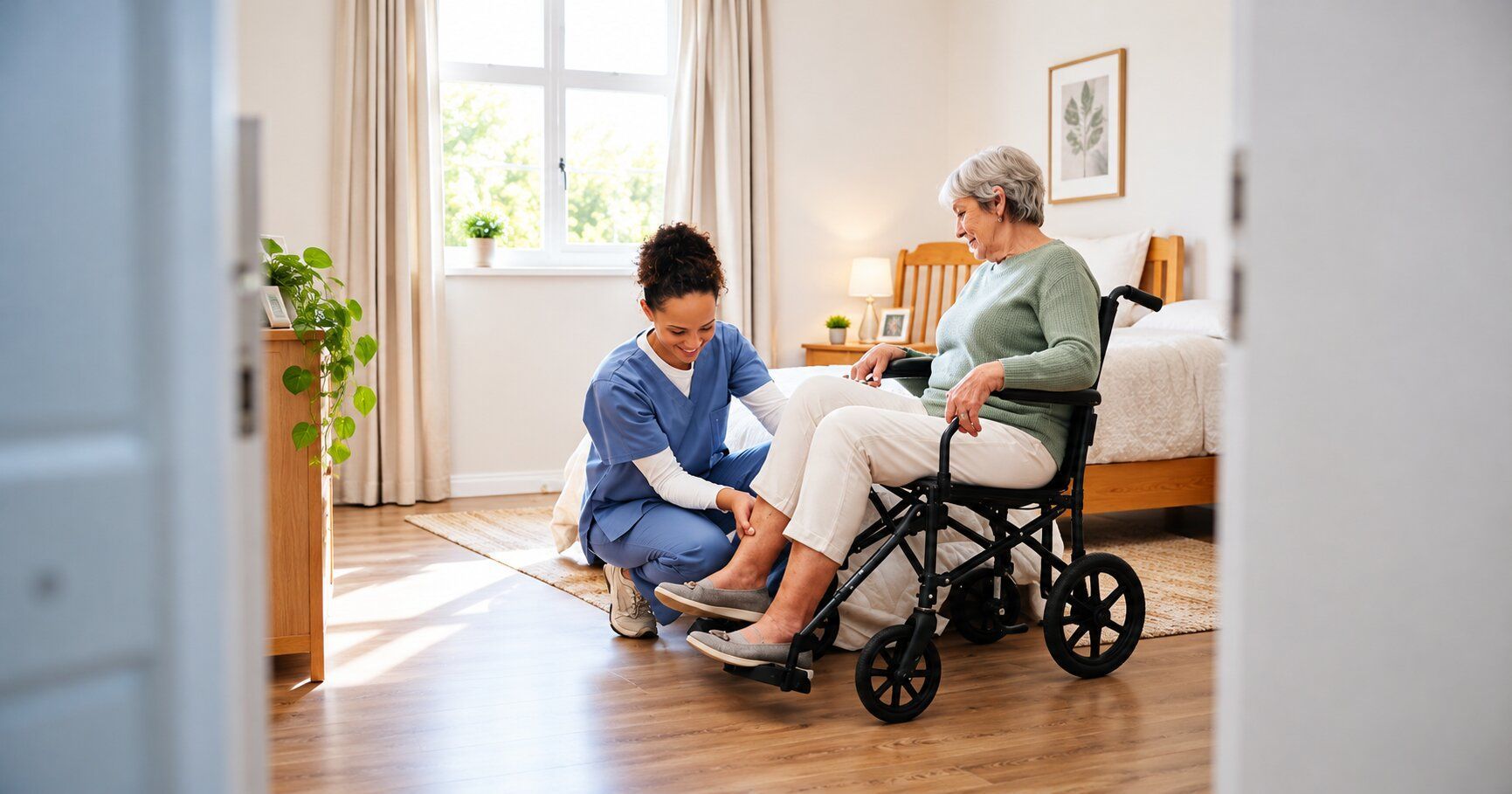
Personal care is more hands-on. It includes help with bathing, dressing, grooming, toileting, transferring, and mobility.
This type of care is essential when a person can no longer manage physical tasks safely on their own.
Post-Hospital Recovery Support
Many families first arrange care after surgery, illness, or hospitalization.
This type of care often includes meal preparation, medication reminders, mobility support, supervision during recovery, and help getting to follow-up appointments.
Dementia and Memory Care Support
When memory loss begins affecting safety, routines, and judgment, home care often shifts from simple assistance to structured supervision.
This may include cueing, redirection, consistent routines, wandering prevention, meal prompting, medication reminders, and close communication with family.
Overnight Care
Some seniors are mostly stable during the day but become unsafe at night.
Overnight care can help with bathroom trips, confusion, nighttime wandering, or fall risk.
Live-In Care
Live-in care is often appropriate when a person needs daily support throughout the day and some overnight presence, but does not require a fully awake caregiver all night.
24-Hour Care
When a senior needs continuous active supervision, rotating caregivers provide around-the-clock coverage.
This is often necessary for advanced dementia, serious mobility issues, or situations where safety concerns are constant.
The Benefits of In-Home Care for Seniors and Families
The biggest benefit of home care is simple: it helps people stay home safely.
That has emotional value, but it also has practical value. Seniors often function better in familiar environments. They know where things are. They sleep better in their own rooms. They are calmer with their own routines. They are less disoriented than they would be in a facility.
For families, the benefit is usually relief. Not because they stop caring, but because the impossible part becomes manageable.
A professional caregiver can make sure the senior has eaten lunch, taken medication, bathed safely, and gotten out of bed. That changes the entire emotional climate of a family. Adult children can return to being sons and daughters instead of trying to act as unpaid shift workers on top of jobs and families.
Another major benefit is consistency. Once care is in place, the day stops depending entirely on whether a family member can get there in time.
And finally, care at home can often be introduced gradually. Families do not have to make an all-or-nothing decision. They can start with a few hours and build from there.
Signs It May Be Time to Start Care
Families often wait longer than they should because the decline happens slowly.
It is rarely one dramatic moment. It is usually a pattern.
Maybe your loved one is forgetting medications. Maybe the refrigerator is full of expired food. Maybe they are wearing the same clothes repeatedly, skipping showers, losing weight, or seeming more confused than usual. Maybe they have fallen once. Maybe they have almost fallen several times. Maybe they are fine when you visit, but neighbors or building staff are noticing problems during the day.
The signs are often subtle before they become obvious.
Common warning signs include:
- frequent forgetfulness
- missed medications
- falls or near-falls
- poor hygiene
- unopened mail or unpaid bills
- noticeable weight loss
- loneliness or isolation
- increasing confusion
- trouble getting around safely
- difficulty preparing meals
- worsening clutter or housekeeping
- family members feeling constant worry
If you are seeing several of these at once, it may be time to stop thinking only in terms of “checking in more often” and start thinking in terms of structured support.
If you have noticed several of these changes, call (516) 408-0034 to discuss care options. Early support often prevents larger problems.
Understanding the Cost of Home Care in New York
Cost is one of the first questions every family asks, and understandably so.
The total cost depends on the type of care needed, the number of hours required, the caregiver’s training, and the complexity of the situation. Some families need only a few hours a day. Others need full-day coverage, overnight care, live-in care, or 24-hour care.
That means there is no single universal number that applies to everyone.
What matters most is matching the care plan to the actual need. A family may assume they need 24-hour care when a structured daytime plan would solve the problem. Another family may try to save money with part-time help when the real safety needs clearly require more coverage.
The best approach is not to guess. It is to assess the situation honestly.
What Affects Cost
The cost of home care usually depends on:
- how many hours are needed
- whether care is hourly, overnight, live-in, or 24-hour
- whether the client needs hands-on personal care
- whether dementia or wandering supervision is involved\
- whether specialized experience is needed
- whether scheduling is routine or urgent
Payment Options
Many families pay privately. Others use long-term care insurance. In some cases, Medicaid may cover certain home care services for individuals who qualify. Medicare generally does not cover non-medical home care.
The right next step is usually a conversation about the actual care need, not just the hourly rate in the abstract.
Call (516) 408-0034 for a personalized care discussion and estimate.

How to Choose the Right Home Care Agency
Choosing an agency is not just about price. It is about whether the agency is organized, responsive, trustworthy, and capable of staffing the level of care your family actually needs.
Families should ask practical questions:
- How are caregivers screened?
- What training do they have?
- How does the agency handle caregiver call-outs?
- How is care supervised?
- How are families updated?
- Can care scale up if needs increase?
- Does the agency have experience with your loved one’s situation?
The right agency should sound calm, clear, and experienced — not vague.
It should also be able to explain how care is coordinated, how schedules work, how communication happens, and how emergencies are handled.
A good agency makes families feel like the situation is manageable.
Home Health Aide vs In-Home Caregiver
Families often use these terms interchangeably, but there are differences.
An in-home caregiver usually refers broadly to someone providing non-medical assistance with daily living. That can include companionship, meals, reminders, light housekeeping, and mobility support.
A
Home Health Aide (HHA) is a more specific role and often involves training related to hands-on personal care and support with daily functions.
In practical terms, families usually need to think less about terminology and more about the actual tasks their loved one needs help with.
If the need is companionship and routine support, lighter care may be enough. If the need is bathing, toileting, transferring, dressing, and hands-on assistance, a trained aide is usually more appropriate.
How Families Can Prepare for In-Home Care
The smoother the preparation, the better the transition.
One of the best things families can do is start the conversation before there is a full-blown emergency. Seniors are often more open to care when they feel included in the process rather than forced into it after a crisis.
It also helps to prepare the home environment. Good lighting, clear walkways, grab bars, medication organization, and an accessible bathroom all make care safer and easier.
Families should also think about communication. Who is the main point of contact? Who receives updates? What routines matter most to the senior? What worries the family most right now?
The most successful care starts with clarity.
What the First Week of Care Usually Looks Like
This is one of the most underexplained parts of home care, and it matters.
The first week is usually about stabilization.
The caregiver learns the senior’s rhythms, preferences, and challenges. The family begins to see what the day actually looks like when support is in place. Meals become more regular. Safety improves. The caregiver notices what the family may have only partly seen: how steady the person is when walking, whether meals are really being eaten, whether memory is worse in the afternoon, whether bathing is being avoided, whether medications are confusing.
For many families, the first week brings relief and surprise.
Relief because someone is finally there.
Surprise because the situation was often more serious than they realized.
This is also when good care plans start evolving. The family may realize more hours are needed, or that fewer are enough, or that certain routines matter more than expected.
That is normal. Good care becomes more precise with real observation.
Frequently Asked Questions
What services are included in in-home care?
In-home care typically includes bathing, dressing, meal preparation, medication reminders, mobility support, companionship, and safety supervision. Services are adjusted based on the senior’s needs.
When should a senior consider home care?
Home care is worth considering when daily routines become difficult, safety concerns start appearing, medications are missed, falls occur, or family support is no longer enough to cover the day.
What does an in-home caregiver do?
An in-home caregiver helps with daily activities such as personal care, meal preparation, mobility support, reminders, light housekeeping, and companionship.
What is the difference between home care and home health care?
Home care is usually non-medical support with daily living. Home health care involves licensed medical services such as nursing or therapy provided at home.
How do families choose the right agency?
Families should look for an agency with trained caregivers, clear communication, reliable staffing, strong supervision, and experience handling the specific type of care their loved one needs.
How can families prepare a home for care?
Improve lighting, remove tripping hazards, organize medications, make bathrooms safer, and clearly communicate routines, preferences, and health concerns.
Does Medicare cover non-medical home care?
Medicare generally does not cover non-medical home care. Medicaid may cover certain home care services for people who qualify.
What if we are not sure how much care is needed?
That is common. Many families start with part-time care and adjust as they learn more about what daily life actually requires.
Choosing the Right Care for Your Family
Most families do not begin this process because they want to. They begin because something has changed, and the old arrangement no longer feels safe or sustainable.
The good news is that there is a middle ground between “doing everything alone” and moving a loved one out of the home.
That middle ground is often in-home care.
The right support can help a senior remain safe, comfortable, and dignified in familiar surroundings while giving the family the structure and reassurance they need. Whether the issue is surgery recovery, memory loss, falls, loneliness, or simply the slow accumulation of daily difficulty, professional home care can make the situation feel manageable again.
For many families, the hardest part is not choosing care. It is starting the conversation.
Call (516) 408-0034 to discuss care options and what level of support may make sense for your family.
Professional home care is not about taking independence away. It is about protecting it for as long as possible.