6 Balance Exercises for Seniors to Reduce Fall Risk
As we age, maintaining balance becomes increasingly crucial for preventing falls and ensuring overall well-being. Fortunately, promoting stability and reducing the risk of falls doesn't always require a visit to the gym or a fitness class. In fact, there are practical and effective balance exercises that seniors can easily incorporate into their daily routine right in the comfort of their own homes. At 7 Day Home Care, we understand the importance of fostering independence and safety for seniors. In this article, we'll explore six balance exercises tailored for older adults, empowering them to enhance stability and lower the risk of falls within the familiar surroundings of home. Before embarking on any new exercise routine, especially if you're a senior or have pre-existing health conditions, it's crucial to consult with your healthcare provider or primary care physician.
Staying active and maintaining good balance are crucial for seniors to prevent falls and maintain independence. Here are 6 effective at-home balance exercises for seniors:
1. Sit-to-stand:
- Sit on a sturdy chair with feet flat on the floor and hip-width apart.
- Lean forward and push through your legs to stand up without using your arms.
- Slowly sit back down, repeating 10-15 times.
- This strengthens leg muscles and improves balance.
2. Heel-toe raises:
- Stand behind a sturdy chair for support.
- Lift one heel off the ground, balancing on the ball of your foot.
- Place the heel of the lifted foot gently in front of the other toe, making a heel-toe position.
- Repeat for 10-15 times on each leg.
- This improves ankle flexibility and balance.
3. Tandem stand:
- Stand with feet directly in front of each other, heel-to-toe.
- Hold for 10-30 seconds, increasing time as you get stronger.
- Close your eyes for an added challenge (with support nearby).
- This enhances balance and coordination.
4. Side leg raises:
- Stand with feet hip-width apart and hands on your hips.
- Slowly lift one leg out to the side, keeping it straight.
- Hold for 5 seconds, then lower and repeat on the other side.
- Do 10-15 repetitions on each leg.
- This strengthens hip muscles and improves stability.
5. Marching in place:
- Stand tall with feet hip-width apart and arms by your sides.
- March your knees high for 30 seconds, focusing on good posture.
- Reverse the direction and march backwards for another 30 seconds.
- This improves coordination and leg strength.
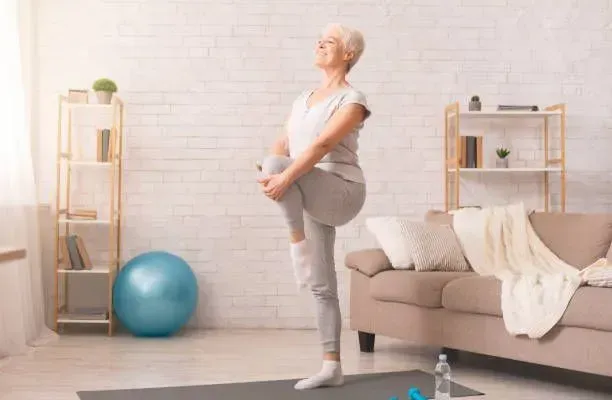
6. Stork stand:
- Stand on one leg, raising the other bent knee behind you and balancing your arms out to the sides.
- Hold for 10-30 seconds, then switch legs.
- Repeat 5-10 times on each side.
- This challenges balance and strengthens leg muscles.
It is Very Important to Remember:
- Start slow and gradually increase the number of repetitions and duration as you get stronger.
- Listen to your body and stop if you feel any pain.
- Consistent exercise is key to maintaining good balance to reduce fall risks.
- Use a chair or wall for support if needed.
- Find the right mix of exercise activities you enjoy so you stick with it.
- Consult your doctor before starting any new exercise program.
Maintaining good balance is crucial for seniors as it directly impacts their safety, independence, and overall well-being. Proactively engaging in regular balance exercises offers a multitude of benefits that make it a "must" for seniors:
1. Fall Prevention: Falls are the leading cause of injury and death among seniors, often resulting in broken bones, hospitalization, and decreased mobility. Strong balance can significantly reduce fall risks by enhancing:
- Coordination: Better control over body movements and reflexes to react quickly to imbalances.
- Leg strength: Stronger muscles, particularly in the legs and ankles, provide better support and stability.
- Flexibility: Improved range of motion in joints, especially ankles and hips, allows for easier adjustments and responses to unexpected movements.
2. Improved Mobility and Independence: Good balance enables seniors to perform daily activities with confidence and ease, such as:
- Climbing stairs and navigating uneven surfaces.
- Reaching for objects on shelves or cupboards.
- Getting in and out of chairs and bathtubs.
- Participating in social activities and hobbies.
3. Enhanced Cognitive Function: Balance exercises often involve multitasking and focusing on body movements, which can stimulate cognitive function and memory. This can help in:
- Delaying the onset or progression of cognitive decline and dementia.
- Improving attention, concentration, and decision-making abilities.
- Promoting overall brain health and well-being.
4. Reduced Pain and Improved Bone Density: Regular physical activity, including balance exercises, can help manage chronic pain conditions like arthritis and osteoporosis. By strengthening muscles and bones, it can:
- Reduce pressure on joints, alleviating pain and discomfort.
- Increase bone density, making bones less susceptible to fractures.
- Promote overall physical health and pain management.
5. Boosted Mood and Reduced Risk of Depression: Exercise releases endorphins, the body's natural mood elevators. Consistent balance exercises can:
- Combat feelings of depression and anxiety, common in older adults.
- Improve sleep quality, leading to better energy levels and mood.
- Increase social interaction and participation in activities, reducing feelings of isolation.
It's never too late to start! Even small improvements in balance can make a significant difference. Incorporating these six balance exercises into your daily routine can significantly contribute to reducing the risk of falls and enhancing overall stability, allowing you to maintain an active and independent lifestyle. Maintaining independence not only boosts self-esteem and quality of life but also reduces reliance on caregivers and potential institutionalization. At 7 Day Home Care, we understand the importance of fostering autonomy for seniors. Our affordable in-home care services, available in Manhattan, Queens, Nassau County, Brooklyn, and Suffolk County, New York, are designed to support your well-being while respecting your desire for independence. We believe in home care that empowers, focusing on maintaining your freedom rather than creating dependence. Visit us at 7 Day Home Care or call us at 516-408-0034 to explore how our services can complement your efforts to age gracefully and securely in the comfort of your own home.
Brian Callahan
7 Day Home Care